Gloves & Mitts · Guide
Youth glove size chart: what size baseball glove does my kid need, by age and position
The maker's sizing table, printed on every glove page and ignored in every aisle. Glove inches by age and position for baseball and fastpitch, how the size is measured, the one test that matters (can the kid close it), and a pick per size band.
By Mike M.Updated Researched · every figure sourced
#adReader-supported: we may earn a commission if you buy through our links, at no extra cost to you. It never decides a pick. How we pick · Disclosure
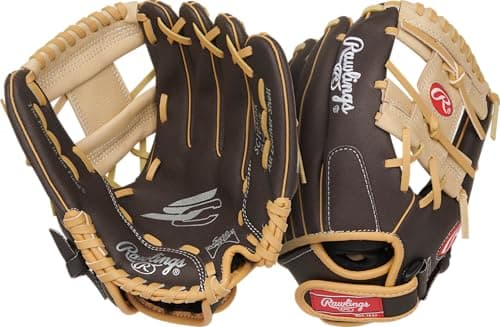
The quick answer by age
| Age | Size | Notes |
|---|---|---|
| 4–5 | 9–10 in | Tee ball. Basket web, Velcro strap. |
| 6 | 10–10.5 in | Tee ball or coach pitch. 10.5 if starting coach pitch next year. |
| 7–8 | 10.5–11 in | First kid-pitch seasons. 11 in is the common size. |
| 9–10 | 11–11.5 in | Infield 11; outfield or utility 11.5. |
| 11–12 | 11.25–12 in | Infield 11.25–11.5; outfield 11.75–12.25; first base 11.5–12. |
| 13+ | 11.5–12.75 in | Adult patterns: infield 11.25–12, outfield 12–12.75, first base 12–13. |
Compiled from the Rawlings glove sizing table (below) and the youth patterns the makers sell at each size; a starting point, not a rule.
Baseball: the maker's table
Rawlings prints this on every glove page; Easton (the same company) uses the same one.
| Level | Age | Position | Glove size |
|---|---|---|---|
| T-Ball | 3 to 6 | All positions | 8.5–10 in |
| Youth | 7 to 12 | 1st base | 11.5–12 in |
| Youth | 7 to 12 | Infield | 10.25–11.5 in |
| Youth | 7 to 12 | Outfield | 11.5–12.25 in |
| Adult | 12+ | 1st base | 12–13 in |
| Adult | 12+ | Infield | 11.25–12 in |
| Adult | 12+ | Outfield | 12–12.75 in |
Fastpitch softball
The ball is bigger (11 in at 10U, 12 in from 12U), so the pocket is deeper and the glove runs half an inch to an inch larger. Rawlings' softball table: youth fastpitch infield 10.5–11 in, outfield 11–11.5 in; adult fastpitch infield 11.5–12 in, outfield/first base 12–13 in. Softball-specific youth gloves (the Sure Catch Softball line, the Wilson A500 Siren) have the deeper pocket built in; a baseball glove of the same number does not. The softball glove size chart has the full version and the picks.
How a glove is measured
From the top of the index finger down to the heel of the palm, in inches, along the inside of the glove. An 11 in glove is 11 inches from fingertip to heel. Catcher's mitts are measured around the circumference instead, which is why a 33 in mitt is not three times an 11 in glove; see the catcher's mitt page. First base mitts are measured like fielder's gloves.
The squeeze test
- Glove on, correct hand (right-hand throw goes on the left hand).
- Kid closes the glove with that hand only. No helping with the other hand.
- Closes fully and easily: the size and stiffness are right. Closes with effort: right size, needs break-in (fine at 10, wrong at 6). Cannot close: too big or too stiff; go down a size or to a softer line.
- Then the pocket check: drop a ball in; it should sit in the pocket, not roll to the fingers. A glove too long for the hand catches in the fingertips and pops out.
Mistakes parents make
- Buying by the age on the box. The box says 8–10; the kid's hand says 10.5.
- Buying to grow into. See the squeeze test.
- The wrong hand. RHT = right-hand throw = glove on the left hand. LHT is the opposite. The most common return.
- An outfield glove for an infielder. At 9 it does not matter; at 12 an 11.25 in infield glove with an I or H web transfers faster than a 12.25 trapeze.
- Buying a stiff adult-pattern glove for a 9-year-old. Structure and welting are a virtue at 12 and a wall at 8.
The two ages parents ask about most have their own pages, with the band, the fit check and the picks in one place: baseball glove size for an 8-year-old and baseball glove size for a 10-year-old. If the size is right and he still cannot shut the glove, the problem is the hand opening rather than the length: gloves for small hands. And the throwing-hand mistake above is explained in full on left-handed youth gloves explained.
One pick per size band
Our picks for this
One youth glove per size band
Chosen from the site's rankings; sizes and the maker's age tags are quoted from each product page. Do the squeeze test in the store or keep the receipt.
Best tee ball glove overall
Rawlings Sure Catch 10.5 in
Ages 5–7, 10.5 in9.6/1010.5 in for ages 5–7: soft leather, Velcro strap, 10 break-in.
$39.95Amazon#ad · Price as of November 5, 2026 · Disclosure for the link to Rawlings Sure Catch 10.5 in
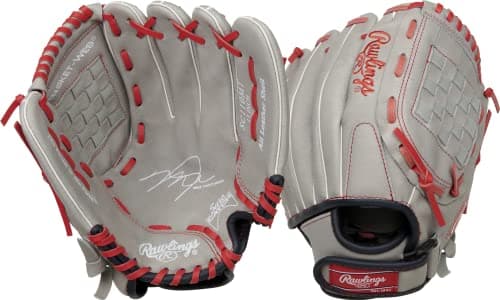
Best youth glove for 7–9
Rawlings Sure Catch 11 in (Mike Trout)
Ages 7–9, 11 in9.6/1011 in for ages 7–9: the common first kid-pitch size, still with the strap.
$42.95Amazon#ad · Price as of November 5, 2026 · Disclosure for the link to Rawlings Sure Catch 11 in (Mike Trout)
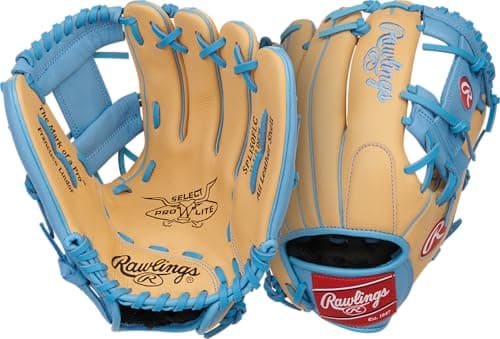
Best youth infield glove for 10–12
Rawlings Select Pro Lite 11.5 in (Francisco Lindor)
Ages 10–12, 11.5 in9.2/1011.5 in for 10–12 infield: Pro I web, youth taper, leather lace.
$74.97Amazon#ad · Price as of November 5, 2026 · Disclosure for the link to Rawlings Select Pro Lite 11.5 in (Francisco Lindor)
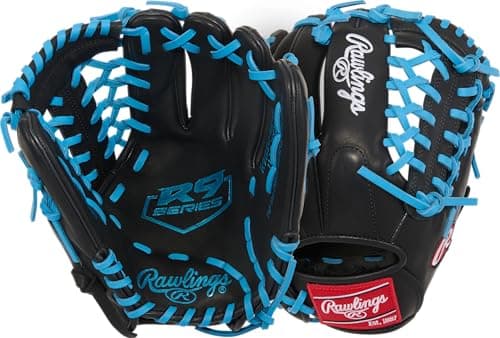
Best youth glove for 11–13
Rawlings R9 ContoUR 11.5 in
Ages 10–13, 11.5 in9.0/1011.5 in for 11–13: the ContoUR small-hand fit on a full youth pattern, all leather.
$149.99Amazon#ad · Price as of November 5, 2026 · Disclosure for the link to Rawlings R9 ContoUR 11.5 in
Once the chart has given you a size, the picks are one click away: best gloves for a 10-year-old for the 11 to 11.5 inch band, and Mizuno Prospect vs Wilson A500 if the squeeze test is the thing he is failing.
How we picked these
Researched, certification-checked and sized for the age
Every pick on this page earns its place the same way: the certification is checked against the governing bodies' rules and the maker's stated stamp, so the gear is legal for the division it is bought for; sizing comes from the makers' own age, height and hand charts; the published specs (drop, barrel, construction, closure, cleat type) are read from the maker's page; and the patterns in verified buyer reviews sharpen the “best for” line on each card. Every figure links to where it came from, with the date.
Scores are editorial judgments built from that documented research, applied with the same weights to every product in a category, so the ranking is comparable top to bottom. Commissions never set a score or decide a pick. The rubric and its weights are published.
Questions parents ask
Frequently asked
What size glove for a 6-year-old?
What size glove for an 8-year-old?
What size glove for a 10-year-old?
What size glove for a 12-year-old?
What size glove should an 11-year-old use?
How do I measure my kid's hand for a glove?
Keep reading
Related on Bat & Bucket
- Best youth outfield glovesOnce the chart says 12 in and he is out there.
- Best gloves for a 10-year-oldOnce the chart says 11 or 11.5 in.
- Best gloves for a 12-year-oldOnce the chart says 11.5 or 12 in.
- Best gloves for an 8-year-oldOnce you have the size.
- Best youth baseball glovesRanked by age with the break-in rating.
- Best youth first base mittsThe sizes that sit above this chart.
- Best tee ball glovesThe 9–10.5 in end of the chart.
- How to break in a baseball gloveWhen the squeeze test says 'with effort'.
- Youth softball glove size chartThe bigger ball, the bigger pocket.
- Youth bat size chartThe other size chart.
Receipts
Sources
- Rawlings: R9 ContoUR 11-inch youth glove (specs, glove size by age table)
- Rawlings: Sure Catch 10.5-inch Corbin Carroll youth glove
- Rawlings: Sure Catch 11-inch Mike Trout youth glove
- Rawlings: Select Pro Lite 11.5-inch Lindor youth glove
- Rawlings: R9 ContoUR 11.5-inch glove
- Rawlings: Sure Catch Softball 11-inch youth glove
Certification rules come from the governing bodies' own pages (Little League, USA Baseball, USSSA, NOCSAE), sizes from the makers' published sizing charts, and specs from the maker's product page or the retailer listing named on each product. Every figure above links to the page it was read from, with the date. Amazon prices move often, so each buy button takes you to the current price. Read the full method.