Gloves & Mitts · The picks
Best baseball glove for a 12-year-old
Twelve is the year the glove question changes. Up to about 11 you are buying whatever a kid can actually close. At 12 he has a position, he throws harder, and the glove has to survive a season of it — but he still does not have an adult hand, which is why the 12.75 in glove on the end cap is the wrong answer. Here is the size by position, and seven gloves that are in stock.
By Mike M.Updated Researched · every figure sourced
#adReader-supported: we may earn a commission if you buy through our links, at no extra cost to you. It never decides a pick. How we pick · Disclosure
Quick picks
The rankings at a glance
| # | Product | Best for | Score | Price |
|---|---|---|---|---|
| 1 | 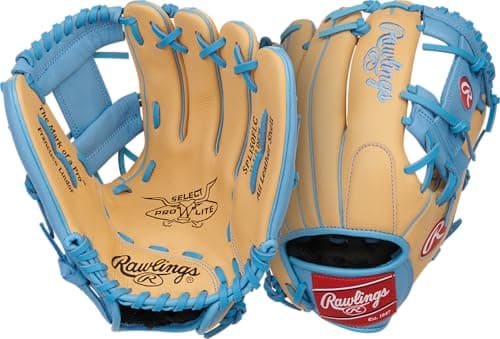 Rawlings Select Pro Lite 11.5 in (Francisco Lindor) An 11.5 in Pro I web on Rawlings' Youth Pro Taper frame, rated 10 on the maker's own break-in scale. Full infield size, and it still closes like a youth glove on day one. | Best glove for a 12-year-oldAges 10–12, 11.5 in | 9.0 /10 | $74.97Amazon |
| 2 | 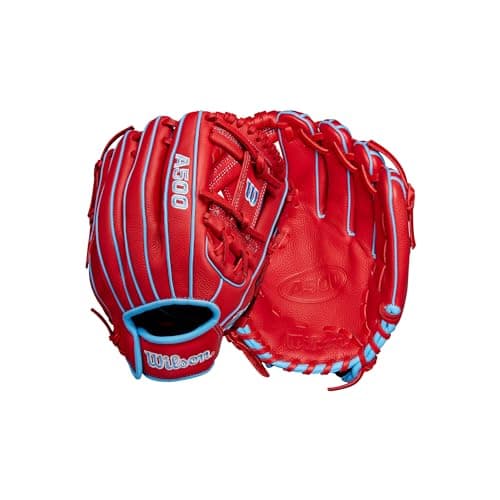 Wilson A500 11.5 in Utility The 11.5 in A500 in a utility pattern, for the 12-year-old whose position changes by inning. The listing is thinner on detail than Rawlings' own pages, and the card says so. | Best for a kid who plays everywhereAges 10–12, 11.5 in | 8.8 /10 | $55.72Amazon |
| 3 | 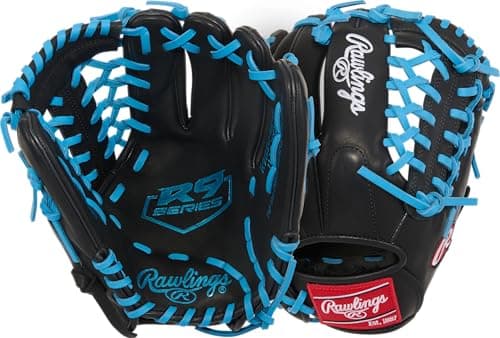 Rawlings R9 ContoUR 11.5 in All-leather, ContoUR small-hand fit, Modified Trap-Eze web, and a Player Break-In of 20 instead of 10. More glove than the Select Pro Lite, and a week of catch before it is game-ready. | Best glove he keeps into high schoolAges 10–13, 11.5 in | 8.6 /10 | $149.99Amazon |
| 4 | 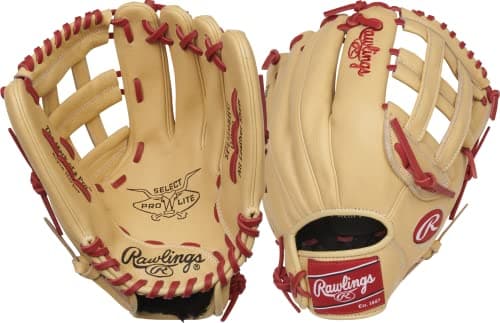 Rawlings Select Pro Lite 12 in (Bryce Harper, Pro H-Web) The 12 in Select Pro Lite in a stated Pro H-Web, which is the open pattern an outfielder actually wants. Same lightweight youth frame as the 11.5 in pick above. | Best for a 12-year-old outfielderAges 10-13 (12 in) | 8.6 /10 | $82.99Amazon |
| 5 | 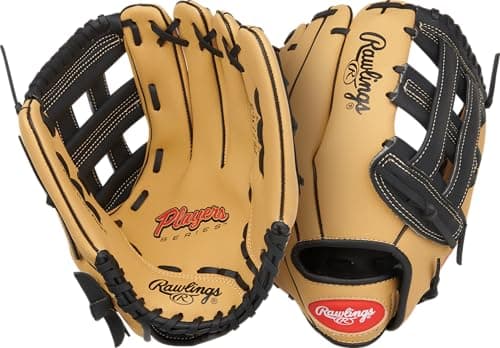 Rawlings Players Series 11.5 in The cheapest 11.5 in glove here that is a real glove. Right as a spare for the car or a second season of rec ball; the shell will not survive travel ball. | Best budget glove and best backupAges 9–11, 11.5 in | 8.4 /10 | $29.99Amazon |
| 6 | 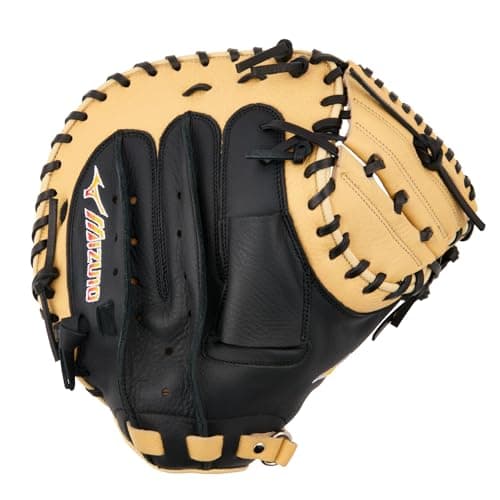 Mizuno Franchise Youth Catcher's Mitt 33.5 in A 33.5 in mitt, which is the size a 12U catcher needs once kid pitching has real velocity. Specs here come from a retailer listing rather than Mizuno's own page. | Best for a 12-year-old catcherAges 11–13, 33.5 in | 8.1 /10 | $95.00Amazon |
| 7 | 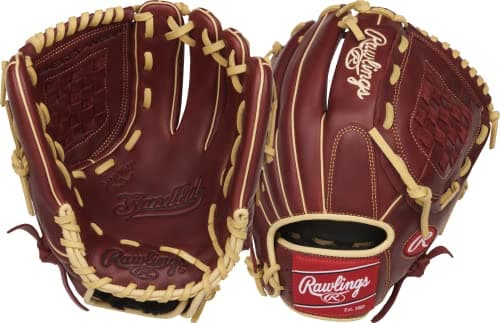 Rawlings Sandlot 12 in (Basket Web) A stiffer, more grown-up 12 in frame that will still fit at 15. It needs genuine break-in, so buy it in the fall and not the week before opening day. | Best step-up for a big 12-year-oldAges 12-14 (12 in) | 6.4 /10 | $79.84Amazon |
#ad · Prices come live from Amazon, last checked November 4, 2026. Scores are ours, built from the governing bodies' certification rules, the makers' sizing charts and published specs. Photos are illustrative stock. Tap a row for the full write-up.
What size glove a 12-year-old needs
The honest answer is a narrow range, and it is narrower than a sporting-goods wall suggests. At 12 the length is set by the position, not by how tall the kid is:
| Position at 12 | Glove size | Pattern |
|---|---|---|
| Infield (2B, 3B, SS) | 11.25–11.5 in | I web or similar tight pattern; shallow pocket |
| Pitcher | 11.5 in | Closed web only — an open web shows the batter the grip |
| Outfield | 12 in | Open H-web or trapeze; deeper pocket |
| First base | 12–12.5 in mitt | A first base mitt, which has no fingers |
| Catcher | 32.5–33.5 in mitt | A catcher's mitt, measured around the circumference |
| Plays everywhere | 11.5 in | Utility pattern; the compromise that is genuinely fine |
Note what is missing: 12.75 in, which is an adult outfield size and gets sold to 12-year-olds constantly. A 12-year-old with a 12.75 in glove is a 12-year-old who drops fly balls. If a chart in a store is pushing you there, it is fitting the inventory rather than the kid. The hand-measurement method, and how to read the length stamped on the glove itself, are on youth glove size chart.
One more thing about the number: glove length is measured from the heel to the top of the index finger along the outside of the glove, so it is not the same measurement as a hand size and it is not comparable between brands to the quarter inch. Treat 11.5 in as a band, not a specification. A Rawlings 11.5 in and a Wilson 11.5 in will not feel identical, and neither one is wrong.
What actually changes at 12
Three things change in the year a kid turns 12, and together they explain why this page does not read like the glove page for a 10-year-old.
- The ball arrives faster. At 12U, kid pitching is real pitching. A glove with a thin palm that was fine off a coach's arm at 9 now stings, and a kid who gets stung stops putting his hand in front of the ball. Palm padding stops being a luxury feature.
- He has a position. Coaches still move kids around, but by 12 most players have a spot they take most innings. That is the first year the position should decide the pattern rather than the other way around.
- The glove has to last. A 12-year-old is one or two seasons from an adult-size glove, so a good 11.5 in bought now can genuinely be the last youth glove you buy. That changes the math on spending more for leather.
What has not changed is his hand. A 12-year-old's hand is still small enough that closing force is the limit, which is why the top pick here is a youth-taper glove rather than the stiffest leather on the page.
Position decides the glove now
If he is an infielder, you want 11.25 to 11.5 in with a shallow pocket, because an infielder's whole job after the catch is getting the ball out of the glove in under a second. A deep outfield pocket actively works against that.
If he is an outfielder, you want the extra half inch and an open web, so he can track a high fly ball through the webbing instead of losing it behind the glove. The full argument, the sizes by age and which listings actually state their web pattern are on best youth outfield gloves.
If he pitches, the web must be closed. An open H-web lets a batter see his grip on the ball, and at this level that is a competitive problem rather than a rules problem — but it is a real one. A closed basket or Tartan web solves it.
If he catches or plays first base, he does not need a glove at all — he needs a mitt, and those are measured and sized differently. See best youth catcher's mitts and best youth first base mitts. The 33.5 in mitt ranked here is on this page because 12 is exactly the age at which a 31.5 in starter mitt stops being enough.
How these were ranked
Nobody on this site has broken in or played with any of these gloves, and we never claim to have. Every figure on the cards is quoted from the page it came from — Rawlings' own product pages where they exist, and a retailer listing for the Wilson and the Mizuno, because those two makers do not publish the same detail. Where a listing does not state a material or a web pattern, the card says so instead of filling the gap. The ranking follows the published glove rubric, in weight order:
- Size fit for the age (30%). Is this a full 11.5 in on a youth frame, or an adult glove in a short length? For a 12-year-old those are different products.
- Ease of close for small hands (25%). Still the thing that decides whether the glove gets used. A Rawlings Player Break-In of 10 scores high; a 20 scores well but costs you a week; a stiff adult-pattern frame scores low on a 12-year-old's hand.
- Leather and build quality (15%). As published. All-leather shells score high, soft synthetic-feel shells score low.
- Break-in effort (15%). Less effort scores higher, because a glove that is not ready until July is not a glove for this season.
- Value (15%). Price against the number of seasons it can plausibly cover.
That is why the most expensive glove on the page is not first and the cheapest is not last. The Select Pro Lite wins because it is the only pick that is full infield size, soft from the box and leather-laced on a youth taper. The R9 is the better piece of leather and finishes third because a 20 break-in and a higher price cost it on two metrics a 12-year-old actually feels. The weights are published on how we pick youth baseball gear.
Leather, break-in and the 20 vs 10 question
Rawlings publishes a Player Break-In number on its glove pages — 0 is game-ready, 100 is stiff pro leather — and it is the single most useful figure available to a parent buying online, because it is the one spec that predicts whether the glove works in week one. Two of the gloves here state it: the Select Pro Lite is a 10, the R9 ContoUR is a 20.
A 10 means he can play catch with it the evening it arrives. A 20 means a week of catch, or a weekend of deliberate work, before it closes properly. That gap matters more than it sounds: a 12-year-old handed a stiff glove in the first week of the season will blame himself for the drops.
The flip side is that the stiffer glove is usually the better one in two years. All-leather shells hold their shape and take a pocket that stays; soft synthetic-feel shells go floppy. So the real question is not which glove is better, it is when you are buying. A glove bought in November has all winter to break in, and the R9 or the Sandlot makes sense. A glove bought the week before opening day should be the softest real glove you can find, which is the Select Pro Lite.
Either way the method matters, and most of the internet is wrong about it: play catch with it, use a small amount of conditioner, never use heat. Full method on how to break in a baseball glove, and the products worth using on best baseball glove conditioner.
The two mistakes parents make at this age
The test takes ten seconds in the living room: glove on, no ball, one squeeze. If the thumb and the pinky meet cleanly with one hand, it fits. If he needs his other hand, or the glove folds in the middle instead of closing at the top, it is too much glove. That is a fit problem, and no amount of break-in fixes a fit problem.
For what the rest of the season costs — and where a glove honestly ranks in that list — see what a season of youth baseball costs.
Is this the last youth glove?
Often, yes, and that is worth thinking about before you pick. Most kids move to an adult-size glove — 11.5 to 11.75 in infield, 12.5 in outfield — somewhere between 14 and 15, which means a glove bought at 12 has two or three seasons to cover rather than one.
If he is 12 and big for his age, and genuinely committed, the stiffer frames here are a defensible buy: the Sandlot 12 in and the R9 are both gloves that still fit at 15. If he is 12 and average size, or still deciding whether he likes baseball, the Select Pro Lite or the Players Series is the right call and you can revisit it in two years.
If your kid throws left-handed, note that all seven gloves ranked here are right-hand-throw models, which is what most readers need. A left-handed thrower wears the glove on the right hand and needs a different listing — which is harder to order correctly than it should be, for reasons set out on left-handed youth gloves explained. And if he has unusually small hands for 12, the narrower-opening options are on best youth gloves for small hands.
One last piece of timing: 12 is also the year the bat decision gets complicated, because 13U caps the drop weight and 14U moves to BBCOR. If you are buying both at once, read best baseball bat for a 12-year-old before you spend, because the bat is the purchase with a legality trap in it and the glove is not. Same for the helmet, where the only thing that actually matters is the certification mark: see Rawlings Mach vs Easton Z5 2.0.
In detail
The picks, in full
Rank 1
Best glove for a 12-year-old
Rawlings Select Pro Lite 11.5 in (Francisco Lindor)
An 11.5 in Pro I web on Rawlings' Youth Pro Taper frame, rated 10 on the maker's own break-in scale. Full infield size, and it still closes like a youth glove on day one.
Spec sheetEvery figure sourced and linked
| Category | Youth glove |
|---|---|
| Fits | Ages 10–12, 11.5 in |
| Construction | Player Break-In 10 (maker's scale) |
| Material | Soft, lightweight leather shell; all-leather lace; palm and index finger padding |
| Sizes | 11.5 in |
| Web / pattern | Pro I web, Youth Pro Taper fit |
| Maker's age guidance | Age group: 12U, 10U, 8U |
How the 9.0 score breaks down
- Size fit for the age (30%)
- 10
- Ease of close for small hands (25%)
- 9
- Leather and build quality (15%)
- 8
- Break-in effort (15%)
- 9
- Value (15%)
- 8
What the spec sheet supports
- Pro I web, a proper infield pattern
- Youth taper on an 11.5 in glove
Where it falls short
- Lightweight leather is not the R9's leather
- No wrist strap
Skip this if…
…the kid is playing outfield; 11.5–12.25 in with an H or trapeze web fits better per the maker's table.
#ad · Price as of November 4, 2026 · Disclosure for the link to Rawlings Select Pro Lite 11.5 in (Francisco Lindor)
Rank 2
Best for a kid who plays everywhere
Wilson A500 11.5 in Utility
The 11.5 in A500 in a utility pattern, for the 12-year-old whose position changes by inning. The listing is thinner on detail than Rawlings' own pages, and the card says so.
Spec sheetEvery figure sourced and linked
| Category | Youth glove |
|---|---|
| Fits | Ages 10–12, 11.5 in |
| Sizes | 11.5 in (retailer listing) |
| Web / pattern | Utility (listing) |
How the 8.8 score breaks down
- Size fit for the age (30%)
- 10
- Ease of close for small hands (25%)
- 8
- Leather and build quality (15%)
- 9
- Break-in effort (15%)
- 8
- Value (15%)
- 8
What the spec sheet supports
- One glove for infield and outfield at this age
- A500 leather and welting
Where it falls short
- Break-in
- Listing detail is thinner than for the 11 in
Skip this if…
…the kid is a committed infielder; an 11–11.5 in I or H web is tidier.
#ad · Price as of November 4, 2026 · Disclosure for the link to Wilson A500 11.5 in Utility
Rank 3
Best glove he keeps into high school
Rawlings R9 ContoUR 11.5 in
All-leather, ContoUR small-hand fit, Modified Trap-Eze web, and a Player Break-In of 20 instead of 10. More glove than the Select Pro Lite, and a week of catch before it is game-ready.
Spec sheetEvery figure sourced and linked
| Category | Youth glove |
|---|---|
| Fits | Ages 10–13, 11.5 in |
| Construction | Player Break-In 20 (maker's scale) |
| Material | Soft, durable all-leather shell; leather lace; padded fingerback liners; reinforced palm pad |
| Sizes | 11.5 in |
| Web / pattern | Modified Trap-Eze web, ContoUR fit |
| Closure | Adjustable pull-lace wrist |
| Maker's age guidance | Age group: 14U, 12U, 10U, 8U |
How the 8.6 score breaks down
- Size fit for the age (30%)
- 10
- Ease of close for small hands (25%)
- 8
- Leather and build quality (15%)
- 9
- Break-in effort (15%)
- 8
- Value (15%)
- 7
What the spec sheet supports
- Small-hand fit on a full-size youth pattern
- All-leather build that survives travel ball
Where it falls short
- Break-in needed
- Trapeze web is more outfield/utility than pure infield
Skip this if…
…the kid is under 9; the 11 in R9 or Select Pro Lite fits better.
#ad · Price as of November 4, 2026 · Disclosure for the link to Rawlings R9 ContoUR 11.5 in
Rank 4
Best for a 12-year-old outfielder
Rawlings Select Pro Lite 12 in (Bryce Harper, Pro H-Web)
The 12 in Select Pro Lite in a stated Pro H-Web, which is the open pattern an outfielder actually wants. Same lightweight youth frame as the 11.5 in pick above.
Spec sheetEvery figure sourced and linked
| Category | Youth glove |
|---|---|
| Fits | Ages 10-13 (12 in) |
| Sizes | 12 in (listing) |
| Fits (maker) | Select Pro Lite youth series; Bryce Harper model; right hand throw (listing) |
| Web / pattern | Pro H-Web — an open H pattern (listing) |
How the 8.6 score breaks down
- Size fit for the age (30%)
- 10
- Ease of close for small hands (25%)
- 9
- Leather and build quality (15%)
- 7
- Break-in effort (15%)
- 9
- Value (15%)
- 6
What the spec sheet supports
- A genuine open H-web, which lets a kid see the ball through the glove on a high fly
- Select Pro Lite is Rawlings' lightweight youth frame, so a 12 in glove still closes in a 12-year-old's hand
- Sold as a youth model rather than an adult glove in a small size
Where it falls short
- The most expensive glove on this page
- A signature colorway dates faster than a plain glove
- The listing does not state the leather grade, so break-in effort is unknown until it arrives
Skip this if…
…your kid plays mostly infield; an 11 to 11.5 in glove closes faster and that matters more at second base.
#ad · Price as of November 4, 2026 · Disclosure for the link to Rawlings Select Pro Lite 12 in (Bryce Harper, Pro H-Web)
Rank 5
Best budget glove and best backup
Rawlings Players Series 11.5 in
The cheapest 11.5 in glove here that is a real glove. Right as a spare for the car or a second season of rec ball; the shell will not survive travel ball.
Spec sheetEvery figure sourced and linked
| Category | Youth glove |
|---|---|
| Fits | Ages 9–11, 11.5 in |
| Material | Soft, pliable shell; soft felt padding |
| Sizes | 11.5 in |
| Fits (maker) | Rawlings sizing table: Youth 7–12, infield 10.25–11.5 in, outfield 11.5–12.25 in |
| Web / pattern | Pro H web, Youth Pro Taper fit, conventional back |
How the 8.4 score breaks down
- Size fit for the age (30%)
- 9
- Ease of close for small hands (25%)
- 9
- Leather and build quality (15%)
- 4
- Break-in effort (15%)
- 9
- Value (15%)
- 10
What the spec sheet supports
- 11.5 in at an entry price
- Youth Pro Taper keeps the hand opening small
Where it falls short
- Shell quality is a step below the Sure Catch and Select Pro Lite
- Not a glove for travel ball
Skip this if…
…the kid plays more than a rec season; the Select Pro Lite is worth the difference.
#ad · Price as of November 4, 2026 · Disclosure for the link to Rawlings Players Series 11.5 in
Rank 6
Best for a 12-year-old catcher
Mizuno Franchise Youth Catcher's Mitt 33.5 in
A 33.5 in mitt, which is the size a 12U catcher needs once kid pitching has real velocity. Specs here come from a retailer listing rather than Mizuno's own page.
Spec sheetEvery figure sourced and linked
| Category | Catcher's mitt |
|---|---|
| Fits | Ages 11–13, 33.5 in |
| Sizes | 33.5 in (retailer listing) |
How the 8.1 score breaks down
- Size fit for the age (30%)
- 9
- Ease of close for small hands (25%)
- 7
- Leather and build quality (15%)
- 9
- Break-in effort (15%)
- 7
- Value (15%)
- 8
What the spec sheet supports
- Full 33.5 in pocket for kid-pitch velocity at 12U
- Mizuno leather
Where it falls short
- Retailer-sourced specs
- Break-in
Skip this if…
…the kid is under 10.
#ad · Price as of November 4, 2026 · Disclosure for the link to Mizuno Franchise Youth Catcher's Mitt 33.5 in
Rank 7
Best step-up for a big 12-year-old
Rawlings Sandlot 12 in (Basket Web)
A stiffer, more grown-up 12 in frame that will still fit at 15. It needs genuine break-in, so buy it in the fall and not the week before opening day.
Spec sheetEvery figure sourced and linked
| Category | Youth glove |
|---|---|
| Fits | Ages 12-14 (12 in) |
| Sizes | 12 in (listing) |
| Fits (maker) | Sandlot Series; right hand throw (listing) |
| Web / pattern | Basket web — a closed pattern (listing) |
How the 6.4 score breaks down
- Size fit for the age (30%)
- 7
- Ease of close for small hands (25%)
- 5
- Leather and build quality (15%)
- 9
- Break-in effort (15%)
- 4
- Value (15%)
- 7
What the spec sheet supports
- The Sandlot line is built on a stiffer, more grown-up frame, which lasts past one season
- States its web pattern, which half the listings on this page do not
Where it falls short
- Needs real break-in; a 10-year-old will not close it unaided
- A basket web is closed, so it is not a true outfield pattern
- Priced with the signature youth gloves without being youth-specific
Skip this if…
…your kid is 10 or 11; buy a Select Pro Lite and let him close the glove.
#ad · Price as of November 4, 2026 · Disclosure for the link to Rawlings Sandlot 12 in (Basket Web)
Before you buy
- Ask him what position he actually plays. Most innings, not his favorite. Infield means 11.5 in, outfield means 12 in, catcher means a mitt. Everything else follows from that answer.
- Do the squeeze test. One hand, no ball, thumb to pinky. If he cannot do it, the glove is too big — and that is not something a week of catch fixes.
- Check the throwing hand on the listing twice. “Right hand throw” means the glove goes on the left hand. Every glove ranked here is right-hand-throw.
- Match the break-in to the calendar. Buying in the off-season? Take the stiffer leather. Buying in the last week before opening day? Take the glove that is soft out of the box.
- Do not buy 12.75 in. It is an adult size. The 12 in outfield pick here is already the top of the sensible range for a 12-year-old.
- Budget for the conditioner, not the upgrade. A small tub of conditioner and twenty minutes a week does more for a glove than the next price tier up.
A word on the prices you see here
The numbers on the cards are pulled live and they move, so read them as brackets rather than figures: the Players Series sits alone at the bottom, the Wilson A500 next, then the two Select Pro Lite gloves and the Sandlot in the middle of the youth range, with the Mizuno catcher's mitt and the all-leather R9 at the top. Check the number on the card on the day you order rather than trusting any figure written into prose.
Side by side
| Evidence | Rawlings Select Pro Lite 11.5 in (Francisco Lindor) | Rawlings R9 ContoUR 11.5 in |
|---|---|---|
| Sizes | 11.5 in | 11.5 in |
| Web / pattern | Pro I web, Youth Pro Taper fit | Modified Trap-Eze web, ContoUR fit |
| Material | Soft, lightweight leather shell; all-leather lace; palm and index finger padding | Soft, durable all-leather shell; leather lace; padded fingerback liners; reinforced palm pad |
| Construction | Player Break-In 10 (maker's scale) | Player Break-In 20 (maker's scale) |
| Score | 9.0/10 | 8.6/10 |
Same length, same maker, two different purchases. The Select Pro Lite is a Pro I web on the Youth Pro Taper frame at a break-in rating of 10, so it is a glove he can use immediately and will probably outgrow at 14. The R9 ContoUR is an all-leather shell with a reinforced palm and a Modified Trap-Eze web at a break-in rating of 20 — more glove, more work, and the one that is still on his hand in high school. Buy the first if the season starts next week; buy the second in the fall.
How we picked these
Researched, certification-checked and sized for the age
Every pick on this page earns its place the same way: the certification is checked against the governing bodies' rules and the maker's stated stamp, so the gear is legal for the division it is bought for; sizing comes from the makers' own age, height and hand charts; the published specs (drop, barrel, construction, closure, cleat type) are read from the maker's page; and the patterns in verified buyer reviews sharpen the “best for” line on each card. Every figure links to where it came from, with the date.
Scores are editorial judgments built from that documented research, applied with the same weights to every product in a category, so the ranking is comparable top to bottom. Commissions never set a score or decide a pick. The rubric and its weights are published.
Corrections & updates
- Page published. Sizes, web patterns, materials and break-in ratings quoted from each maker's product page where one exists, and from the cited retailer listing for the Wilson A500 and the Mizuno Franchise mitt, which Wilson and Mizuno do not document to the same level.
Questions parents ask
Frequently asked
What size baseball glove does a 12-year-old need?
What is the best baseball glove for a 12-year-old?
Should a 12-year-old use an adult glove?
Is an 11.5 inch glove too small for a 12-year-old?
How long does a glove last at this age?
Does a 12-year-old pitcher need a different glove?
How much should I spend on a glove for a 12-year-old?
Keep reading
Related on Bat & Bucket
- Youth glove size chartMeasure before you order.
- Best gloves for a 10-year-oldThe step below this page.
- Best youth outfield glovesIf he is out there most innings.
- Best youth catcher's mittsIf he is behind the plate.
- How to break in a baseball gloveWhat the 10 and 20 ratings mean in practice.
- Best bat for a 12-year-oldThe other half of the same shopping trip.
Receipts
Sources
- Rawlings: Select Pro Lite 11.5-inch Lindor youth glove
- Rawlings: R9 ContoUR 11.5-inch glove
- Rawlings: Players Series 11.5-inch youth glove
- Amazon listing: Rawlings Select Pro Lite youth baseball glove, Bryce Harper model, Pro H-Web, 12 in, right hand throw (read 2026-10-28)
- Amazon listing: Rawlings Sandlot Series baseball glove, 12 in, basket web, right hand throw (read 2026-10-28)
- Academy: Wilson A500 11.5-inch youth utility glove listing
- Headbanger Sports: Mizuno Franchise 33.5-inch youth catcher's mitt listing
- Rawlings: R9 ContoUR 11-inch youth glove (specs, glove size by age table)
Certification rules come from the governing bodies' own pages (Little League, USA Baseball, USSSA, NOCSAE), sizes from the makers' published sizing charts, and specs from the maker's product page or the retailer listing named on each product. Every figure above links to the page it was read from, with the date. Amazon prices move often, so each buy button takes you to the current price. Read the full method.