Gloves & Mitts · Guide
Left-handed youth baseball gloves: what LHT means and what to buy
More gloves get returned over throwing hand than over size. The labelling is genuinely confusing — a left-handed kid wears the glove on his right hand and the listing calls it a left-hand-throw glove — and the stock is thinner, so the mistake costs you a week. Here is the labelling, the test that settles which hand he throws with, and where being left-handed is actually an advantage.
By Mike M.Updated Researched · every figure sourced
#adReader-supported: we may earn a commission if you buy through our links, at no extra cost to you. It never decides a pick. How we pick · Disclosure
What left hand throw actually means
This is the single most returned detail in youth gear and the reason is the wording. A parent reads “left hand” and pictures the glove going on the left hand, which is exactly backwards. Some retailers compound it by listing “Worn on right hand” in the description while the title says left hand throw, which reads like a contradiction and is not.
One more wrinkle worth knowing: throwing hand has nothing to do with batting side. Plenty of kids throw right-handed and bat left-handed, and a few do the reverse. Buy the glove for the throwing hand and ignore which side of the plate he stands on. The bat is a separate decision entirely.
Working out which hand he throws with
With a four-year-old this is genuinely not obvious, and the answer is not always the hand he writes with. Three tests, none of which require a field.
- The surprise throw. Roll a ball to him on the floor and ask him to throw it back without thinking about it. Do it five times. The hand he picks under no pressure is almost always the throwing hand.
- The reach test. Hold a ball out at his chest height, centred, and let him take it. Repeat. A clear preference shows up quickly.
- The glove swap. If he already has a glove, put it on the other hand and play catch for five minutes. Kids who have been handed the wrong glove usually look relieved rather than confused.
If he is genuinely ambidextrous at five — some are — buy for the hand he throws harder with, not the hand he catches better with. Catching is learned and throwing is closer to wired, and a kid who throws with his weaker arm is fighting the game for years.
Why left-handed gloves are harder to find
Roughly one in ten people is left-handed, so makers build and distribute LHT gloves in proportion and retailers stock them accordingly. The practical consequences are consistent across the category:
| What changes | What it means for you |
|---|---|
| Fewer sizes stocked | The exact size you want may only exist in one or two models rather than ten |
| Fewer colourways | The glove he picked out in a photo may not exist left-handed |
| Sometimes a higher price | Separate listing, thinner demand; the left-hand version is occasionally priced above the right |
| Sells out and stays out | Restocks are slower, so order in winter rather than the week before the first practice |
| Fewer in-store options | Big-box shelves carry mostly right-handed; online is usually the only real choice |
None of this changes what you should be looking for. The size, the pattern and the ease of closing are exactly the same decisions as for a right-hander — the chart is on the youth glove size chart and the closing question is on gloves for small hands. What changes is the lead time.
The positions a left-hander plays
Worth knowing before you buy, because it decides what kind of glove he ends up needing. Left-handed players are standard at first base, in the outfield and on the mound. They are very rare at second base, shortstop and third base, for a mechanical reason rather than a prejudice: a left-handed infielder has to turn his body all the way around to throw to first, which costs him the half-second the play is decided in.
Catcher is the other one. Left-handed catchers exist but almost nobody develops one, partly because the throw to third crosses a right-handed batter and partly because catcher's mitts in LHT are genuinely hard to find at youth sizes. If your left-handed kid wants to catch, start with whether the gear exists in his size before you start with whether it is a good idea.
At eight or nine none of this matters much — kids rotate everywhere and coaches are not optimising. By eleven or twelve it does, and a left-handed kid is usually being pointed at first base, the outfield or the mound. That is the point at which the glove purchase gets more specific.
First base: where left-handed is an advantage
First base is the one position where being left-handed is a genuine edge. The glove hand is on the infield side, which makes the sweep tag and the throw to second natural rather than awkward, and the stretch toward a throw from the left side of the diamond opens rather than closes.
It is also the one place where left-handed mitts are reliably stocked, for the obvious reason that so many first basemen are lefties. Of the youth first base mitts on this site, Mizuno's Prospect GXF102 lists right-hand-throw and left-hand-throw as separate listings with both stocked — that is unusual enough to be worth saying out loud. The Rawlings Select Pro Lite first base mitt also has a left-hand version listed separately, though it is less consistently available.
A first base mitt is a different object from a fielding glove: no individual fingers, a scoop-shaped pocket and a longer pattern. It is not a glove he can play shortstop with, so most families end up owning both by about eleven. The full ranked field is on best youth first base mitts.
Four patterns to look for
These are the patterns worth searching for in a left-hand-throw listing: two general-purpose youth fielding gloves and two first base mitts, because those are the two things a left-handed youth player most often needs. Filter or search for “Left Hand Throw” before you order — the right-handed version of each is the default listing.
Our picks for this
Patterns worth looking for in LHT
Sizes and patterns are quoted from the maker or the retailer listing. Throwing-hand availability varies by size and colour, so confirm the listing says Left Hand Throw before you buy.
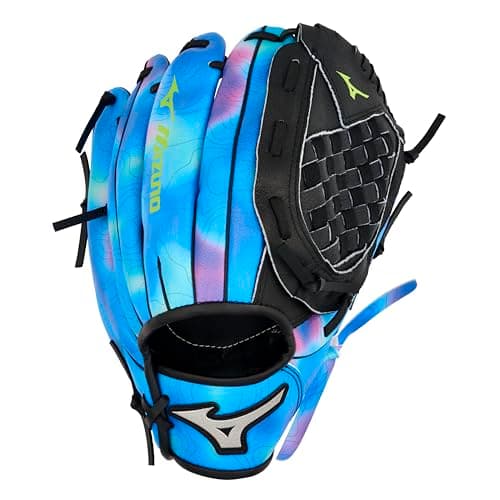
Best easy-close glove for 7–10
Mizuno Prospect PowerClose 11 in
Ages 7–10, 11 in9.1/10Eleven inches with the PowerClose hinge. The general youth pattern to look for at seven to ten, left-handed or right.
$55.00Amazon#ad · Price as of November 3, 2026 · Disclosure for the link to Mizuno Prospect PowerClose 11 in
Best youth glove overall
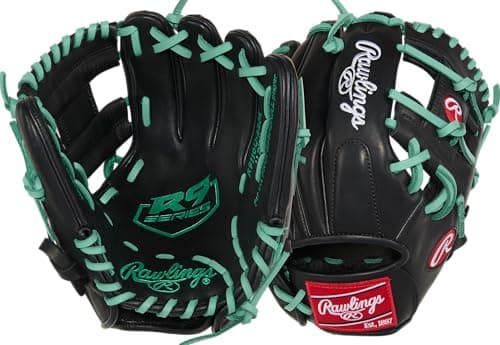
Rawlings R9 ContoUR 11 in
Ages 8–12, 11 in8.6/10Eleven inches with a Pro I web and the ContoUR fit's narrower hand opening. The step up for an eight- to twelve-year-old who plays regularly.
$149.99Amazon#ad · Price as of November 3, 2026 · Disclosure for the link to Rawlings R9 ContoUR 11 in
Best first base mitt for 10-13
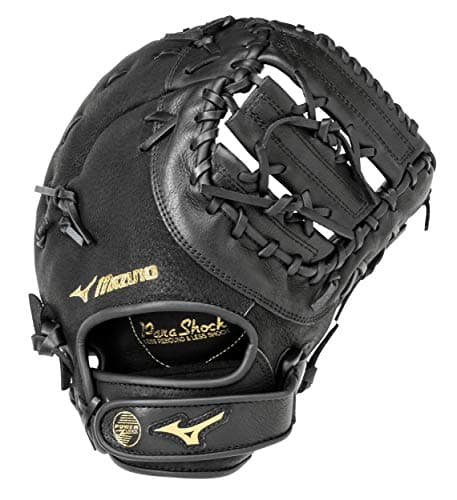
Mizuno Prospect GXF102 First Baseman's Mitt (12 in)
Ages 10-138.2/10The one mitt here whose listing states that right-hand-throw and left-hand-throw are both stocked as separate listings. A 12 in youth first base pattern for a 10- to 13-year-old.
$74.99Amazon#ad · Price as of November 3, 2026 · Disclosure for the link to Mizuno Prospect GXF102 First Baseman's Mitt (12 in)
Best youth first base mitt overall
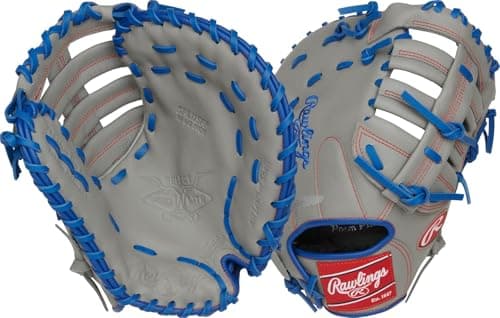
Rawlings Select Pro Lite First Base Mitt (11.5 in)
Ages 8-118.6/10Eleven and a half inches, single-post web, Select Pro Lite youth pattern. The listing notes the left-hand version is sold as a separate listing.
$74.99Amazon#ad · Price as of November 3, 2026 · Disclosure for the link to Rawlings Select Pro Lite First Base Mitt (11.5 in)
How not to order the wrong one
Three habits that prevent almost every returned glove. First, read the title rather than the photo: product photography is regularly mirrored or reused across both versions, and the image is not evidence. Second, search the exact phrase “left hand throw” rather than “left handed”, which returns left-handed batting gloves and left-handed bats as well. Third, check the variant you are actually adding to the basket — on most marketplaces throwing hand, size and colour are separate variants and switching the colour can silently switch you back to right-handed.
And order early. A right-handed glove is available all year; the left-handed version of the same model in the size you want may have a four-week gap in stock. If the glove is a Christmas present for a March season, that is fine. If you are buying it the week tryouts start, it is not.
Once it arrives, everything else is the same as for any other glove: run the squeeze test, condition it, and get a few hundred catches into it before the first practice. That is on how to break in a baseball glove.
How we picked these
Researched, certification-checked and sized for the age
Every pick on this page earns its place the same way: the certification is checked against the governing bodies' rules and the maker's stated stamp, so the gear is legal for the division it is bought for; sizing comes from the makers' own age, height and hand charts; the published specs (drop, barrel, construction, closure, cleat type) are read from the maker's page; and the patterns in verified buyer reviews sharpen the “best for” line on each card. Every figure links to where it came from, with the date.
Scores are editorial judgments built from that documented research, applied with the same weights to every product in a category, so the ranking is comparable top to bottom. Commissions never set a score or decide a pick. The rubric and its weights are published.
Questions parents ask
Frequently asked
What does left hand throw mean on a baseball glove?
Which hand does a left-handed kid wear a baseball glove on?
How do I know which hand my kid throws with?
Are left-handed baseball gloves more expensive?
Can a left-handed kid play shortstop or third base?
Is being left-handed an advantage at first base?
Keep reading
Related on Bat & Bucket
Receipts
Sources
- Mizuno: Prospect Series PowerClose 11-inch glove
- Rawlings: R9 ContoUR 11-inch youth glove (specs, glove size by age table)
- Amazon listing: Mizuno GXF102 Youth Prospect first baseman's mitt, 12 in, right hand throw (read 2026-10-14)
- Amazon listing: Rawlings Select PRO LITE Series youth first base mitt, 11.5 in, right hand throw, Freddie Freeman single-post web, grey (read 2026-10-14)
- Official Baseball Rules 3.05 (formerly 1.13): the first baseman's glove or mitt may be no more than 13 in long from top to bottom and 8 in wide across the palm, with webbing no more than 5 in from top to the base of the thumb crotch (read 2026-10-14)
Certification rules come from the governing bodies' own pages (Little League, USA Baseball, USSSA, NOCSAE), sizes from the makers' published sizing charts, and specs from the maker's product page or the retailer listing named on each product. Every figure above links to the page it was read from, with the date. Amazon prices move often, so each buy button takes you to the current price. Read the full method.