Gloves & Mitts · The picks
Best youth outfield gloves for a 10- to 14-year-old
An outfield glove is longer than an infield glove for one reason: reach. It is also harder for a kid to close, which is why buying the biggest glove in the store is the classic parent mistake. Here is the size that is actually right at each age, what the web pattern changes, and seven gloves that are in stock.
By Mike M.Updated Researched · every figure sourced
#adReader-supported: we may earn a commission if you buy through our links, at no extra cost to you. It never decides a pick. How we pick · Disclosure
Quick picks
The rankings at a glance
| # | Product | Best for | Score | Price |
|---|---|---|---|---|
| 1 | 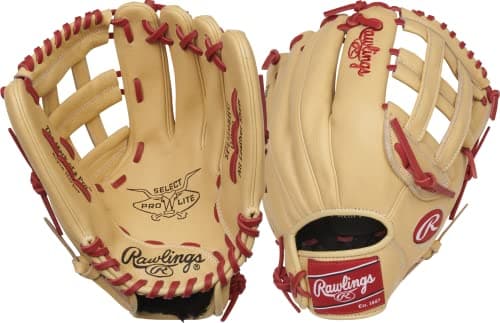 Rawlings Select Pro Lite 12 in (Bryce Harper, Pro H-Web) The only glove here that is both a youth-specific frame and a stated open outfield web. 12 in, Pro H-Web, on the lightweight Select Pro Lite pattern a 12-year-old can actually close. | Best youth outfield gloveAges 10-13 (12 in) | 8.6 /10 | $82.99Amazon |
| 2 | 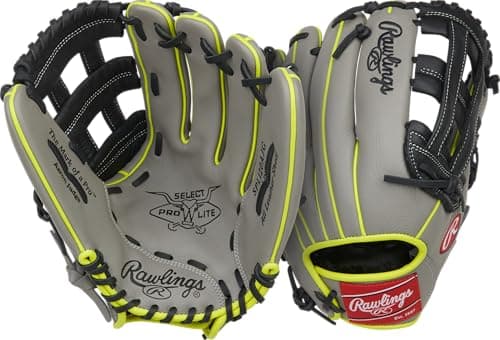 Rawlings Select Pro Lite 12 in (Aaron Judge) Same lightweight 12 in Select Pro Lite frame as the Harper, in gray and black and usually cheaper. The listing does not state its web pattern. | Best plainer alternativeAges 10-13 (12 in) | 8.3 /10 | $66.95Amazon |
| 3 | 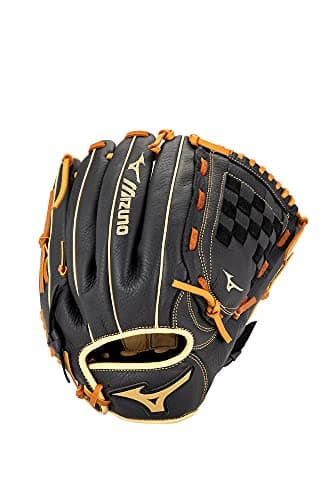 Mizuno Prospect Select GPSL1201 12 in (Tartan Web) Mizuno's 12 in youth glove, listed for pitcher and outfield. A closed Tartan web is the one pattern a pitcher is allowed, so this covers both positions legally. | Best for a kid who also pitchesAges 10-13 (12 in) | 8.0 /10 | $70.00Amazon |
| 4 | 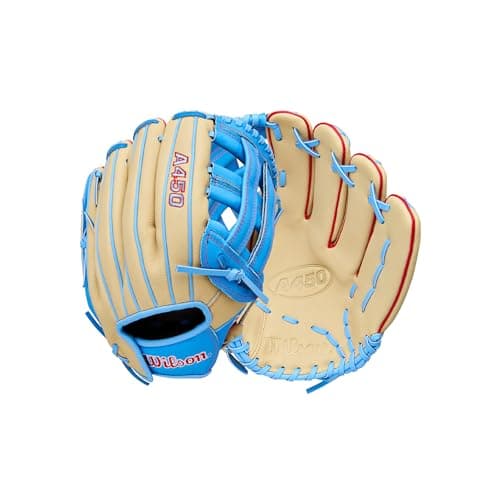 Wilson A450 12 in (2026) The 12 in size of Wilson's current A450 youth line at well under the signature Rawlings gloves. Web pattern unstated on the listing. | Best value from a major makerAges 10-13 (12 in) | 7.9 /10 | $59.94Amazon |
| 5 | 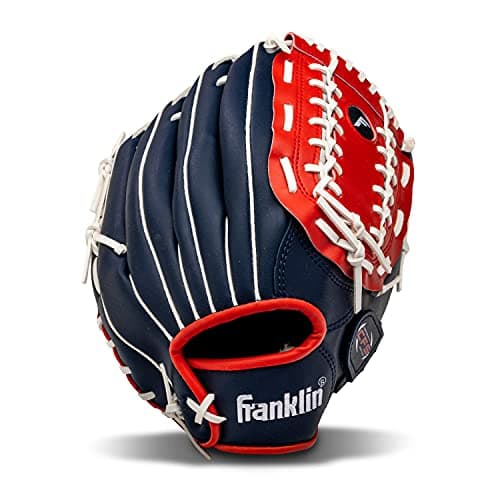 Franklin Field Master USA Series 12 in A 12 in synthetic-feel glove for about the price of a bucket of balls. Right for one season of finding out; wrong for a kid who has settled in the outfield. | Cheapest way to try the positionAges 9-12 (12 in) | 7.8 /10 | $23.99Amazon |
| 6 | 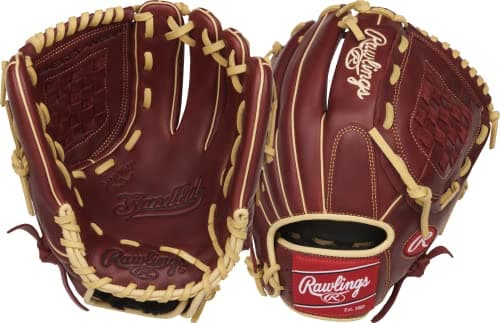 Rawlings Sandlot 12 in (Basket Web) A stiffer, more grown-up 12 in frame in the basket web. Will not be closed by a 10-year-old, and will still be here when a 13-year-old is 15. | Best for a 13-year-oldAges 12-14 (12 in) | 6.4 /10 | $79.84Amazon |
| 7 | 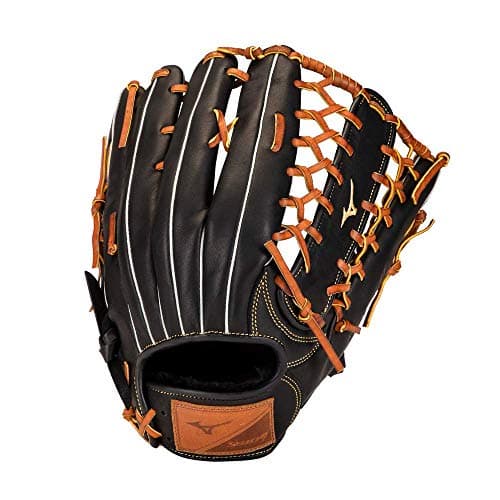 Mizuno Select 9 GSN1250 12.5 in Outfield A true 12.5 in glove sold as an outfield glove rather than a youth glove. The length a high-school outfielder uses, so it does not need replacing at 15. | Best step-up at 13 or 14Ages 13 and up (12.5 in) | 5.7 /10 | $115.90Amazon |
#ad · Prices come live from Amazon, last checked November 3, 2026. Scores are ours, built from the governing bodies' certification rules, the makers' sizing charts and published specs. Photos are illustrative stock. Tap a row for the full write-up.
What size outfield glove by age
Outfield gloves are sold in a narrow band of sizes and the youth end of it is narrower still. Here is the honest version, which is less exciting than the one on a store shelf:
| Age | Outfield glove size | Reality check |
|---|---|---|
| Under 9 | None — use his regular glove | At this age nobody plays a position consistently and he cannot close 12 in |
| 9-10 | 11.5 in, or 12 in if he is big | A 12 in is borderline; ease of close matters more than reach |
| 11-13 | 12 in | The size this page is built around |
| 13-14 | 12 in, or 12.5 in for a big kid staying in the outfield | 12.5 in is the length he will keep into high school |
Note what is not in that table: 12.75 in, which is a common adult outfield size and has no business on a 12-year-old's hand. If a size chart in a store tells you a 12-year-old outfielder needs a 12.75 in glove, it is selling you a glove rather than fitting one.
Measure before you order. The hand-and-age tables, and how to read the length that is actually printed on a glove, are on youth glove size chart.
Why an outfield glove is longer
An outfield glove is 12 to 12.75 in where an infield glove is 11 to 11.75 in, and the extra length buys exactly one thing: reach on a ball that is already past him. That is the whole trade.
An infielder needs the glove to open and close fast, because a ground ball arrives and has to be transferred to the throwing hand in a fraction of a second. He does not need reach — he needs quickness. An outfielder has three or four seconds while the ball is in the air and almost never needs a fast transfer. What he needs is the ball to end up in the glove at full stretch, so he gets a longer glove with a deeper pocket.
Which means the position actually decides the glove, not the age. A kid who plays second base and the outfield in the same season is better served by one 11.5 in glove than by a compromise, and the first-base and catcher positions need their own equipment entirely — those are on best youth first base mitts and best youth catcher's mitts.
Open web vs closed web
This is the spec that separates a real outfield glove from a 12 in infield glove, and it is the one most listings do not bother to state.
- Open web (H-web, trapeze, two-piece). Gaps between the laces. On a high fly ball into the sun, a kid can track the ball through the webbing instead of losing it behind the glove. That is the genuine outfield advantage, and it is why outfielders at every level use open patterns.
- Closed web (basket, Tartan, modified trap). A solid panel of leather or lacing. No sight line through the glove, but a deeper, more secure pocket — and, critically, it is the only pattern a pitcher may use, because an open web lets a batter see the grip on the ball.
If your kid pitches at all, the closed web is not a compromise — it is the requirement. The Mizuno Prospect Select is listed for pitcher and outfield for exactly this reason and is the sensible single purchase for a kid who does both.
How these were ranked
Nobody on this site has worn, broken in or caught a ball in any of these gloves, and we never claim to have. Every figure is quoted from the live listing it came from, read on 28 October 2026 through the Amazon catalog; four of the seven listings do not state a web pattern and two do not state the material, and the cards say so. The ranking follows the published glove rubric, in weight order:
- Size fit for the age (30%). Is it a 12 in glove built on a youth frame, or an adult glove in a short length? These are not the same product and a 12-year-old can only close one of them.
- Ease of close for small hands (25%). The single thing that decides whether a glove gets used. A lightweight youth pattern scores high here; a stiff full-grain adult frame scores low on a kid's hand even when it is the better glove in the abstract.
- Leather and build quality (15%). As published. A synthetic-leather feel scores low; a line the maker positions as full-grain scores high. Where the listing is silent, the score reflects that uncertainty.
- Break-in effort (15%). Lower effort scores higher for a youth glove, because a glove a kid cannot close is not a glove he can use this season.
- Value (15%). Price against how many seasons it can plausibly cover.
That rubric is why the cheapest glove here is not last and the most expensive is not first: the Franklin scores well on ease of close and value and badly on leather, and the 12.5 in Mizuno scores well on build and badly on fit for the age this page is written for. The weights are published on how we pick youth baseball gear.
The mistake almost every parent makes
The test is simple and you can do it on the floor of the living room: he puts the glove on, and squeezes it shut with no ball in it. If the thumb and the pinky meet cleanly with one squeeze, it fits. If he has to use his other hand, or the glove folds in the middle instead of closing at the top, it is too much glove. That is a fit problem, not a break-in problem, and no amount of oil fixes it.
Does a 10-year-old even need one?
Often not, and that is worth saying before you spend $80. At 10 most coaches move kids around the field every inning, so a dedicated outfield glove spends half the game being the wrong tool. One good 11.5 in glove covers the whole diamond at that age — the options are on best youth baseball gloves and, by age, on best gloves for a 10-year-old.
An outfield glove starts to make sense when two things are true: he is 11 or older, and he is genuinely playing the outfield most innings rather than being rotated through it. If he has asked for one because a teammate has one, the cheapest glove on this page is the honest answer, not the most expensive.
Break-in: an outfield glove is different
An infield glove wants a shallow, fast pocket. An outfield glove wants a deep one, and that changes how you break it in: the fold should run across the top of the glove rather than through the middle, and the pocket should be formed deep, toward the base of the fingers.
The practical method — a ball tied into the pocket, how much conditioner is too much, and why a microwave is never the answer — is on how to break in a baseball glove, and the conditioners worth buying are on best baseball glove conditioner. One caution specific to this page: the stiffer Sandlot frame genuinely needs that work, while the Select Pro Lite gloves and the Franklin arrive soft and need almost none.
If your kid throws left-handed, note that every glove ranked here is a right-hand-throw model, which is what the large majority of readers need — a left-handed thrower wears the glove on his right hand and needs a different listing. Why that is harder than it should be, and how to avoid ordering the wrong one, is on left-handed youth gloves explained.
In detail
The picks, in full
Rank 1
Best youth outfield glove
Rawlings Select Pro Lite 12 in (Bryce Harper, Pro H-Web)
The only glove here that is both a youth-specific frame and a stated open outfield web. 12 in, Pro H-Web, on the lightweight Select Pro Lite pattern a 12-year-old can actually close.
Spec sheetEvery figure sourced and linked
| Category | Youth glove |
|---|---|
| Fits | Ages 10-13 (12 in) |
| Sizes | 12 in (listing) |
| Fits (maker) | Select Pro Lite youth series; Bryce Harper model; right hand throw (listing) |
| Web / pattern | Pro H-Web — an open H pattern (listing) |
How the 8.6 score breaks down
- Size fit for the age (30%)
- 10
- Ease of close for small hands (25%)
- 9
- Leather and build quality (15%)
- 7
- Break-in effort (15%)
- 9
- Value (15%)
- 6
What the spec sheet supports
- A genuine open H-web, which lets a kid see the ball through the glove on a high fly
- Select Pro Lite is Rawlings' lightweight youth frame, so a 12 in glove still closes in a 12-year-old's hand
- Sold as a youth model rather than an adult glove in a small size
Where it falls short
- The most expensive glove on this page
- A signature colorway dates faster than a plain glove
- The listing does not state the leather grade, so break-in effort is unknown until it arrives
Skip this if…
…your kid plays mostly infield; an 11 to 11.5 in glove closes faster and that matters more at second base.
#ad · Price as of November 3, 2026 · Disclosure for the link to Rawlings Select Pro Lite 12 in (Bryce Harper, Pro H-Web)
Rank 2
Best plainer alternative
Rawlings Select Pro Lite 12 in (Aaron Judge)
Same lightweight 12 in Select Pro Lite frame as the Harper, in gray and black and usually cheaper. The listing does not state its web pattern.
Spec sheetEvery figure sourced and linked
| Category | Youth glove |
|---|---|
| Fits | Ages 10-13 (12 in) |
| Sizes | 12 in (listing) |
| Fits (maker) | Select Pro Lite Series youth glove; Aaron Judge model; right hand throw; Grey/Black as the listing titles it (listing) |
How the 8.3 score breaks down
- Size fit for the age (30%)
- 8
- Ease of close for small hands (25%)
- 9
- Leather and build quality (15%)
- 7
- Break-in effort (15%)
- 9
- Value (15%)
- 8
What the spec sheet supports
- Same youth-specific Select Pro Lite frame as the Harper glove, normally cheaper
- Gray and black will not look dated in two seasons
Where it falls short
- The listing does not name the web pattern, so you cannot confirm it is an open outfield web before it arrives
- Signature models get discontinued when the endorsement moves on, so a replacement in two years may not exist
Skip this if…
…the web pattern matters to you and you will not accept a surprise; buy the Pro H-Web Harper listing, which states it.
#ad · Price as of November 3, 2026 · Disclosure for the link to Rawlings Select Pro Lite 12 in (Aaron Judge)
Rank 3
Best for a kid who also pitches
Mizuno Prospect Select GPSL1201 12 in (Tartan Web)
Mizuno's 12 in youth glove, listed for pitcher and outfield. A closed Tartan web is the one pattern a pitcher is allowed, so this covers both positions legally.
Spec sheetEvery figure sourced and linked
| Category | Youth glove |
|---|---|
| Fits | Ages 10-13 (12 in) |
| Sizes | 12 in (listing) |
| Fits (maker) | Prospect Select Series, listed as pitcher/outfield; right hand throw (listing) |
| Web / pattern | Tartan web — a closed pattern (listing) |
How the 8.0 score breaks down
- Size fit for the age (30%)
- 9
- Ease of close for small hands (25%)
- 8
- Leather and build quality (15%)
- 8
- Break-in effort (15%)
- 7
- Value (15%)
- 7
What the spec sheet supports
- A closed web is the one pattern a pitcher is allowed, so this glove covers both positions legally
- Prospect Select is Mizuno's youth-specific line, not a cut-down adult glove
Where it falls short
- A closed web means a kid cannot sight the ball through the pocket on a fly, which is the whole point of an open outfield web
- Mid-to-premium price
Skip this if…
…he only plays the outfield and never pitches; an open-web glove suits him better.
#ad · Price as of November 3, 2026 · Disclosure for the link to Mizuno Prospect Select GPSL1201 12 in (Tartan Web)
Rank 4
Best value from a major maker
Wilson A450 12 in (2026)
The 12 in size of Wilson's current A450 youth line at well under the signature Rawlings gloves. Web pattern unstated on the listing.
Spec sheetEvery figure sourced and linked
| Category | Youth glove |
|---|---|
| Fits | Ages 10-13 (12 in) |
| Sizes | 12 in (listing) |
| Fits (maker) | A450 youth series, 2026 model; right hand throw (listing) |
How the 7.9 score breaks down
- Size fit for the age (30%)
- 8
- Ease of close for small hands (25%)
- 8
- Leather and build quality (15%)
- 6
- Break-in effort (15%)
- 8
- Value (15%)
- 9
What the spec sheet supports
- Current model year from a major maker at well under the Rawlings signature gloves
- A450 is Wilson's youth-sized frame, so the hand opening suits a kid
Where it falls short
- The listing does not state the web pattern, which on an outfield glove is the spec that matters most
- A450 sits below the A500 on leather grade, so expect it to soften fast and then keep softening
Skip this if…
…you want a confirmed open outfield web; the Rawlings Pro H-Web listing states its pattern and this one does not.
#ad · Price as of November 3, 2026 · Disclosure for the link to Wilson A450 12 in (2026)
Rank 5
Cheapest way to try the position
Franklin Field Master USA Series 12 in
A 12 in synthetic-feel glove for about the price of a bucket of balls. Right for one season of finding out; wrong for a kid who has settled in the outfield.
Spec sheetEvery figure sourced and linked
| Category | Youth glove |
|---|---|
| Fits | Ages 9-12 (12 in) |
| Sizes | 12.0 in (listing) |
| Fits (maker) | Field Master USA Series; right handed thrower (listing) |
How the 7.8 score breaks down
- Size fit for the age (30%)
- 7
- Ease of close for small hands (25%)
- 9
- Leather and build quality (15%)
- 3
- Break-in effort (15%)
- 10
- Value (15%)
- 10
What the spec sheet supports
- Under a third of the price of the Rawlings gloves here
- Soft from the box, so a kid can use it the day it arrives with no break-in
Where it falls short
- Franklin's Field Master line is a synthetic-leather feel, not real leather, and it will not hold a pocket for long
- The listing states neither the web pattern nor the material
- A soft glove folds on a hard-hit ball, which is exactly what an outfielder catches
Skip this if…
…he is in the outfield every game; spend the extra and buy leather that holds a shape.
#ad · Price as of November 3, 2026 · Disclosure for the link to Franklin Field Master USA Series 12 in
Rank 6
Best for a 13-year-old
Rawlings Sandlot 12 in (Basket Web)
A stiffer, more grown-up 12 in frame in the basket web. Will not be closed by a 10-year-old, and will still be here when a 13-year-old is 15.
Spec sheetEvery figure sourced and linked
| Category | Youth glove |
|---|---|
| Fits | Ages 12-14 (12 in) |
| Sizes | 12 in (listing) |
| Fits (maker) | Sandlot Series; right hand throw (listing) |
| Web / pattern | Basket web — a closed pattern (listing) |
How the 6.4 score breaks down
- Size fit for the age (30%)
- 7
- Ease of close for small hands (25%)
- 5
- Leather and build quality (15%)
- 9
- Break-in effort (15%)
- 4
- Value (15%)
- 7
What the spec sheet supports
- The Sandlot line is built on a stiffer, more grown-up frame, which lasts past one season
- States its web pattern, which half the listings on this page do not
Where it falls short
- Needs real break-in; a 10-year-old will not close it unaided
- A basket web is closed, so it is not a true outfield pattern
- Priced with the signature youth gloves without being youth-specific
Skip this if…
…your kid is 10 or 11; buy a Select Pro Lite and let him close the glove.
#ad · Price as of November 3, 2026 · Disclosure for the link to Rawlings Sandlot 12 in (Basket Web)
Rank 7
Best step-up at 13 or 14
Mizuno Select 9 GSN1250 12.5 in Outfield
A true 12.5 in glove sold as an outfield glove rather than a youth glove. The length a high-school outfielder uses, so it does not need replacing at 15.
Spec sheetEvery figure sourced and linked
| Category | Youth glove |
|---|---|
| Fits | Ages 13 and up (12.5 in) |
| Sizes | 12.5 in (listing) |
| Fits (maker) | Select 9 series, listed as an outfield glove; right hand throw; black/brown (listing) |
How the 5.7 score breaks down
- Size fit for the age (30%)
- 6
- Ease of close for small hands (25%)
- 4
- Leather and build quality (15%)
- 9
- Break-in effort (15%)
- 5
- Value (15%)
- 5
What the spec sheet supports
- Sold and built as an outfield glove, which almost nothing in a youth size is
- 12.5 in is the length a high-school outfielder actually uses, so it does not need replacing at 15
Where it falls short
- Comfortably the most expensive glove on this page
- Not a youth frame: a 10- or 11-year-old will not close it
- The listing does not name the web pattern
Skip this if…
…your kid is 12 or under; a 12 in youth glove is the correct size and this one will swallow his hand.
#ad · Price as of November 3, 2026 · Disclosure for the link to Mizuno Select 9 GSN1250 12.5 in Outfield
Before you buy
- Confirm he actually plays the outfield. Most innings, not some innings. If he is rotated, buy one good 11.5 in glove instead and spend the difference on a bucket of balls.
- Do the squeeze test before you commit. Thumb to pinky, one hand, no ball. If he cannot do it, the glove is too big — and that is not something break-in fixes.
- Decide whether you need a stated open web. If yes, only one glove here states one. If he pitches, you want a closed web anyway and the Mizuno Prospect Select is the pick.
- Check the throwing hand on the listing, twice. “Right hand throw” means the glove goes on the left hand. Every glove ranked here is right-hand-throw.
- Do not buy 12.75 in for a 12-year-old. It is an adult size. The 12.5 in Mizuno here is already the outer limit for a big 13- or 14-year-old.
A word on the prices you see here
The numbers on the cards are pulled live and move, so read them as brackets rather than figures: the Franklin sits alone at the bottom, the Wilson A450 and the Judge glove in the middle, the Harper and Sandlot gloves at the top of the youth range, and the 12.5 in Mizuno Select 9 above all of them because it is not a youth glove. Check the number on the card on the day you order.
For where a glove fits against the rest of a season's spending, see what a season of youth baseball costs.
Side by side
| Evidence | Rawlings Select Pro Lite 12 in (Bryce Harper, Pro H-Web) | Mizuno Prospect Select GPSL1201 12 in (Tartan Web) |
|---|---|---|
| Sizes | 12 in (listing) | 12 in (listing) |
| Web / pattern | Pro H-Web — an open H pattern (listing) | Tartan web — a closed pattern (listing) |
| Fits (maker) | Select Pro Lite youth series; Bryce Harper model; right hand throw (listing) | Prospect Select Series, listed as pitcher/outfield; right hand throw (listing) |
| Score | 8.6/10 | 8.0/10 |
Same length, opposite webs, and that is the entire decision. The Rawlings Pro H-Web is open, so he can track a fly ball through the glove — the correct outfield pattern. The Mizuno Tartan web is closed, which costs him the sight line and makes the glove legal on the mound. If he only plays the outfield, take the Rawlings. If he pitches at all, take the Mizuno and do not think of it as a compromise.
How we picked these
Researched, certification-checked and sized for the age
Every pick on this page earns its place the same way: the certification is checked against the governing bodies' rules and the maker's stated stamp, so the gear is legal for the division it is bought for; sizing comes from the makers' own age, height and hand charts; the published specs (drop, barrel, construction, closure, cleat type) are read from the maker's page; and the patterns in verified buyer reviews sharpen the “best for” line on each card. Every figure links to where it came from, with the date.
Scores are editorial judgments built from that documented research, applied with the same weights to every product in a category, so the ranking is comparable top to bottom. Commissions never set a score or decide a pick. The rubric and its weights are published.
Corrections & updates
- Page published. Sizes, web patterns and throwing hands read from each live Amazon listing on this date; four of the seven listings do not state a web pattern and the page says so rather than inferring one.
Questions parents ask
Frequently asked
What size glove does a youth outfielder need?
What is the difference between an infield and an outfield glove?
Do outfield gloves need an open web?
Should I buy a bigger glove for my kid to grow into?
Does a 10-year-old need a separate outfield glove?
What is the best youth outfield glove?
How do you break in an outfield glove?
Keep reading
Related on Bat & Bucket
- Youth glove size chartMeasure before you order.
- Best youth baseball glovesThe all-round 11 to 11.5 in gloves.
- Best youth first base mittsThe other long-glove position.
- How to break in a baseball gloveDeep pocket, folded across the top.
- Left-handed youth gloves explainedIf he throws left-handed.
- Best gloves for a 10-year-oldIf he is not out there every inning yet.
Receipts
Sources
- Amazon listing: Rawlings Select Pro Lite youth baseball glove, Bryce Harper model, Pro H-Web, 12 in, right hand throw (read 2026-10-28)
- Amazon listing: Mizuno GPSL1201 Prospect Select Series pitcher/outfield baseball glove, 12 in, Tartan web, right hand throw (read 2026-10-28)
- Amazon listing: Rawlings Select Pro Lite Series Aaron Judge youth baseball glove, 12 in, right hand throw, Grey/Black (read 2026-10-28)
- Amazon listing: Wilson 2026 A450 baseball glove, 12 in, right hand throw (read 2026-10-28)
- Amazon listing: Rawlings Sandlot Series baseball glove, 12 in, basket web, right hand throw (read 2026-10-28)
- Amazon listing: Mizuno GSN1250 Select 9 outfield baseball glove, 12.5 in, right hand throw, black/brown (read 2026-10-28)
- Amazon listing: Franklin Sports Field Master USA Series baseball glove, 12.0 in, right handed thrower (read 2026-10-28)
- Rawlings: R9 ContoUR 11.5-inch glove
Certification rules come from the governing bodies' own pages (Little League, USA Baseball, USSSA, NOCSAE), sizes from the makers' published sizing charts, and specs from the maker's product page or the retailer listing named on each product. Every figure above links to the page it was read from, with the date. Amazon prices move often, so each buy button takes you to the current price. Read the full method.