Gloves & Mitts · Guide
What size baseball glove for an 8-year-old
Eight is the age the glove stops being a toy. It is the first or second season of kid pitch, the ball arrives harder, and a glove that cannot be closed one-handed becomes a safety problem rather than an inconvenience. The size is easy — here it is — but the size is not the thing that decides whether the glove works.
By Mike M.Updated Researched · every figure sourced
#adReader-supported: we may earn a commission if you buy through our links, at no extra cost to you. It never decides a pick. How we pick · Disclosure
The size, and the band around it
Eight-year-olds land on a 10.5 or 11 inch glove. That is not a narrow preference, it is where the makers actually build the gloves: walk a shelf and the youth patterns cluster at 10, 10.5, 11 and 11.5 inches, and the 8-year-old sits squarely on the 10.5 and 11.
| Age | Glove size | What changes at this age |
|---|---|---|
| 6 | 10–10.5 in | Tee ball or first coach pitch; the glove is mostly a mitt |
| 7 | 10.5–11 in | Coach pitch; the kid starts needing to close it himself |
| 8 | 10.5–11 in | First or second kid-pitch season; a real pocket starts to matter |
| 9–10 | 11–11.5 in | Positions start to separate: infield 11, outfield 11.5 |
| 11–12 | 11.25–12 in | Position-specific patterns become the normal buy |
Rawlings publishes the band rather than a single number: youth players aged 7 to 12 are listed at 10.25 to 11.5 inches for the infield, 11.5 to 12.25 for the outfield and 11.5 to 12 at first base. An 8-year-old is at the small end of all three, and at this age almost every kid is a de facto infielder because the ball rarely reaches the outfield on the fly.
If you are buying for a 10-year-old at the same time — the sibling problem — the answer is different, and it is on baseball glove size for a 10-year-old. The whole table, including fastpitch, is on the youth glove size chart.
How a glove is measured
A glove's size is not its width and it is not a hand measurement. It is the distance from the heel of the glove, at the base of the palm, up along the inside of the pocket to the tip of the index finger. Most makers print it on the thumb or the pinky.
That matters for two practical reasons. First, two 11 inch gloves can feel very different depending on how deep the pocket is and how wide the hand opening runs — a narrow-fit 11 inch glove suits a slim hand far better than a generously cut one. Second, you cannot measure your kid's hand and convert it to a glove size. There is no conversion. Age and position are the inputs the industry actually uses.
Why the close matters more than the size
An 8-year-old who cannot close his glove does not catch the ball; he traps it against his body, turns his head, or starts flinching. Coaches read that as fear and parents read it as a kid who does not like baseball, and very often it is a stiff glove on a small hand. A half-inch too big is survivable. A glove that will not shut is not.
This is why the makers build the features they build at this size. Mizuno engineers a closing hinge into the Prospect and removes two web lace loops to let the glove fold where a kid needs it to fold. Rawlings sells a Flex Palm and a Sure Catch with a deliberately soft heel. Easton builds an adjustable strap into the Ghost Flex. Those are not gimmicks at eight; they are the product solving the actual problem.
The other half of the answer is break-in. Almost every glove at this price arrives stiffer than an 8-year-old can manage, and twenty minutes of work before the first practice changes the first month of his season. The method is on how to break in a baseball glove.
Does position matter at eight?
Barely, and you should be suspicious of anyone who tells you otherwise. At eight, most kids rotate through positions every inning or two, and the ball almost never carries to the outfield on a fly. A general-purpose infield pattern at 10.5 or 11 inches covers every position he will actually play.
The two exceptions are real but narrow. If he is the kid who catches, a catcher's mitt is a different object and he needs one — those are on best youth catcher's mitts. If he plays first base regularly in a league that holds positions, a first base mitt has no fingers and a different pocket, and the youth ones start around 11.5 inches: best youth first base mitts.
Everything else — the web shape, the open versus closed back, the brand — is noise at this age. Buy the size, buy the close, and let him worry about an I-web when he is twelve.
Four gloves sized for an 8-year-old
Our picks for this
Gloves in the 10.5 to 11 inch band
All four are sold in the size an 8-year-old wants, and all four are chosen for how easily a small hand can shut them. Sizes and patterns are quoted from the maker or the retailer listing.
Best youth glove for 7–9
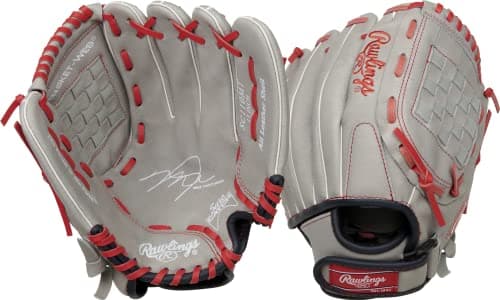
Rawlings Sure Catch 11 in (Mike Trout)
Ages 7–9, 11 in9.3/10Eleven inches, basket web, Youth Pro Taper fit. Rawlings builds the Sure Catch specifically for a kid who is still learning to close a glove, and it is the default answer at this age.
$42.95Amazon#ad · Price as of November 3, 2026 · Disclosure for the link to Rawlings Sure Catch 11 in (Mike Trout)
Best easy-close glove for 7–10
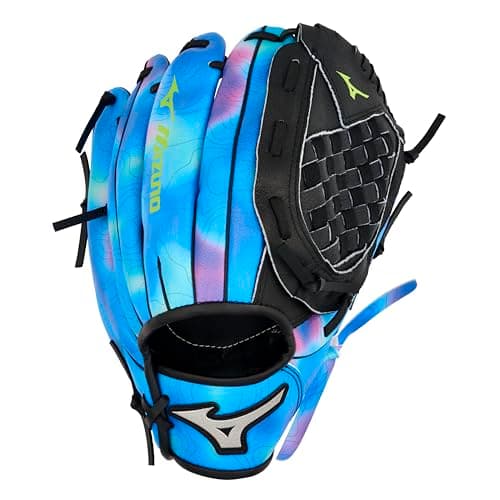
Mizuno Prospect PowerClose 11 in
Ages 7–10, 11 in9.1/10Eleven inches with the PowerClose hinge and Less 2 Lacing, which removes two web lace loops so the glove bends where a kid needs it to. The pick if closing is the problem.
$55.00Amazon#ad · Price as of November 3, 2026 · Disclosure for the link to Mizuno Prospect PowerClose 11 in
Best budget 11 in glove with a wrist strap
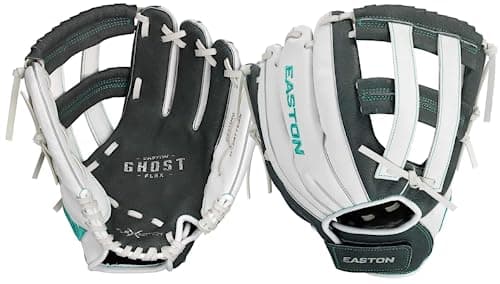
Easton Ghost Flex Youth 11 in
Ages 7–9, 11 in9.1/10Eleven inches with an adjustable fit strap, so the same glove works on a narrow hand now and a bigger one next spring. The budget option with a wrist adjustment.
$49.99Amazon#ad · Price as of November 3, 2026 · Disclosure for the link to Easton Ghost Flex Youth 11 in
Best Wilson youth glove
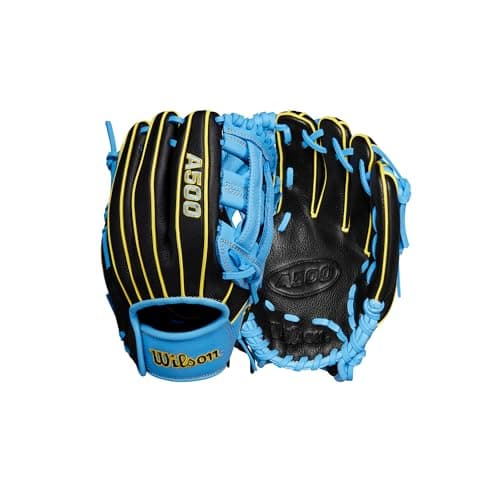
Wilson A500 10.5 in
Ages 7–10, 10.5 in8.8/10Ten and a half inches in full-grain leather with an H-web and a self-adjusting wrist. Stiffer out of the box than the other three, and the one that will still be good in two seasons.
$59.95Amazon#ad · Price as of November 3, 2026 · Disclosure for the link to Wilson A500 10.5 in
The three-minute fit check when it arrives
Do this before the tags come off, because a glove that fails any of it should go back rather than get broken in.
- The squeeze. One hand, nothing in the glove, thumb and pinky sides meet. If not, it is too big or too stiff.
- The shake. He holds his arm out and shakes it. The glove should stay on without him clamping. If it falls, the wrist opening is too wide for him and he needs a strap or a smaller pattern.
- The fingers. His fingertips should reach roughly to the ends of the glove's fingers. Kids sometimes slide two fingers into the pinky slot, which is fine and common.
- The catch. Toss a ball into it ten times. If it bounces straight back out, the pocket has not formed yet, which is a break-in job rather than a sizing error.
Three mistakes parents make at this age
Buying a 12 inch glove so he can grow into it. He cannot close it, he will not catch with it, and by the time he grows into it the leather is already curled into whatever shape two bad seasons gave it. An 8-year-old's glove is a two-season purchase, not a five-season one.
Buying an adult glove because it was on sale. Adult gloves are built on a wider hand opening and stiffer leather. The size on the pinky is the same number; the glove is not the same glove.
Skipping the break-in and blaming the kid. A new glove out of a box is a flat board. Twenty minutes of conditioning and a few hundred catches is the difference between a glove he uses and a glove he hides behind. The conditioners worth using are on best baseball glove conditioner, and the full ranked field for this age is on best baseball glove for an 8-year-old.
How we picked these
Researched, certification-checked and sized for the age
Every pick on this page earns its place the same way: the certification is checked against the governing bodies' rules and the maker's stated stamp, so the gear is legal for the division it is bought for; sizing comes from the makers' own age, height and hand charts; the published specs (drop, barrel, construction, closure, cleat type) are read from the maker's page; and the patterns in verified buyer reviews sharpen the “best for” line on each card. Every figure links to where it came from, with the date.
Scores are editorial judgments built from that documented research, applied with the same weights to every product in a category, so the ranking is comparable top to bottom. Commissions never set a score or decide a pick. The rubric and its weights are published.
Questions parents ask
Frequently asked
What size baseball glove does an 8-year-old need?
Is an 11 inch glove too big for an 8-year-old?
How do you measure a baseball glove?
Should an 8-year-old get an infield or outfield glove?
Can an 8-year-old use a 10 inch glove?
How long will an 8-year-old's glove last?
Keep reading
Related on Bat & Bucket
- Youth glove size chartEvery age and position, in one table.
- Best baseball glove for an 8-year-oldThe ranked field at this size.
- Glove size for a 10-year-oldThe next size up, two years on.
- How to break in a baseball gloveWhat to do before the first practice.
- Gloves for small handsIf he still cannot close it.
Receipts
Sources
- Rawlings: R9 ContoUR 11-inch youth glove (specs, glove size by age table)
- Rawlings: Sure Catch 11-inch Mike Trout youth glove
- Mizuno: Prospect Series PowerClose 11-inch glove
- Easton: Ghost Flex Youth 11-inch glove
- Amazon listing: Wilson A500 10.5 in infield youth baseball glove, right hand throw (read 2026-10-03)
- BaseballMonkey: How to break in a baseball glove
Certification rules come from the governing bodies' own pages (Little League, USA Baseball, USSSA, NOCSAE), sizes from the makers' published sizing charts, and specs from the maker's product page or the retailer listing named on each product. Every figure above links to the page it was read from, with the date. Amazon prices move often, so each buy button takes you to the current price. Read the full method.