Gloves & Mitts · Guide
What size baseball glove for a 10-year-old
Ten is the first year position actually changes the answer. An infielder wants 11 inches and a quick transfer; an outfielder wants 11.5 and a deeper pocket. It is also the last year most kids buy a glove purely on size, because from here the pattern starts to matter as much as the number.
By Mike M.Updated Researched · every figure sourced
#adReader-supported: we may earn a commission if you buy through our links, at no extra cost to you. It never decides a pick. How we pick · Disclosure
The size, by position
At eight, every kid gets the same glove. At ten, the answer splits, because this is the age where leagues start holding kids in positions for a whole game and where a ball hit to the outfield actually reaches the outfield.
| Where he plays | Size | Why |
|---|---|---|
| Middle infield (2B, SS) | 11 in | Shallow pocket, fast transfer out of the glove to the throwing hand |
| Third base | 11–11.5 in | A little more glove, because the ball arrives hot and the throw is long |
| Pitcher | 11–11.5 in | A closed web hides the grip; otherwise the infield pattern is fine |
| Outfield | 11.5 in | Deeper pocket, more reach, and transfer speed does not matter as much |
| Everywhere (most 10-year-olds) | 11.5 in utility | One glove that is not wrong anywhere on the field |
| First base | 11.5–12 in mitt | A different object: no fingers, scoop pocket |
The honest answer for most families is the last-but-one row. A 10-year-old in rec ball plays four positions in a season, and an 11.5 inch utility pattern is wrong nowhere and perfect nowhere, which is exactly the right trade for the money. The full chart, including fastpitch sizes, is on the youth glove size chart.
Why the half inch suddenly matters
At eight the difference between 10.5 and 11 inches is mostly whether the kid can close the thing. By ten he can close almost anything in the youth range, so the half inch stops being a strength question and starts being a function question.
An infielder is judged on how fast the ball leaves his glove. A deep pocket is the enemy of that: the ball settles, he has to dig it out, and the runner is safe. Half an inch of extra glove is half an inch of extra digging on every ground ball, twenty times a practice.
An outfielder is judged on whether he caught it at all. A deeper pocket holds a ball he reached for at full stretch and does not spit it out when he hits the ground. The extra half inch of reach is free and the slower transfer costs him nothing on a throw he is making from 180 feet anyway.
That is the whole argument, and it is the reason the makers build different patterns rather than just different sizes. Buy the function first and let the number follow it.
The leather question at ten
The trade is break-in. A leather glove arrives stiff and needs real work — conditioner, a mallet, a few hundred catches — before it is usable, and a kid who gets handed a board in week one of the season has a bad month. If you buy leather, buy it in January, not in March. The process is on how to break in a baseball glove and the products worth using are on best baseball glove conditioner.
If your kid is a casual rec player who may not be playing at twelve, none of that argument applies and a treated youth glove at half the money is the better buy. The honest comparison between the two routes is on Rawlings vs Wilson youth gloves.
Webs, and which ones are worth caring about
Ten is the age kids start asking for a specific web because a teammate has one. Most of it does not matter, but two distinctions are real.
- Open webs (I-web, H-web, Trap-Eze). Lighter, and dirt falls through them on a ground ball. Standard for middle infielders and fine anywhere.
- Closed webs (basket, modified trap, two-piece). Hide the ball and the grip, which is why pitchers use them, and give a slightly deeper, more forgiving pocket for a younger outfielder.
Everything else — the lacing colour, the stamping, the player name on the pinky — is marketing. If he has a preference and it fits the position he plays, let him have it; a kid who likes his glove uses his glove.
Four gloves at 11 and 11.5 inches
Our picks for this
Gloves in the 10-year-old band
Two at 11 inches for an infielder, two at 11.5 for an outfielder or a kid who plays everywhere. Sizes, webs and fit systems are quoted from the maker or the retailer listing the buy link points at.
Best youth glove overall
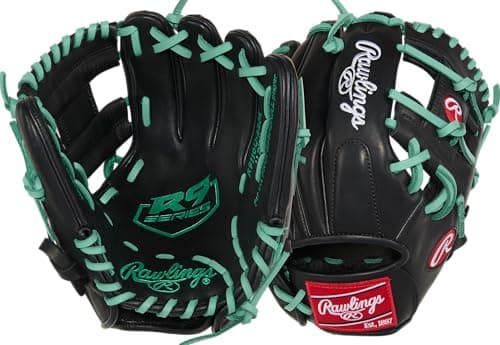
Rawlings R9 ContoUR 11 in
Ages 8–12, 11 in8.6/10Eleven inches, Pro I web, ContoUR fit — a narrower hand opening built for a youth hand rather than a shrunk adult glove. The infield pick at this age.
$149.99Amazon#ad · Price as of November 3, 2026 · Disclosure for the link to Rawlings R9 ContoUR 11 in
Best youth infield glove for 10–12
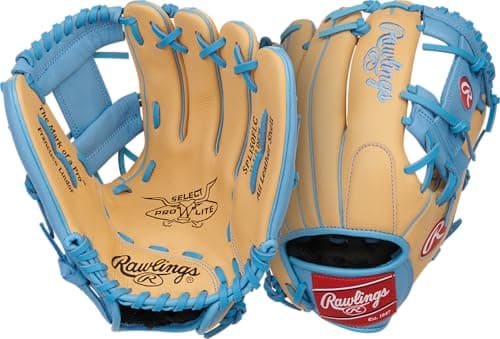
Rawlings Select Pro Lite 11.5 in (Francisco Lindor)
Ages 10–12, 11.5 in9.0/10Eleven and a half inches with a Pro I web and the Youth Pro Taper fit. The step up for a 10- to 12-year-old who has settled into a position.
$74.97Amazon#ad · Price as of November 3, 2026 · Disclosure for the link to Rawlings Select Pro Lite 11.5 in (Francisco Lindor)
Best 11.5 in utility glove
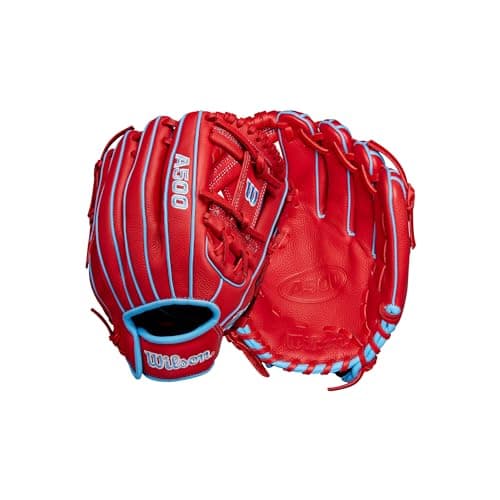
Wilson A500 11.5 in Utility
Ages 10–12, 11.5 in8.8/10Eleven and a half inches in a utility pattern and full-grain leather. The one-glove answer for a kid who plays four positions in a season.
$55.72Amazon#ad · Price as of November 3, 2026 · Disclosure for the link to Wilson A500 11.5 in Utility
Best easy-close 11.5 in glove
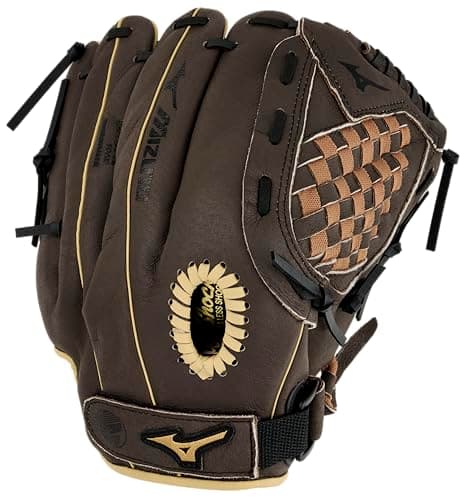
Mizuno Prospect PowerClose 11.5 in
Ages 9–11, 11.5 in9.1/10Eleven and a half inches with the PowerClose hinge. The pick if he has grown into the size but still fights the glove shut.
$50.00Amazon#ad · Price as of November 3, 2026 · Disclosure for the link to Mizuno Prospect PowerClose 11.5 in
The fit check when it arrives
Same three checks as at any age, with one addition that only matters from ten upward.
- Close it one-handed. Still the first test. A 10-year-old should manage a youth glove without swinging his arm.
- Check the wrist. The glove should stay on when he shakes his arm. Adult patterns fail this on a 10-year-old even when the length is right.
- Time the transfer. Have him catch a ball and get it to his throwing hand ten times. If the ball is getting lost in the pocket on an infield glove, the pattern is too deep for the position.
How long this glove has to last
Two to three seasons, which is longer than any glove he has owned. A 10-year-old is usually on 11 to 11.5 inches, an 11-year-old on 11.25 to 11.75 and a 12-year-old on 11.5 to 12 — so an 11.5 inch glove bought at ten is still a legitimate size at twelve, and with leather it is likely to be better at twelve than it was at ten.
That is the one age where buying slightly up is defensible, and it is still not a licence to buy a 12.5 inch adult glove. Half an inch of headroom is the limit, and only if he can close it on day one.
If he is an 8-year-old sibling in the same order, the answer is different and smaller: baseball glove size for an 8-year-old. The ranked field at this exact age is on best baseball glove for a 10-year-old.
How we picked these
Researched, certification-checked and sized for the age
Every pick on this page earns its place the same way: the certification is checked against the governing bodies' rules and the maker's stated stamp, so the gear is legal for the division it is bought for; sizing comes from the makers' own age, height and hand charts; the published specs (drop, barrel, construction, closure, cleat type) are read from the maker's page; and the patterns in verified buyer reviews sharpen the “best for” line on each card. Every figure links to where it came from, with the date.
Scores are editorial judgments built from that documented research, applied with the same weights to every product in a category, so the ranking is comparable top to bottom. Commissions never set a score or decide a pick. The rubric and its weights are published.
Questions parents ask
Frequently asked
What size baseball glove does a 10-year-old need?
Is an 11.5 inch glove too big for a 10-year-old?
Should a 10-year-old get an infield or outfield glove?
Should I buy a leather glove for a 10-year-old?
Can a 10-year-old use a 12 inch glove?
How often should a 10-year-old replace a glove?
Keep reading
Related on Bat & Bucket
Receipts
Sources
- Rawlings: R9 ContoUR 11-inch youth glove (specs, glove size by age table)
- Rawlings: Select Pro Lite 11.5-inch Lindor youth glove
- Academy: Wilson A500 11.5-inch youth utility glove listing
- Mizuno: Prospect Series PowerClose 11.5-inch glove
- BaseballMonkey: How to break in a baseball glove
Certification rules come from the governing bodies' own pages (Little League, USA Baseball, USSSA, NOCSAE), sizes from the makers' published sizing charts, and specs from the maker's product page or the retailer listing named on each product. Every figure above links to the page it was read from, with the date. Amazon prices move often, so each buy button takes you to the current price. Read the full method.