Helmets & Catcher's Gear · The picks
Best youth catcher's helmets
A catcher's helmet is the one piece of gear on this site where a wrong purchase is not an inconvenience, it is a foul tip off the mask. The good news is that the decision is small: measure the head, buy a one-piece hockey-style helmet whose listing states its certification, and stop. Six helmets that are in stock, ranked, with the certification line on each one quoted either way.
By Mike M.Updated Researched · every figure sourced
#adReader-supported: we may earn a commission if you buy through our links, at no extra cost to you. It never decides a pick. How we pick · Disclosure
League rules as of Nov 11, 2026. Every rule on this page was read from the governing body's own page on that date, and each is linked. Leagues and tournaments change bat and gear rules between seasons (USSSA's 14U bat rule changed on January 1, 2026): confirm on the linked page and with your league before you buy, and tell us if a rule has changed.
Top pick · Best Youth Catcher's Helmet
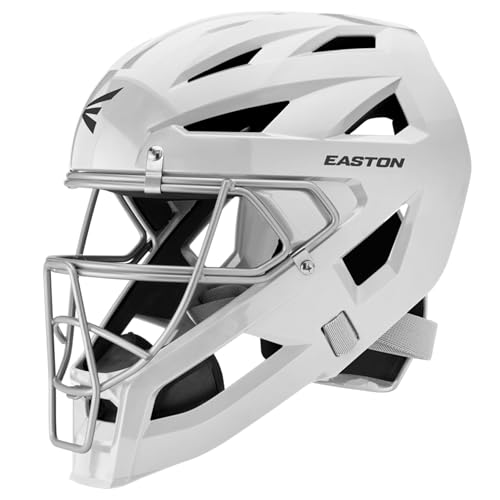
Easton Phenom Catcher's Helmet (Small & Large)
The only helmet here that publishes a hat size AND a head circumference for each of its two sizes, and states its NOCSAE certification in its own words.
#ad · Price as of November 12, 2026 · Disclosure for the link to Easton Phenom Catcher's Helmet (Small & Large)
Quick picks
The rankings at a glance
| # | Product | Best for | Score | Price |
|---|---|---|---|---|
| 1 | Easton Phenom Catcher's Helmet (Small & Large) The only helmet here that publishes a hat size AND a head circumference for each of its two sizes, and states its NOCSAE certification in its own words. Measure, pick Small or Large, done. | Best youth catcher's helmetSmall fits hat size 6 1/2-7 1/8 in; Large 7 1/8-7 1/2 in | 9.3 /10 | $149.99Amazon |
| 2 | 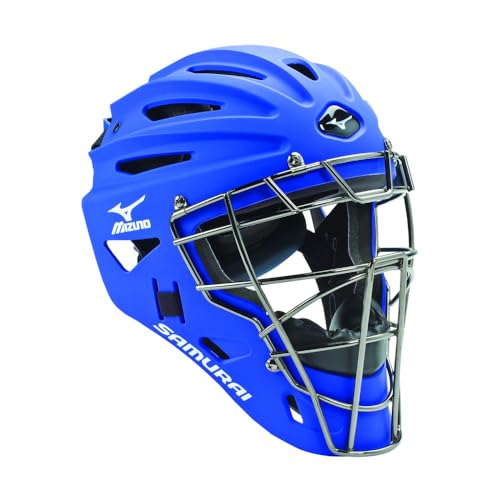 Mizuno Youth Samurai G4 Catcher's Helmet One shell that Mizuno states fits Youth 6 1/2 to 7 1/4 in, with an adjustable jaw pad. The most growing room on the page, which is why it is here and not a size-specific helmet. | Best for a kid still growingOne size fits most, Youth 6 1/2-7 1/4 in | 9.3 /10 | $104.50Amazon |
| 3 | 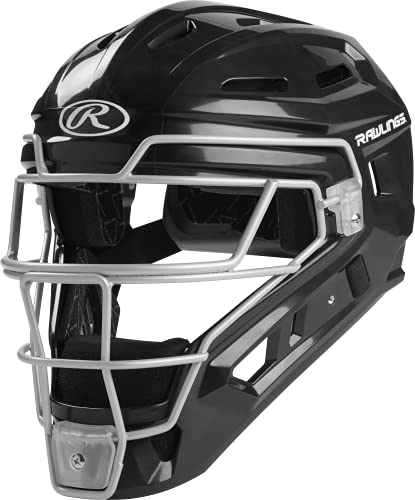 Rawlings Renegade 2.0 Catcher's Helmet (Junior) A stated-NOCSAE helmet in a real Junior size for well under travel-ball money. Ignore the boilerplate 'ages 15 & up' line on the listing - the same listing's own title says Junior, 6 1/2 to 7 in. | Best valueJunior, 6 1/2-7 in (listing title) | 9.2 /10 | $91.82Amazon |
| 4 | 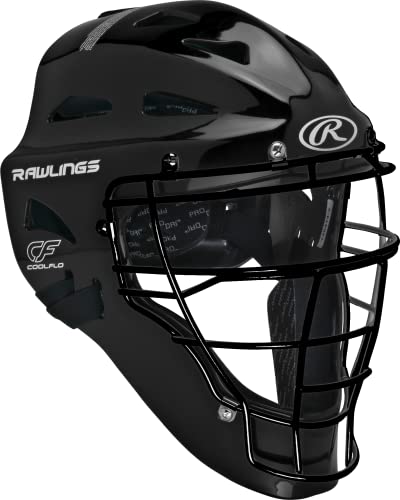 Rawlings Players Series Catcher's Helmet (Youth) The cheapest helmet here that still states NOCSAE compliance, and the lightest at 1.75 lb as listed. The right first helmet, and the right spare for the kid who catches two innings a week. | Best budget pickYouth, 6 1/2-7 in (listing title and size field) | 9.1 /10 | $67.45Amazon |
| 5 | 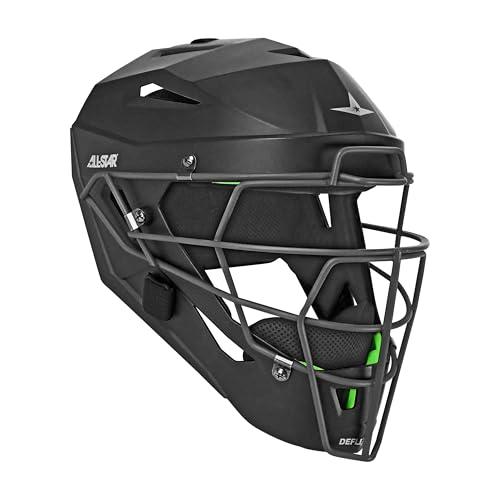 All-Star MVP-PRO LT Catcher's Helmet (Large) The only cage here that extends past the ear for back-swing contact, and the only listing that states SEI certification to the NOCSAE standard in its title. It ranks fifth on our rubric because it is a Large-only shell at triple the price, not because it is a worse helmet. | Best for a 13-14U travel catcherLarge (the listing states the size but not the head-size range) | 8.9 /10 | $229.95Amazon |
| 6 | 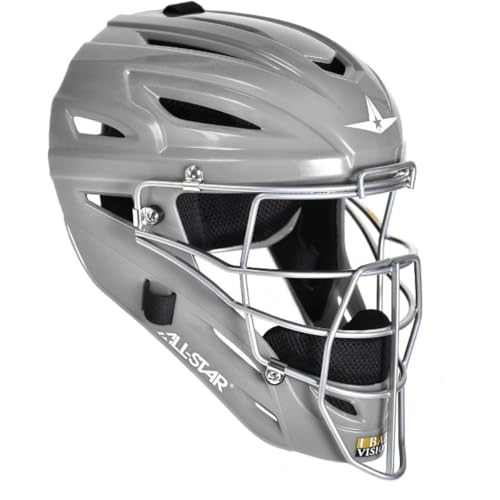 All-Star MVP2510 S7 Catching Helmet (Youth) The helmet most travel programs already own, with the best view of the plate on the page. It sits last because neither listing we read states its certification - a gap we are not willing to rank above helmets that do. | Widest sightlinesYouth, 6 1/4-7 in per the cited retailer listing | 8.6 /10 | $189.95Amazon |
#ad · Prices come live from Amazon, last checked November 12, 2026. Scores are ours, built from the governing bodies' certification rules, the makers' sizing charts and published specs. Photos are illustrative stock. Tap a row for the full write-up.
Measure the head first
Catcher's helmets are sold by hat size, which is a measurement most parents have never taken. Take a soft tape measure around the head, just above the ears and across the middle of the forehead, and pull it snug. That number in inches is the head circumference. Divide it by about 3.14 and you have the hat size the listings use — or just use the circumference directly, because the better listings publish both.
| Head circumference | Hat size | Which helmets on this page fit |
|---|---|---|
| 20 1/2–22 in | 6 1/2–7 | Easton Phenom Small, Rawlings Renegade 2.0 Junior, Rawlings Players Youth, Mizuno Samurai G4 |
| About 19 3/4–22 in | 6 1/4–7 | All-Star MVP2510 Youth — the lowest floor here |
| 22–22 3/4 in | 7–7 1/4 | Mizuno Samurai G4 (top of its one-size range) |
| 22 3/8–23 1/2 in | 7 1/8–7 1/2 | Easton Phenom Large, All-Star MVP-PRO LT (Large) |
Two things to know about that table. First, age is not in it, and that is deliberate: a thick-haired 9-year-old and a slight 13-year-old can wear the same shell. Second, “Youth” and “Junior” are brand words, not standards. Rawlings' Junior is 6 1/2 to 7 in; All-Star's Youth starts a quarter inch lower; Easton splits the same ground into Small and Large. Buy the range, not the word. The same logic applies to a batting helmet, and the measuring method is identical — see the batting helmet size chart.
Check the fit when it arrives with the chin strap fastened: the helmet should not rotate when you take hold of the cage and twist, and it should not rock forward and back. A helmet that moves on a foul tip transfers the hit to the jaw instead of the shell, which is the whole thing you paid to avoid.
One-piece, two-piece, and the skull cap trap
There are three ways to cover a catcher's head, and only two of them are legal in Little League.
- One-piece hockey-style helmet. Shell and cage in one unit, like every helmet on this page. It goes on and off in one motion, there is nothing to lose in the bag, and the fit is set once. This is what you want.
- Two-piece: a catcher's helmet plus a separate mask. A full catcher's helmet — dual ear flaps, worn backwards — with a traditional steel mask strapped over it. Legal, and still preferred by some older catchers because the mask can be thrown clear on a pop-up. It is two purchases and two fits.
- A skull cap plus a mask. The thin single-shell cap with no ear flaps. This is the one to avoid.
That last line is why the cheap “mask and cap” bundles on the shelf are a trap. The cap is the part that fails the rule, and the cap is the part that is doing nothing for the back and sides of the head anyway. A one-piece helmet is cheaper than a compliant helmet-plus-mask pair, fits in one step, and cannot be separated and half-forgotten.
What the certification actually tells you
Catcher's head protection is certified to a NOCSAE standard, and in practice a certified helmet carries a sticker or a molded mark inside the shell. What matters for your purchase is narrower than it sounds: the standard applies to the helmet-and-cage unit as the maker sells it. That is a second argument for a one-piece helmet, because a helmet certified with its own cage stays certified. Bolt a different cage onto it and you are outside what anyone tested.
Here is the uncomfortable part of researching this category. Of the six helmets on this page, four state the certification in the listing in their own words, one states SEI certification to the NOCSAE standard right in the product title, and one — the All-Star MVP2510, which is probably the most common youth catcher's helmet in American travel ball — states nothing about certification on either the Amazon listing or the retailer page we read. We have not concluded that it is uncertified. We have concluded that we cannot verify it from the pages a parent can read before clicking buy, and on a head-protection product that is enough to rank it last.
How these were ranked
Five weighted metrics, the same ones every protective-gear page on this site uses: certification (35%), fit range for the age (25%), ventilation and comfort (15%), value (15%) and guard compatibility (10%). Scores are compiled from the published specs and certification statements cited on each card. We do not test helmets, and nobody should trust a website that claims it drop-tested one.
Two consequences of that weighting are worth stating plainly, because they explain an order that may look odd. The All-Star MVP-PRO LT is the best-built helmet here and it ranks fifth: it is a Large-only shell at roughly triple the price of the budget pick, so it loses on fit range and on value even while winning on construction. And the MVP2510 ranks last on a certification score it could flip tomorrow by adding one line to its listing. Both of those are the rubric doing its job for the buyer this site is written for: a parent buying one helmet for one kid this season.
Helmet on its own, or a whole set?
If your kid is becoming a catcher, a set is almost always better value: a set gets you the helmet, chest protector and leg guards sized to each other for less than the three bought separately. The sets worth buying are on best youth catcher's gear sets, and the age-banded version of the same question is on best youth catcher's gear for 9-12.
Buy the helmet on its own when one of these is true:
- The league lends the gear. Many rec leagues keep a team set in the dugout and it is shared, sweated in and a size off. The helmet is the piece nobody wants to share, and buying just that one is the cheap fix.
- He has outgrown the helmet but not the rest. Heads finish growing later than torsos finish growing, but a shell has one fit range and a chest protector has an adjustable harness. The helmet is usually the first part of a set to stop fitting.
- The set's helmet is the weak piece. On some entry sets, the leg guards and chest protector are fine and the helmet is the item built to a price. Replacing one piece beats replacing three.
- He is an emergency catcher. The kid who catches two innings when the regular catcher pitches needs a helmet that fits him, not the one in the bag.
The throat guard is not optional
Read the rule quoted above once more: helmet with face mask and throat guard. The dangling throat protector is a separate part, it costs very little, and it is frequently not in the box with a helmet sold on its own. Every helmet on this page is sold as a helmet — check the listing before you assume a guard came with it, because an umpire will check before the first pitch.
If yours did not include one, a youth dangling throat protector is the cheapest item in this entire category. Fit it to the bottom bar of the cage so it hangs free and swings — a guard cable-tied tight to the mask is not doing the job it was designed for.
Our picks for this
The part that is probably not in the box
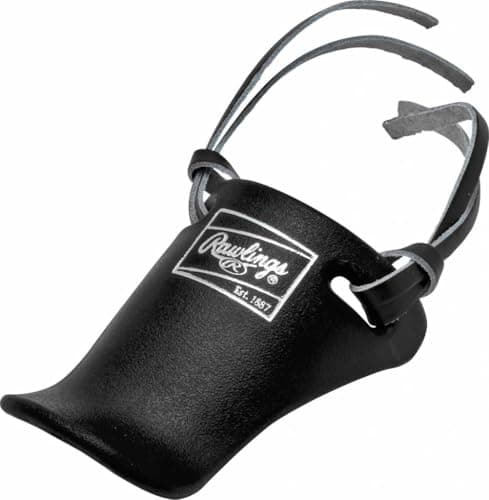
Every helmet on this page is sold as a helmet. If a dangling throat guard did not come with yours, this is the one we keep in the registry.
Best youth throat guard
Rawlings Youth Throat Protector
Youth catcher's masks8.7/10A youth dangling throat protector, which many leagues require on the mask. Check the mounting against your cage's bottom bar.
$12.95Amazon#ad · Price as of November 12, 2026 · Disclosure for the link to Rawlings Youth Throat Protector
Three mistakes parents make
One: buying by age. Catcher's helmets are sold by head size and the brand words do not line up. A “Youth” All-Star starts at 6 1/4 in; a “Junior” Rawlings starts at 6 1/2 in; an Easton “Small” also starts at 6 1/2 in but runs higher at the top. Measure.
Two: buying one size up to grow into. This works for cleats and pants and it is actively dangerous for a helmet. A loose shell rotates on impact. If he is between sizes, take the smaller one and plan to replace it, or take the Mizuno Samurai G4, whose single shell covers three quarters of an inch of head sizes by design.
Three: mixing a cage from one helmet onto another shell. It fits, it looks fine, and it voids the thing you were paying for — the certification covers the unit as sold. If a cage is bent, replace the helmet.
A word on the prices you see here
The numbers on the cards are pulled live and they move, so read them as brackets rather than figures. The Rawlings Players Series sits alone at the bottom, the Rawlings Renegade 2.0 and the Mizuno Samurai G4 are the next step up, the Easton Phenom is in the middle, the All-Star MVP2510 is priced like a step-up helmet, and the All-Star MVP-PRO LT is well clear of everything else at the top. Check the number on the card on the day you order rather than trusting any figure written into prose.
In detail
The picks, in full
Rank 1
Best youth catcher's helmet
Easton Phenom Catcher's Helmet (Small & Large)
The only helmet here that publishes a hat size AND a head circumference for each of its two sizes, and states its NOCSAE certification in its own words. Measure, pick Small or Large, done.
Spec sheetEvery figure sourced and linked
| Category | Catcher's gear |
|---|---|
| Fits | Small fits hat size 6 1/2-7 1/8 in; Large 7 1/8-7 1/2 in |
| Certification (quoted) | 'ERGONOMIC FIT & NOCSAE CERTIFIED ... NOCSAE certification provides trusted protection at every level of play' (maker listing) |
| Certification | 'NOCSAE CERTIFIED' stated in the listing's own feature bullet |
| Construction | Ventilated ABS shell, high-tensile steel mask, triple-density padding, BioDri moisture-wicking liner, ergonomic chin cup (maker listing) |
| Sizes | Small - hat size 6 1/2-7 1/8 in, circumference 20 1/2-22 3/8 in (maker listing) |
| Fits (maker) | Large - hat size 7 1/8-7 1/2 in, circumference 22 3/8-23 1/2 in (maker listing) |
The rubric points behind the 9.3
- Certification (NOCSAE / SEI) (35%)
- 10
- Fit range for the age (25%)
- 9
- Ventilation and comfort (15%)
- 9
- Face-guard compatibility (10%)
- 8
- Value (15%)
- 8
Rubric points are scored out of 10 per criterion. The weighted result is published on this site's 8.4–9.8 recommendation scale, because everything listed here is a product we would tell a parent to buy — how the scale works.
Why we picked it
- Hat size AND head circumference published for both sizes, so you can measure instead of guess
- Two sizes cover roughly 8 through high school
- The listing states the NOCSAE certification in its own words
Good to know
Only two sizes - a small 7-year-old can be under the Small's 6 1/2 in floor.
#ad · Price as of November 12, 2026 · Disclosure for the link to Easton Phenom Catcher's Helmet (Small & Large)
Rank 2
Best for a kid still growing
Mizuno Youth Samurai G4 Catcher's Helmet
One shell that Mizuno states fits Youth 6 1/2 to 7 1/4 in, with an adjustable jaw pad. The most growing room on the page, which is why it is here and not a size-specific helmet.
Spec sheetEvery figure sourced and linked
| Category | Catcher's gear |
|---|---|
| Fits | One size fits most, Youth 6 1/2-7 1/4 in |
| Certification (quoted) | 'Meets NOCSAE Standards' (maker listing) |
| Certification | 'Meets NOCSAE Standards' (maker listing) |
| Construction | Strategic ventilation system, 3-layer EVA foam padding, steel-framed mask, adjustable jaw pad (maker listing) |
| Sizes | 'ONE SIZE fits most: Youth 6 1/2 in - 7 1/4 in' (maker listing) |
The rubric points behind the 9.3
- Certification (NOCSAE / SEI) (35%)
- 10
- Fit range for the age (25%)
- 9
- Ventilation and comfort (15%)
- 9
- Face-guard compatibility (10%)
- 6
- Value (15%)
- 9
Rubric points are scored out of 10 per criterion. The weighted result is published on this site's 8.4–9.8 recommendation scale, because everything listed here is a product we would tell a parent to buy — how the scale works.
Why we picked it
- Three-quarters of an inch of stated fit range in one shell, which is the most growing room here
- Adjustable jaw pad, so the fit can be tuned rather than only padded
- Stated NOCSAE compliance
Good to know
A one-size shell will never fit as closely as a sized helmet at either end of its range.
#ad · Price as of November 12, 2026 · Disclosure for the link to Mizuno Youth Samurai G4 Catcher's Helmet
Rank 3
Best value
Rawlings Renegade 2.0 Catcher's Helmet (Junior)
A stated-NOCSAE helmet in a real Junior size for well under travel-ball money. Ignore the boilerplate 'ages 15 & up' line on the listing - the same listing's own title says Junior, 6 1/2 to 7 in.
Spec sheetEvery figure sourced and linked
| Category | Catcher's gear |
|---|---|
| Fits | Junior, 6 1/2-7 in (listing title) |
| Certification (quoted) | 'CERTIFICATION: Meets NOCSAE Standard' (maker listing) |
| Certification | 'CERTIFICATION: Meets NOCSAE Standard' (maker listing) |
| Construction | Renegade 2.0 shell with moisture-wicking liner, 'high-strength, increased impact resistance cage', upgraded chin pad (maker listing) |
| Sizes | Junior, stated as 6 1/2-7 in in the listing title |
| Weight | 2.35 lb as listed (listing item dimensions) |
The rubric points behind the 9.2
- Certification (NOCSAE / SEI) (35%)
- 10
- Fit range for the age (25%)
- 9
- Ventilation and comfort (15%)
- 7
- Face-guard compatibility (10%)
- 7
- Value (15%)
- 10
Rubric points are scored out of 10 per criterion. The weighted result is published on this site's 8.4–9.8 recommendation scale, because everything listed here is a product we would tell a parent to buy — how the scale works.
Why we picked it
- Stated NOCSAE certification at the lowest price of any helmet here except the Players Series
- A real Junior size range rather than a one-size shell
- Upgraded chin pad, which is where a cheap helmet usually rubs
Good to know
The same listing also carries a boilerplate line reading 'DESIGNED FOR ATHLETES AGES 15 & UP', which contradicts its own Junior 6 1/2-7 in size - buy by the head measurement, not the age line.
#ad · Price as of November 12, 2026 · Disclosure for the link to Rawlings Renegade 2.0 Catcher's Helmet (Junior)
Rank 4
Best budget pick
Rawlings Players Series Catcher's Helmet (Youth)
The cheapest helmet here that still states NOCSAE compliance, and the lightest at 1.75 lb as listed. The right first helmet, and the right spare for the kid who catches two innings a week.
Spec sheetEvery figure sourced and linked
| Category | Catcher's gear |
|---|---|
| Fits | Youth, 6 1/2-7 in (listing title and size field) |
| Certification (quoted) | 'Meets nocsae Standard' (maker listing) |
| Certification | 'Meets nocsae Standard' (maker listing) |
| Construction | Cool-Flo hockey-style ABS plastic shell, Pro Dri Plus interior padding, 'high strength, increased impact resistance cage' (maker listing) |
| Sizes | Youth, 6 1/2-7 in (listing title and size field) |
| Weight | 1.75 lb as listed - the lightest helmet here (listing item dimensions) |
The rubric points behind the 9.1
- Certification (NOCSAE / SEI) (35%)
- 10
- Fit range for the age (25%)
- 9
- Ventilation and comfort (15%)
- 7
- Face-guard compatibility (10%)
- 6
- Value (15%)
- 10
Rubric points are scored out of 10 per criterion. The weighted result is published on this site's 8.4–9.8 recommendation scale, because everything listed here is a product we would tell a parent to buy — how the scale works.
Why we picked it
- Lowest price on the page and still a stated NOCSAE helmet
- Lightest listed weight here, which a 9-year-old notices by the fifth inning
- Vented Cool-Flo shell rather than a solid one
Good to know
Pro Dri Plus padding is the thinnest here; it compresses faster than the Phenom's triple-density.
#ad · Price as of November 12, 2026 · Disclosure for the link to Rawlings Players Series Catcher's Helmet (Youth)
Rank 5
Best for a 13-14U travel catcher
All-Star MVP-PRO LT Catcher's Helmet (Large)
The only cage here that extends past the ear for back-swing contact, and the only listing that states SEI certification to the NOCSAE standard in its title. It ranks fifth on our rubric because it is a Large-only shell at triple the price, not because it is a worse helmet.
Spec sheetEvery figure sourced and linked
| Category | Catcher's gear |
|---|---|
| Fits | Large (the listing states the size but not the head-size range) |
| Certification (quoted) | 'SEI Certified to the NOCSAE Standard' (stated in the maker listing title) |
| Certification | 'SEI Certified to the NOCSAE Standard' in the listing title; 'Built to meet NOCSAE catcher's helmet standards' in the feature bullets |
| Construction | EVA Shock Hammocks in the forehead and chin, I-BAR-BSP cage extended past the ear for back-swing protection, oversized 3D Airmesh padding with laser-cut foam panels (maker listing) |
| Sizes | Large - the listing states the size name only and does not publish a head-size range |
| Weight | 3.45 lb as listed (listing item dimensions) |
The rubric points behind the 8.9
- Certification (NOCSAE / SEI) (35%)
- 10
- Fit range for the age (25%)
- 7
- Ventilation and comfort (15%)
- 10
- Face-guard compatibility (10%)
- 8
- Value (15%)
- 6
Rubric points are scored out of 10 per criterion. The weighted result is published on this site's 8.4–9.8 recommendation scale, because everything listed here is a product we would tell a parent to buy — how the scale works.
Why we picked it
- SEI certification to the NOCSAE standard stated in the listing title, not inferred
- Back-swing protection past the ear, which is the one real catcher's-helmet upgrade that is not about comfort
- The most ventilation detail published of any helmet here
Good to know
Roughly triple the price of the Rawlings Players Series shell.
#ad · Price as of November 12, 2026 · Disclosure for the link to All-Star MVP-PRO LT Catcher's Helmet (Large)
Rank 6
Widest sightlines
All-Star MVP2510 S7 Catching Helmet (Youth)
The helmet most travel programs already own, with the best view of the plate on the page. It sits last because neither listing we read states its certification - a gap we are not willing to rank above helmets that do.
Spec sheetEvery figure sourced and linked
| Category | Catcher's gear |
|---|---|
| Fits | Youth, 6 1/4-7 in per the cited retailer listing |
| Certification | NOT STATED on the Amazon listing or on the cited retailer page - check the SEI/NOCSAE sticker inside the shell before your league's first game |
| Construction | 'High Impact resistant ABS plastic shell' with an 'I-Bar Vision steel cage' (retailer listing) |
| Sizes | 'Youth size: 6 1/4 in - 7 in' (retailer listing) |
| Weight | 45.2 oz (retailer listing) |
The rubric points behind the 8.6
- Certification (NOCSAE / SEI) (35%)
- 6
- Fit range for the age (25%)
- 10
- Ventilation and comfort (15%)
- 8
- Face-guard compatibility (10%)
- 8
- Value (15%)
- 7
Rubric points are scored out of 10 per criterion. The weighted result is published on this site's 8.4–9.8 recommendation scale, because everything listed here is a product we would tell a parent to buy — how the scale works.
Why we picked it
- The I-Bar Vision cage gives the widest-looking sightline here, which catchers notice immediately
- Fit range starts at 6 1/4 in, lower than the Easton Phenom Small
- All-Star's youth helmet line is the one most travel programs already stock
Good to know
Certification is not stated on either listing we read - on a head-protection purchase that is a real gap, and it is why this sits last.
#ad · Price as of November 12, 2026 · Disclosure for the link to All-Star MVP2510 S7 Catching Helmet (Youth)
Before you buy
- Measure, then read the range. A soft tape above the ears, snug. Then match that number to the helmet's published range, not to the word “Youth”.
- Buy one-piece. Fewer parts, one fit, one certification, and it cannot be half-forgotten in the bag.
- Read the certification line on the listing you are about to click. If it is not there, either find a page where it is or buy a different helmet.
- Check whether a throat guard is included. Usually it is not, when the helmet is sold on its own. Budget a few dollars for one.
- Twist-test it on his head. Chin strap fastened, hold the cage, twist. The helmet should move with the head, not on it.
- Do not buy a size up. It is the one piece of youth gear where growing room is the wrong instinct.
- If he is becoming the catcher, price a set first. A matched set beats three separate purchases almost every time.
Side by side
Same category, same hockey-style shape, two very different purchases on paper. The Easton Phenom publishes the certification, the hat size and the head circumference for both of its sizes; the All-Star MVP2510 publishes a retailer size range and a 45.2 oz weight, and leaves the certification unstated on both pages we read. If the MVP2510 is what your program wears and you want the sightlines, buy it — and then look inside the shell for the sticker before the first game. That one check is the difference between the two columns.
The bottom line
Our recommendation
Buy this one
9.3 /10Easton Phenom Catcher's Helmet (Small & Large)
Best youth catcher's helmet
#ad · Price as of November 12, 2026 · Disclosure for the link to Easton Phenom Catcher's Helmet (Small & Large)
Or the runner-up
9.3 /10Mizuno Youth Samurai G4 Catcher's Helmet
Best for a kid still growing
#ad · Price as of November 12, 2026 · Disclosure for the link to Mizuno Youth Samurai G4 Catcher's Helmet
How we picked these
Researched, certification-checked and sized for the age
Every pick on this page earns its place the same way: the certification is checked against the governing bodies' rules and the maker's stated stamp, so the gear is legal for the division it is bought for; sizing comes from the makers' own age, height and hand charts; the published specs (drop, barrel, construction, closure, cleat type) are read from the maker's page; and the patterns in verified buyer reviews sharpen the “best for” line on each card. Every figure links to where it came from, with the date.
Scores are editorial judgments built from that documented research, applied with the same weights to every product in a category, so the ranking is comparable top to bottom. Commissions never set a score or decide a pick. The rubric and its weights are published.
Corrections & updates
- Page published. Certification, size and construction lines quoted from each helmet's own listing, read through the Amazon Creators API on 2026-11-11, plus a cited retailer page for the All-Star MVP2510 size and weight. Where a listing does not state a certification, the card says so rather than assuming one. Little League's Appendix B safety code read 2026-11-11.
Questions parents ask
Frequently asked
What size catcher's helmet does a 10-year-old need?
Can a catcher wear a skull cap and a mask in Little League?
Does a catcher's helmet need to be NOCSAE certified?
Is a one-piece hockey-style helmet better than a traditional mask?
Do catcher's helmets come with a throat guard?
How long does a youth catcher's helmet last?
Should I buy the helmet separately or buy a catcher's set?
Keep reading
Related on Bat & Bucket
- Best youth catcher's gear setsHelmet, chest and legs, sized to each other.
- Youth catcher's gear size chartEvery piece, by age and height.
- Best catcher's gear for 9-12The age band most catchers start in.
- The NOCSAE chest protector ruleThe other certification on a catcher.
- Batting helmet size chartSame measurement, different helmet.
- Best youth catcher's mittsThe other half of the position.
- Best fastpitch catcher's mittsIf she catches softball.
Receipts
Sources
- Little League: Appendix B, Safety Code for Little League — "Catchers must wear catcher's helmet (with face mask and throat guard), chest protector, and shin guards" and, for warming up pitchers, "Skull caps are not permitted" (read 2026-11-11)
- Amazon listing: Easton Phenom catcher's helmet, Small, ventilated ABS shell, high-tensile steel mask, triple-density padding, BioDri liner, NOCSAE certified, hat size 6 1/2-7 1/8 in (read 2026-11-11)
- Amazon listing: Easton Phenom catcher's helmet, Large, hat size 7 1/8-7 1/2 in (read 2026-11-11)
- Amazon listing: Mizuno Youth G4 Samurai catcher's helmet, one size fits most Youth 6 1/2-7 1/4 in, 3-layer EVA foam, steel-framed mask, "Meets NOCSAE Standards" (read 2026-11-11)
- Amazon listing: Rawlings Renegade 2.0 catcher's helmet, Junior 6 1/2-7 in, moisture-wicking liner, high-strength cage, "CERTIFICATION: Meets NOCSAE Standard" (read 2026-11-11)
- Amazon listing: Rawlings Players Series catcher's helmet, Youth 6 1/2-7 in, ABS shell, Pro Dri Plus padding, "Meets nocsae Standard", 1.75 lb (read 2026-11-11)
- Amazon listing: All-Star MVP-PRO LT catcher's helmet, Large, EVA Shock Hammocks, I-BAR-BSP back-swing cage, 3D Airmesh padding, "SEI Certified to the NOCSAE Standard" (read 2026-11-11)
- Amazon listing: All-Star MVP2510 S7 catching helmet, Youth, silver — the listing states the Youth size and a manufacturer's warranty but does NOT state a NOCSAE or SEI certification (read 2026-11-11)
- HQ4Sports: All-Star MVP2510 youth catcher's helmet listing — "Youth size: 6 1/4" - 7"", "High Impact resistant ABS plastic shell", "I-Bar Vision steel cage", 45.2 oz; no NOCSAE statement on the page (read 2026-11-11)
- NOCSAE: Commotio cordis and the ND200 chest protector standard
Certification rules come from the governing bodies' own pages (Little League, USA Baseball, USSSA, NOCSAE), sizes from the makers' published sizing charts, and specs from the maker's product page or the retailer listing named on each product. Every figure above links to the page it was read from, with the date. Amazon prices move often, so each buy button takes you to the current price. Read the full method.