Practice & Gear Bag · The picks
Weighted baseballs for youth hitting (and the honest case against throwing them)
Weighted baseballs do two completely different jobs, and only one of them belongs in a backyard. Heavier balls hit off a tee build a swing. Heavier balls thrown from a mound raised the injury rate to 24 percent against zero in the only controlled youth trial we could find. This page ranks the hitting sets first, says plainly where the throwing sets belong, and does not pretend the evidence is better than it is.
By Mike M.Updated Researched · every figure sourced
#adReader-supported: we may earn a commission if you buy through our links, at no extra cost to you. It never decides a pick. How we pick · Disclosure
Quick picks
The rankings at a glance
| # | Product | Best for | Score | Price |
|---|---|---|---|---|
| 1 | 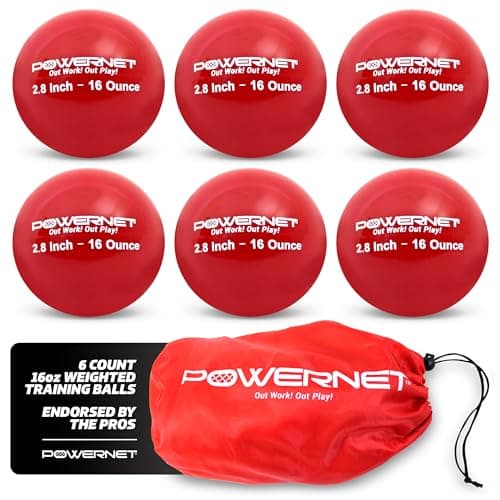 PowerNet Weighted Hitting Balls, 6 x 16 oz (2.8 in) Six 16 oz balls at 2.8 in across. Heavy enough to feel through contact, small enough that a mishit does not reward itself, and enough of them to hit a full tee round. | Best weighted baseballs for hittingAges 9 and up (off a tee or in soft toss) | 8.6 /10 | $39.99Amazon |
| 2 | 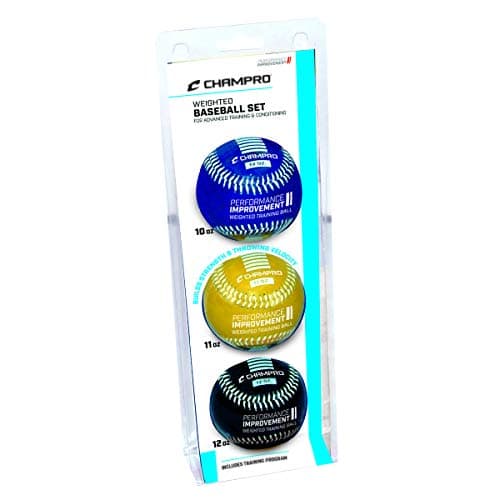 Champro Weighted Training Baseballs, 10 / 11 / 12 oz (9 in) Three 9 in regulation-size balls at 10, 11 and 12 oz. The only set here that changes the weight and nothing else, which is what a hitter should actually be feeling. | Best regulation-size setAges 10 and up | 8.1 /10 | $31.00Amazon |
| 3 | 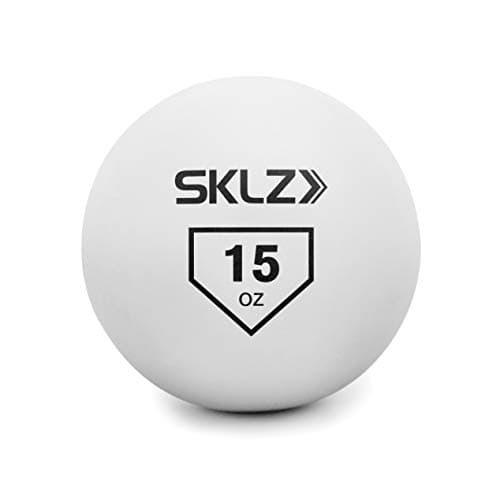 SKLZ Contact Ball, 15 oz One 15 oz batting trainer for about the price of a game baseball. A demonstration tool, not a practice session. | Cheapest way to try itAges 9 and up (baseball or softball) | 7.9 /10 | $10.17Amazon |
| 4 | 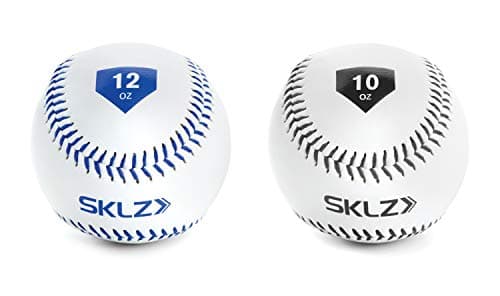 SKLZ Weighted Throwing Baseballs, 10 oz + 12 oz 10 oz and 12 oz, the low end of the overload range. Only inside a coached program, and read the evidence section first. | Mildest throwing set — 13 and up, supervised13 and up, and only inside a coached program | 7.4 /10 | $29.99Amazon |
| 5 | 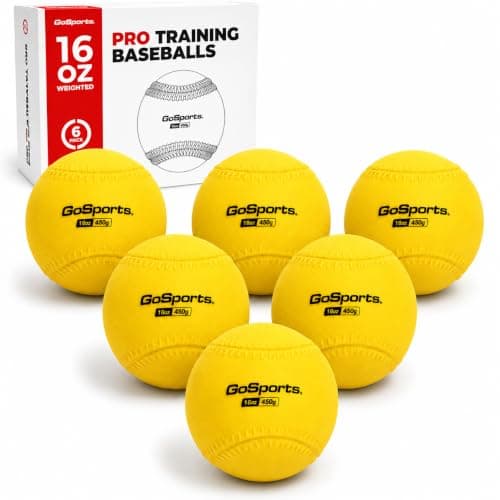 GoSports PRO 16 oz Weighted Training Baseballs States its weight, unlike the cheaper GoSports listing. A newer listing with less of a track record than the PowerNet or Champro sets. | Best cheap 16 oz setAges 9 and up | 7.1 /10 | $24.99Amazon |
| 6 | 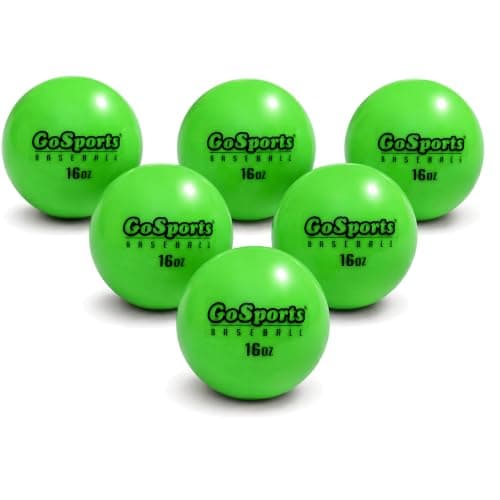 GoSports 2.8 in Weighted Training Baseballs The same small-diameter heavy-ball drill at the lowest price here. Ranked last among the hitting sets for one concrete reason: the listing states neither the weight nor the ball count, so you cannot build a graded progression with it. | Cheapest set, least informationAges 9 and up (off a tee or in soft toss) | 6.8 /10 | $19.99Amazon |
| 7 | 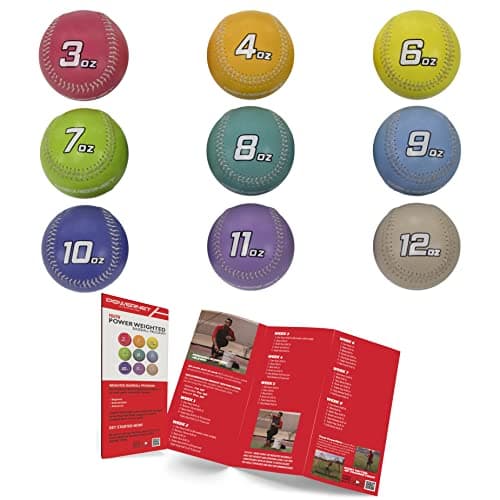 PowerNet Weighted Throwing Baseballs, 3-12 oz A graded 3-12 oz set including underload balls, and the only one here that ships with a written throwing guide. A printed guide is still not supervision. | Throwing set with a program — 13 and up, supervised13 and up, and only inside a coached program | 6.4 /10 | $54.99Amazon |
#ad · Prices come live from Amazon, last checked November 3, 2026. Scores are ours, built from the governing bodies' certification rules, the makers' sizing charts and published specs. Photos are illustrative stock. Tap a row for the full write-up.
Two completely different products
“Weighted baseballs” is one search term covering two products that share nothing but a shape. Confusing them is the expensive mistake here, and most retail listings actively encourage it by marketing a single set for both.
- Weighted balls for hitting. Heavy balls — typically 15 to 16 oz, roughly three times a regulation 5 oz baseball — struck off a tee or in soft toss. The weight resists the barrel, so a swing that is all arms gets exposed immediately. The ball does not go far, which is a feature in a backyard. Nobody's arm is under load.
- Weighted balls for throwing. Graded sets, often 3 oz to 21 oz, thrown as part of a velocity program. The arm is under deliberate overload. This is the use with a measured injury signal, and it is the use this page tells you to be careful with.
Five of the seven sets below are for hitting and are ranked first. Two are throwing sets, ranked last, with the age and supervision caveats written into their cards rather than buried. If you only want the hitting answer, you can stop after the rankings.
What the research actually found
This is the section the product listings do not have, so it goes before the picks rather than after them.
Three things follow from that study, and we are going to be precise about all three rather than overstating any of them.
- The velocity gain is real. Weighted-ball programs do what they claim. This is not a page saying they do not work.
- The injury signal is also real, and it was measured in supervised sessions. These were not kids throwing unsupervised in a yard. A written guide in a box is less supervision than the trial had, not more.
- The cohort was 13 to 18. That is the most important line for the audience of this site. There is no equivalent evidence for 10-, 11- or 12-year-olds — not reassuring evidence, and not damning evidence. There isnothing. Anyone selling you a weighted-ball throwing program for a 10-year-old is working past the end of the data.
For context on what the governing bodies do recommend for young arms, USA Baseball and MLB's Pitch Smart guidelines set daily pitch limits and required rest days by age: 50 pitches a day at 7-8, 75 at 9-10, 85 at 11-12 and 95 at 13-14, with mandatory rest scaling with the count. Those limits exist because cumulative throwing load is the risk factor. A weighted-ball program is additional throwing load, and nothing in Pitch Smart creates room for it.
So the position of this page is simple and we will not soften it to sell a $55 set: buy weighted balls for hitting at any age; do not run a weighted-ball throwing program on a kid under 13, and above 13 only with a coach who is monitoring his arm week to week.
Weighted balls for hitting: what they do
With the arm-safety question parked, the hitting use is genuinely one of the better cheap purchases in this category, and it works for an unglamorous reason: a heavy ball cannot be bluffed.
A regulation baseball off a tee will travel a respectable distance even when a kid casts his hands, drops his back shoulder or swings entirely with his arms. The ball rewards a bad swing with a decent-looking result, which is why tee work can go on for months without anything improving. A 16 oz ball does not. Hit it with arms only and it falls off the tee. Hit it with the lower half rotating and the barrel on plane and it actually goes somewhere. The feedback is immediate, it is physical, and nobody has to coach it.
The small-diameter sets add a second effect. A 2.8 in ball against a regulation 2.9 in shrinks the margin for error slightly, so the drill also rewards finding the sweet spot rather than the end of the barrel. That is a modest difference and we are not going to claim it is transformative.
How these were ranked
Nobody on this site has hit or thrown any of these balls, and we do not claim to have. Every figure below is quoted from the live listing it came from, read on 28 October 2026; where a listing does not state a weight, a count or a diameter, this page says so rather than filling the gap — and two of these listings are notably thin. The ranking follows the published practice-gear rubric, in weight order:
- Stability (25%). Read here as consistency of the product: does the listing state the weight and the count, so every ball in the set is a known quantity? A set that does not tell you what it weighs cannot be used in a graded progression.
- Setup time (20%). Balls are the easiest category in this hub — everything scores well. The separator is whether the set arrives ready to use or needs a program built around it.
- Durability (20%). How a heavy ball holds up being struck by an aluminum barrel repeatedly, as far as the listing and the brand's track record support a judgment.
- Value (20%). Cost per usable ball, not headline price. The single-ball trainers win on price and lose here.
- Portability (15%). A bag of heavy balls is heavy. Count and weight both matter.
One thing to understand about the ordering. The rubric scores the product: how well specified it is, how it holds up, what it costs per usable ball. It does not score whether you should be doing the drill at all. So the SKLZ throwing pair lands mid-table on the rubric — it is a well-specified, durable product — while sitting behind an age gate this page recommends you respect. Read the label on each card, not just the number: the two throwing sets are for 13 and up inside a coached program, whatever their score says. The two GoSports sets, by contrast, rank low for a concrete reason rather than a safety one — neither listing states the ball count, and the cheaper one does not state the weight either, which makes a graded progression impossible. The rubric weights are published on how we pick youth baseball gear.
Which weight to buy
For hitting, heavier is not automatically better — past a point the kid simply changes his swing to move the ball, which is the opposite of the intent.
| Weight | Against a 5 oz baseball | Who it suits | On this page |
|---|---|---|---|
| 10-12 oz | About 2x | A 10- to 12-year-old, or anyone starting out with weighted work | Champro set |
| 15 oz | About 3x | A 12-year-old and up who already makes consistent contact | SKLZ Contact Ball |
| 16 oz | About 3x | The common standard; fine from about 11 or 12 upward | PowerNet, GoSports PRO |
If the kid is under about 9, skip this category entirely. At that age the limiting factor is making contact at all, and a heavy ball just produces whiffs and frustration. Buy a bucket of ordinary practice balls and more repetitions instead — the options are on best bucket of baseballs, and the soft Incredi-Ball there is the right ball for a 5- to 8-year-old.
The three drills worth doing
A set of weighted balls with no plan ends up in the garage, so here is what to actually do with them. None of these involves throwing.
- Tee work, ten swings. Ball on the tee, hit it into a net. Ten swings with the weighted ball, then ten with a normal ball to feel the difference. The contrast is the drill; a whole round of heavy balls teaches a heavy-ball swing.
- Short soft toss. A parent tosses from the side, close in, underhand and gently. The ball comes off the bat slowly enough to be safe at that range, which is not true of a regulation ball. Keep a net behind the hitter.
- One-handed top-hand drill. Half swings, top hand only, off the tee. The weight exposes a wrist that rolls over early more clearly than any amount of being told about it.
If you are buying for throwing anyway
Some families will buy a throwing set regardless — a 15-year-old on a travel roster with a pitching coach is a legitimate case, and that is exactly the population the 2018 trial studied. If that is you, two of the sets here are the honest choices, and here is how we would narrow it.
- Stay close to regulation weight. The SKLZ 10 and 12 oz pair is a mild overload. A 3-to-21 oz set reaches much further from a baseball, and the further you get from 5 oz, the less the throw resembles the one he makes in a game.
- Prefer a set that ships with a written program over a bag of weights with nothing — the PowerNet 3-12 oz set includes a throwing guide. But understand what that is: a leaflet, not a coach watching his arm.
- Count it against his pitch total, not alongside it. Pitch Smart's limits are about cumulative load. Weighted throws are load. If he is at his daily and weekly limits already, there is no room for a program and the answer is no.
- Do not run one in-season. Adding a velocity program on top of a game schedule is stacking load on load.
And the honest bottom line, which costs this page a sale: if nobody qualified is monitoring the arm, buy hitting balls. The hitting use has all of the upside and none of the measured risk.
In detail
The picks, in full
Rank 1
Best weighted baseballs for hitting
PowerNet Weighted Hitting Balls, 6 x 16 oz (2.8 in)
Six 16 oz balls at 2.8 in across. Heavy enough to feel through contact, small enough that a mishit does not reward itself, and enough of them to hit a full tee round.
Spec sheetEvery figure sourced and linked
| Category | Practice balls |
|---|---|
| Fits | Ages 9 and up (off a tee or in soft toss) |
| Sizes | 2.8 in diameter, against a regulation baseball's 2.9 in (listing) |
| Included | 6 balls (listing) |
| Weight | 16 oz each — roughly 3x a regulation 5 oz baseball (listing) |
How the 8.6 score breaks down
- Setup time (20%)
- 9
- Stability (25%)
- 10
- Portability (15%)
- 6
- Durability (20%)
- 8
- Value (20%)
- 9
What the spec sheet supports
- Six balls means a full tee round without stopping to collect
- The small diameter shrinks the sweet spot, so the drill rewards actually finding the barrel
- 16 oz is heavy enough to be felt through contact without being a novelty weight
Where it falls short
- A 16 oz ball will dent a cheap net and will mark a garage door; use it outdoors or into a heavy net
- The listing markets these for throwing as well as hitting — do not use them for a throwing program on a young arm
- Most expensive hitting set here
Skip this if…
…the kid is under about 9 or still learning to make contact; plain practice balls do more for him than heavy ones.
#ad · Price as of November 3, 2026 · Disclosure for the link to PowerNet Weighted Hitting Balls, 6 x 16 oz (2.8 in)
Rank 2
Best regulation-size set
Champro Weighted Training Baseballs, 10 / 11 / 12 oz (9 in)
Three 9 in regulation-size balls at 10, 11 and 12 oz. The only set here that changes the weight and nothing else, which is what a hitter should actually be feeling.
Spec sheetEvery figure sourced and linked
| Category | Practice balls |
|---|---|
| Fits | Ages 10 and up |
| Sizes | 9 in circumference — regulation baseball size (listing) |
| Included | Three color-coded balls, one per weight (listing) |
| Weight | 10, 11 and 12 oz (listing) |
How the 8.1 score breaks down
- Setup time (20%)
- 9
- Stability (25%)
- 10
- Portability (15%)
- 8
- Durability (20%)
- 8
- Value (20%)
- 5
What the spec sheet supports
- Regulation 9 in size, so the eye is not learning a different-sized object
- Three graded weights in one box, color-coded so nobody has to guess which is which
- 10-12 oz is a modest overload — the honest end of the weighted-ball range
Where it falls short
- One ball per weight: three balls total, so somebody is fetching after every three swings
- Costs more per ball than any other set here
Skip this if…
…you want to hit a full round without collecting; buy the six-ball PowerNet set instead.
#ad · Price as of November 3, 2026 · Disclosure for the link to Champro Weighted Training Baseballs, 10 / 11 / 12 oz (9 in)
Rank 3
Cheapest way to try it
SKLZ Contact Ball, 15 oz
One 15 oz batting trainer for about the price of a game baseball. A demonstration tool, not a practice session.
Spec sheetEvery figure sourced and linked
| Category | Practice balls |
|---|---|
| Fits | Ages 9 and up (baseball or softball) |
| Included | One ball; listed for baseball and softball batting training (listing) |
| Weight | 15 oz (listing) |
How the 7.9 score breaks down
- Setup time (20%)
- 10
- Stability (25%)
- 7
- Portability (15%)
- 10
- Durability (20%)
- 7
- Value (20%)
- 6
What the spec sheet supports
- Costs about the same as a single game baseball
- A purpose-built batting trainer, not a throwing ball sold for hitting
Where it falls short
- One ball: this is a demonstration tool, not a practice session
- The listing does not state the diameter
Skip this if…
…you already know he will stick with it; a multi-ball set costs less per ball.
#ad · Price as of November 3, 2026 · Disclosure for the link to SKLZ Contact Ball, 15 oz
Rank 4
Mildest throwing set — 13 and up, supervised
SKLZ Weighted Throwing Baseballs, 10 oz + 12 oz
10 oz and 12 oz, the low end of the overload range. Only inside a coached program, and read the evidence section first.
Spec sheetEvery figure sourced and linked
| Category | Practice balls |
|---|---|
| Fits | 13 and up, and only inside a coached program |
| Included | 2-pack, white (listing) |
| Weight | 10 oz and 12 oz (listing) |
How the 7.4 score breaks down
- Setup time (20%)
- 6
- Stability (25%)
- 9
- Portability (15%)
- 10
- Durability (20%)
- 7
- Value (20%)
- 5
What the spec sheet supports
- 10 and 12 oz is the low end of the overload range, not the 3-21 oz extremes
- Two weights is enough for the whole of a conservative progression
Where it falls short
- Throwing weighted balls raised the injury rate to 24% against 0% in the only randomised youth trial we could find (Sports Health 2018, ages 13-18)
- No published evidence base at all below age 13
- No program card in the box, so the weights arrive without a plan
Skip this if…
…nobody qualified is running the throwing program — which for most families is the honest answer; buy hitting balls instead.
#ad · Price as of November 3, 2026 · Disclosure for the link to SKLZ Weighted Throwing Baseballs, 10 oz + 12 oz
Rank 5
Best cheap 16 oz set
GoSports PRO 16 oz Weighted Training Baseballs
States its weight, unlike the cheaper GoSports listing. A newer listing with less of a track record than the PowerNet or Champro sets.
Spec sheetEvery figure sourced and linked
| Category | Practice balls |
|---|---|
| Fits | Ages 9 and up |
| Included | Weighted training baseballs for hitting and pitching training (listing) |
| Weight | 16 oz (listing) |
How the 7.1 score breaks down
- Setup time (20%)
- 9
- Stability (25%)
- 6
- Portability (15%)
- 8
- Durability (20%)
- 6
- Value (20%)
- 7
What the spec sheet supports
- States its weight, which the cheaper GoSports 2.8 in listing does not
- Budget pricing for a 16 oz overload ball
Where it falls short
- The listing does not state the ball count or the diameter
- Newer listing with less of a track record than the PowerNet or Champro sets
Skip this if…
…you want graded weights to work up through; the Champro 10/11/12 oz set does that and the single-weight sets do not.
#ad · Price as of November 3, 2026 · Disclosure for the link to GoSports PRO 16 oz Weighted Training Baseballs
Rank 6
Cheapest set, least information
GoSports 2.8 in Weighted Training Baseballs
The same small-diameter heavy-ball drill at the lowest price here. Ranked last among the hitting sets for one concrete reason: the listing states neither the weight nor the ball count, so you cannot build a graded progression with it.
Spec sheetEvery figure sourced and linked
| Category | Practice balls |
|---|---|
| Fits | Ages 9 and up (off a tee or in soft toss) |
| Sizes | 2.8 in diameter (listing) |
| Included | Weighted training baseballs for hitting and pitching training (listing) |
How the 6.8 score breaks down
- Setup time (20%)
- 9
- Stability (25%)
- 4
- Portability (15%)
- 8
- Durability (20%)
- 6
- Value (20%)
- 8
What the spec sheet supports
- Budget-bracket price for the same small-diameter heavy-ball drill
- Low enough cost that losing one in the weeds does not matter
Where it falls short
- The listing does not state the ball weight or the count, so you are buying partly blind
- Marketed for pitching training too, which is the use a young arm should not get
Skip this if…
…you want to know exactly what weight you are buying; the PowerNet and Champro listings both state ounces.
#ad · Price as of November 3, 2026 · Disclosure for the link to GoSports 2.8 in Weighted Training Baseballs
Rank 7
Throwing set with a program — 13 and up, supervised
PowerNet Weighted Throwing Baseballs, 3-12 oz
A graded 3-12 oz set including underload balls, and the only one here that ships with a written throwing guide. A printed guide is still not supervision.
Spec sheetEvery figure sourced and linked
| Category | Practice balls |
|---|---|
| Fits | 13 and up, and only inside a coached program |
| Included | Weighted training balls plus a throwing guide (listing) |
| Weight | 3 oz to 12 oz, graded (listing) |
How the 6.4 score breaks down
- Setup time (20%)
- 7
- Stability (25%)
- 7
- Portability (15%)
- 7
- Durability (20%)
- 7
- Value (20%)
- 4
What the spec sheet supports
- Includes both underload (3 oz, lighter than a baseball) and overload balls, which is how published programs are structured
- The only set here that ships with a written throwing guide
Where it falls short
- The same 24%-against-0% injury finding applies, and this set reaches further from regulation weight than the SKLZ pair
- A printed guide in a box is not supervision, and the trial that found the injuries used supervised sessions
- Most expensive set on this page
Skip this if…
…the thrower is under 13, or no coach is monitoring his arm week to week.
#ad · Price as of November 3, 2026 · Disclosure for the link to PowerNet Weighted Throwing Baseballs, 3-12 oz
Before you buy
- Decide which product you are actually buying. Hitting or throwing. Several of these listings market themselves for both; the two uses are not interchangeable and the risk profiles are nothing alike.
- Check the listing states a weight. Two of the seven do not state weight, count or diameter clearly. For hitting that is survivable. For any graded progression it is not.
- Count the balls. A three-ball set means somebody fetches after every three swings, which is how a drill dies. Six balls is a round; one ball is a demonstration.
- Make sure you own a net that can take it. This is the most commonly skipped step and the most expensive one to skip.
- If he is under 9, buy ordinary practice balls instead. More repetitions beat heavier repetitions at that age, every time.
A word on the prices you see here
The numbers on the cards are pulled live and move around, so read them as brackets: the single SKLZ ball and the two GoSports sets sit at the bottom, the Champro and 16 oz sets in the middle, and the two throwing sets at the top. The whole category tops out around the price of a decent batting tee. Check the number on the card on the day you order.
For where this sits against everything else a season costs, see what a season of youth baseball costs. For the order to buy backyard gear in — tee, balls, net, then extras like these — see backyard practice setup.
Side by side
| Evidence | PowerNet Weighted Hitting Balls, 6 x 16 oz (2.8 in) | Champro Weighted Training Baseballs, 10 / 11 / 12 oz (9 in) |
|---|---|---|
| Sizes | 2.8 in diameter, against a regulation baseball's 2.9 in (listing) | 9 in circumference — regulation baseball size (listing) |
| Weight | 16 oz each — roughly 3x a regulation 5 oz baseball (listing) | 10, 11 and 12 oz (listing) |
| Included | 6 balls (listing) | Three color-coded balls, one per weight (listing) |
| Score | 8.6/10 | 8.1/10 |
The PowerNet wins on ball count: six balls is a tee round, three is not. The Champro wins on fidelity — it keeps a real baseball's 9 in size and changes only the weight, and it gives you three graded weights to work up through. If you want one set and one drill, take the PowerNet. If you want to progress a hitter through weights over a season, take the Champro and accept the fetching.
How we picked these
Researched, certification-checked and sized for the age
Every pick on this page earns its place the same way: the certification is checked against the governing bodies' rules and the maker's stated stamp, so the gear is legal for the division it is bought for; sizing comes from the makers' own age, height and hand charts; the published specs (drop, barrel, construction, closure, cleat type) are read from the maker's page; and the patterns in verified buyer reviews sharpen the “best for” line on each card. Every figure links to where it came from, with the date.
Scores are editorial judgments built from that documented research, applied with the same weights to every product in a category, so the ranking is comparable top to bottom. Commissions never set a score or decide a pick. The rubric and its weights are published.
Corrections & updates
- Page published. Injury and velocity figures read from the 2018 Sports Health trial on this date; pitch limits from USA Baseball / MLB Pitch Smart; ball weights, counts and diameters from each live listing, with two listings noted as not stating them.
Questions parents ask
Frequently asked
Are weighted baseballs safe for youth players?
What weight weighted baseball should a 12-year-old use?
Do weighted baseballs increase bat speed?
Can you hit weighted baseballs into a regular hitting net?
What is the difference between weighted balls for hitting and for throwing?
Should a Little League pitcher do a weighted ball program?
How many weighted baseballs do I need?
Keep reading
Related on Bat & Bucket
- Best bucket of baseballsThe ordinary balls that come first.
- Best baseball hitting netsWhat a 16 oz ball needs behind it.
- Best batting tees for kidsWhere every drill here starts.
- Backyard practice setupThe order to buy gear in.
- Best pitchback netsNever hit a weighted ball into one.
- Pitching machine speed by ageLoad and speed by age.
Receipts
Sources
- Reinold, Macrina, Fleisig, Aune, Andrews: 'Effect of a 6-Week Weighted Baseball Throwing Program on Pitch Velocity, Pitching Arm Biomechanics, Passive Range of Motion, and Injury Rates', Sports Health 2018 — 38 healthy pitchers aged 13-18, 6 weeks 3x/week; training group +1.0 m/s (3.3%) velocity and 4 injuries (24%) against 0 (0%) in the control group; authors conclude 'caution is warranted' (read 2026-10-28)
- USA Baseball / MLB Pitch Smart: pitching guidelines — daily pitch limits and required rest days by age (7-8: 50 max; 9-10: 75; 11-12: 85; 13-14: 95) (read 2026-10-28)
- Amazon listing: PowerNet weighted baseballs for hitting training, 6 balls, 2.8 in diameter, 16 oz, red (read 2026-10-28)
- Amazon listing: GoSports 2.8 in weighted training baseballs, hitting and pitching training (read 2026-10-28)
- Amazon listing: Champro basic weighted training baseballs, 9 in regulation size, 10 / 11 / 12 oz, blue-yellow-black (read 2026-10-28)
- Amazon listing: SKLZ Contact Ball baseball and softball batting training ball, 15 oz (read 2026-10-28)
- Amazon listing: GoSports PRO 16 oz weighted training baseballs, hitting and pitching training (read 2026-10-28)
- Amazon listing: SKLZ weighted throwing baseballs, 2-pack, 10 oz and 12 oz, white (read 2026-10-28)
- Amazon listing: PowerNet weighted baseballs, 3-12 oz progressive training balls with throwing guide (read 2026-10-28)
Certification rules come from the governing bodies' own pages (Little League, USA Baseball, USSSA, NOCSAE), sizes from the makers' published sizing charts, and specs from the maker's product page or the retailer listing named on each product. Every figure above links to the page it was read from, with the date. Amazon prices move often, so each buy button takes you to the current price. Read the full method.