Practice & Gear Bag · The picks
Best pitchback nets for backyard baseball
A pitchback is the only piece of gear that plays catch back. It is also the one most likely to end up leaning against the fence unused, because the wrong one is too narrow for a kid who throws wide, or too short to return a high throw. Here is what separates them, and seven nets that are actually in stock.
By Mike M.Updated Researched · every figure sourced
#adReader-supported: we may earn a commission if you buy through our links, at no extra cost to you. It never decides a pick. How we pick · Disclosure
Quick picks
The rankings at a glance
| # | Product | Best for | Score | Price |
|---|---|---|---|---|
| 1 | 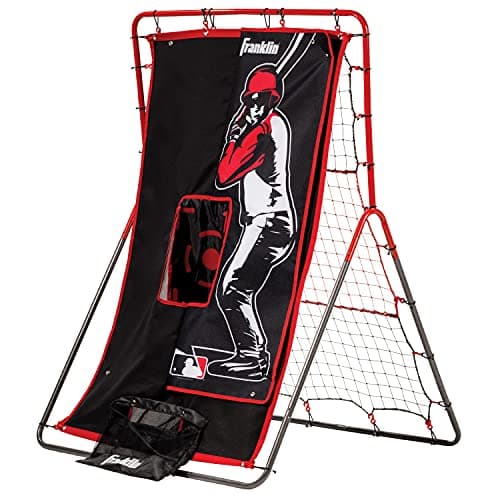 Franklin 55 in 2-in-1 Switch-Hitter Return Trainer A 55 x 36 in steel Y-frame with a three-way throw-and-field trainer on one side and a flip-style switch-hitter pitch target with a ball collector on the other. Two nets' worth of function on one frame, at the bottom of the price range. | Best pitchback net overallAges 7 and up | 8.1 /10 | $32.29Amazon |
| 2 | 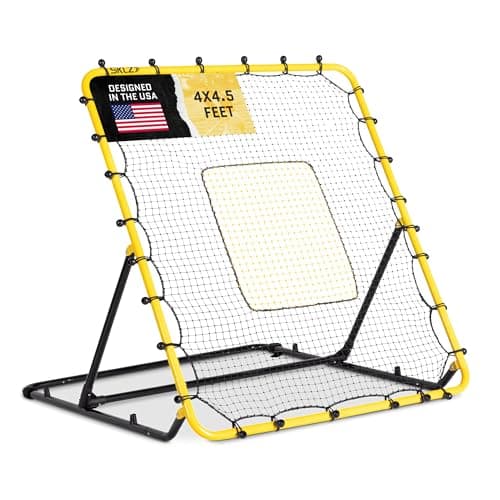 SKLZ Fielding Trainer 4 x 4.5 ft Pitch-Back Net The only net here whose listing names three distinct return settings — ground ball, line drive and fly ball — on a 4 x 4.5 ft steel frame that folds flat. One net, three drills, and the only one that stores properly. | Best for fielding drillsAges 7 and up | 7.9 /10 | $99.99Amazon |
| 3 | 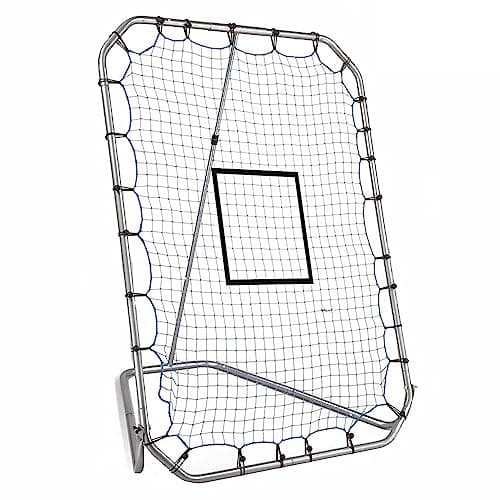 Franklin Sports All-Angle Pitchback Rebounder Net Adjustable rebound path plus a strike-zone target on the net, for well under the SKLZ. The pick if your kid pitches as well as fields. | Best pitchback with a strike zoneAges 7 and up | 7.5 /10 | $58.99Amazon |
| 4 | 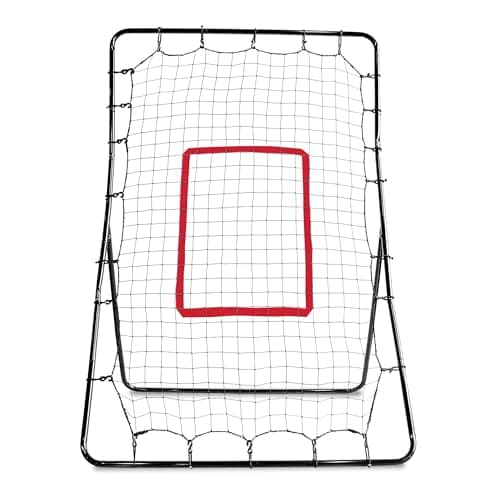 SKLZ PitchBack (2 ft 9 in x 4 ft 8 in) 2 ft 9 in x 4 ft 8 in, the narrowest frame here, in the budget bracket. Fits a side yard nothing else will; punishes an inaccurate throw. | Best for a tight spaceAges 7 and up | 7.5 /10 | $44.99Amazon |
| 5 | 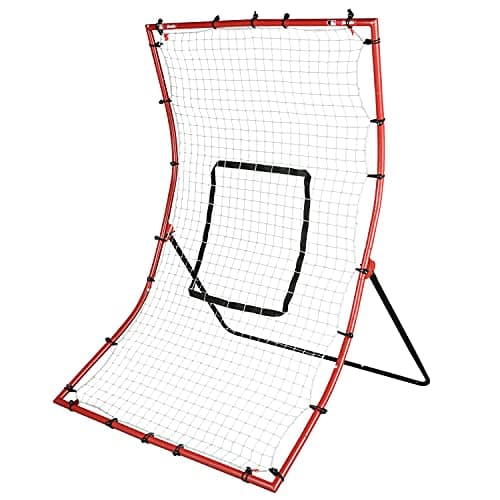 Franklin MLB Flyback Pitch Return (65 x 44 in) 65 x 44 in — the largest stated rebound surface on this page — with adjustable return angles and ground stakes in the box. Buy this one if your 8-year-old misses the net. | Best big net for a wild armAges 7 and up | 7.3 /10 | $76.49Amazon |
| 6 | 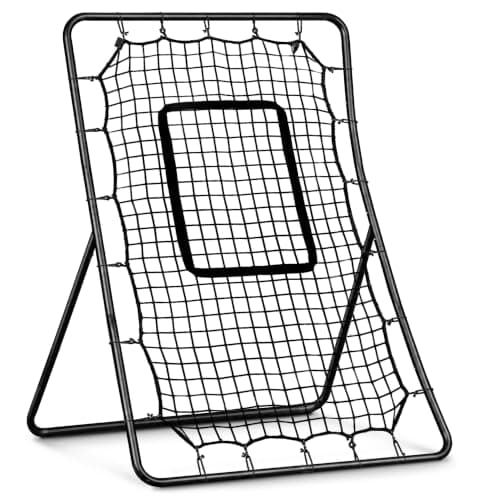 GoSports 5 x 3 ft Pitch-Back Rebounder A 5 x 3 ft rebounder with a strike zone, in the budget bracket. Wide and low, so it suits grounders and not high throws — and the listing names neither frame material nor net ply. | Best cheap net with a strike zoneAges 7 and up | 7.1 /10 | $39.99Amazon |
| 7 | 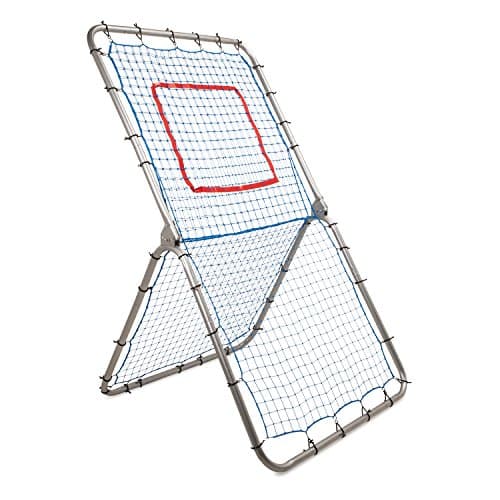 Champion Sports Rebound Pitchback Screen The heavy-duty adjustable-angle screen rec programs buy by the dozen. The listing publishes less detail than any other net here, which is the trade. | Best built to lastAges 7 and up | 7.0 /10 | $116.70Amazon |
#ad · Prices come live from Amazon, last checked November 3, 2026. Scores are ours, built from the governing bodies' certification rules, the makers' sizing charts and published specs. Photos are illustrative stock. Tap a row for the full write-up.
What a pitchback actually does
A pitchback is a frame with a tensioned net in it, angled so a thrown ball comes back to you. That is the whole idea, and it is a better idea than it sounds, because the limiting factor on a kid getting better at baseball is almost never coaching. It is having someone available to throw with. A pitchback is available every day after school, and it does not get bored after fifteen minutes.
What it does not do is replace a hitting net. The two pieces of equipment look similar and solve opposite problems: a hitting net absorbs a batted ball and stops it dead, and a pitchback returns a thrown ball to you at speed. Hitting into a pitchback sends the ball back at a child's face, and throwing into a hitting net means walking over to pick the ball up. If you are not sure which one you need, read hitting net vs pitchback net before you order either — that page exists precisely because this is the most common mix-up in backyard gear.
The other thing a pitchback does is expose a throwing problem honestly. A kid who throws from the elbow, or releases late, or steps across himself, gets an immediate and unsentimental answer: the ball does not come back. Nobody has to say anything. That feedback loop is the real reason this is a good $60 purchase.
How these were ranked
Nobody on this site has swung, thrown into or assembled any of these nets, and we are not going to pretend otherwise. What we have done is read every live listing, taken only the figures each one actually publishes, and ranked on the five criteria below — the published practice-gear rubric, in weight order.
- Stability (25%). Does the frame stay where you put it when a 12-year-old throws hard at it? Ground stakes in the box and a heavier steel frame both count here. A net that walks backward after six throws gets abandoned.
- Setup time (20%). A net that takes forty minutes and two adults to assemble gets built once. A fold-flat frame that goes up in ten minutes gets used.
- Durability (20%). Frame material and net construction as published. Netting is the part that fails first, usually at the bungee or the grommets, and a printed target wears before the frame does.
- Value (20%). What the listing gives you for the money, with no credit for a brand name. Two of the cheapest nets here score highest on this one.
- Portability (15%). Does it fold? Will it live in a garage next to a car, or does it own a corner of the lawn until October?
We deliberately do not score on “rebound quality”, because no maker publishes a figure for it and any number we invented would be fiction. Where a listing omits a dimension, this page says so instead of filling the gap. The full rubric and its weights are published on how we pick youth baseball gear.
Size is the spec that matters, not the brand
If you read one section, read this one. The single biggest determinant of whether a pitchback gets used is whether the kid can hit it. A 2 ft 9 in wide net demands accuracy that most 8-year-olds do not have; a 65 in wide net forgives a throw that sails. Here is the full range on this page, in published dimensions:
| Net | Stated size | Rough target area | Strike zone? |
|---|---|---|---|
| Franklin MLB Flyback | 65 x 44 in | ~20 sq ft | No |
| Franklin 55 in Switch-Hitter | 55 x 36 in | ~14 sq ft | Pitch target, one side |
| GoSports Rebounder | 5 x 3 ft | 15 sq ft | Yes |
| SKLZ Fielding Trainer | 4 x 4.5 ft | 18 sq ft | No |
| SKLZ PitchBack | 2 ft 9 in x 4 ft 8 in | ~13 sq ft | No |
| Franklin All-Angle | Not published | — | Yes |
| Champion Sports Rebound | Not published | — | No |
Two of the seven do not publish a frame size at all, which is a genuine mark against them and is reflected in their cons. The Franklin All-Angle earns its place on the strike-zone target and the adjustable path; the Champion earns its place on build quality and the fact that rec programs buy it. But if knowing the footprint before it arrives matters to you — and in a small yard it should — buy one of the five that states a number.
Return angle: what the three settings do
Every net here except the small SKLZ PitchBack advertises some form of adjustable angle. The angle changes what the ball does on the way back, and that is the difference between one drill and three.
- Leaned away from you (net face angled up). The ball comes back high — a pop fly. The hardest setting to use in a small yard, because a missed catch lands in the neighbor's hedge.
- Upright. The ball comes straight back at chest height — a line drive. This is the catch-practice setting and the one a kid will use most.
- Leaned toward you (net face angled down). The ball comes back low and skipping — a ground ball. This is the setting that teaches a kid to get his glove in the dirt, which is the hardest habit to build and the one most youth infielders are missing.
The SKLZ Fielding Trainer is the pick for fielding work because its listing names all three settings explicitly rather than saying “adjustable” and leaving you to work it out. That is a small thing that turns into a real difference when a parent is setting up a thirty-minute session and wants a plan. The Franklin Flyback and the Champion both state adjustable return angles without naming the three positions, and the Franklin Switch-Hitter states a three-way throw-and-field trainer on one of its two faces.
Do you need a strike zone on it?
Only if your kid pitches, and only if he is old enough to care where the ball went. A printed or ribboned strike zone turns the net into a target: throw, see where it hit, adjust. For a 10-year-old who has just been handed the ball for the first time, that is genuinely useful and it is the reason the Franklin All-Angle and the GoSports rank where they do.
For a 7-year-old, it is decoration. At that age the drill is “throw it at the net and catch it coming back”, and a target just gives him something else to miss. Buy the biggest net you can instead.
What to buy at 7, 10 and 12
- Age 7 or 8. The biggest, cheapest net that will stay standing: the Franklin Flyback at 65 x 44 in, the Franklin Switch-Hitter at 55 x 36 in, or the GoSports at 5 ft wide if the budget is tight. Skip the narrow frames entirely — at this age the net has to forgive him, not test him.
- Age 9 or 10. The SKLZ Fielding Trainer, for the three named return settings. This is the age at which fielding becomes the thing he is actually behind on, and a grounder setting is worth more than a strike zone. The Franklin Switch-Hitter is the cheaper way to most of the same thing.
- Age 10 to 12, and he pitches. The Franklin All-Angle for the strike-zone target, or the Franklin Switch-Hitter if you want a pitch target and a ball collector on one side and fielding on the other.
- Several kids, or a net that lives outside year-round. The Champion Sports Rebound. It is the institutional build and it is priced accordingly.
- A side yard or a driveway and not much else. The small SKLZ PitchBack, which is 2 ft 9 in wide and fits where nothing else will. Accept that an inaccurate throw will not come back.
Measure the yard first
A pitchback needs throwing distance in front of it and clearance behind it, and both are usually the constraint rather than the net itself. As a working rule, give a 7- or 8-year-old about 25 to 30 feet of throwing room, a 10-year-old 35 to 40, and a 12-year-old 45 or more — and then check what is directly behind the net, because every net on this page will let a hard throw through eventually, and a window is more expensive than any of them.
Those are planning distances for a backyard, not league dimensions. The official mound-to-plate distances by age sit on pitching machine speed by age, which also covers how fast a kid should be seeing the ball at each age.
One more constraint worth checking before you order: where the net lives in November. Only the SKLZ Fielding Trainer advertises a fold-flat design. The rest are frames you either leave up or disassemble, which in practice means they stay up, which in practice means the netting weathers for twelve months a year instead of six.
In detail
The picks, in full
Rank 1
Best pitchback net overall
Franklin 55 in 2-in-1 Switch-Hitter Return Trainer
A 55 x 36 in steel Y-frame with a three-way throw-and-field trainer on one side and a flip-style switch-hitter pitch target with a ball collector on the other. Two nets' worth of function on one frame, at the bottom of the price range.
Spec sheetEvery figure sourced and linked
How the 8.1 score breaks down
- Setup time (20%)
- 8
- Stability (25%)
- 8
- Portability (15%)
- 6
- Durability (20%)
- 9
- Value (20%)
- 9
What the spec sheet supports
- Rebounds grounders, line drives and pop-ups depending on angle
- Pitch target side with a ball collector
Where it falls short
- Steel frame is not light
- A pitchback returns what you throw; a wild 7-year-old gets wild returns
Skip this if…
…you already own a 7×7 net; a net plus a parent is a better catch partner.
#ad · Price as of November 3, 2026 · Disclosure for the link to Franklin 55 in 2-in-1 Switch-Hitter Return Trainer
Rank 2
Best for fielding drills
SKLZ Fielding Trainer 4 x 4.5 ft Pitch-Back Net
The only net here whose listing names three distinct return settings — ground ball, line drive and fly ball — on a 4 x 4.5 ft steel frame that folds flat. One net, three drills, and the only one that stores properly.
Spec sheetEvery figure sourced and linked
| Category | Pitchback |
|---|---|
| Fits | Ages 7 and up |
| Construction | Steel frame with a UV and weather-resistant bungee-mounted net; easy-fold design (listing) |
| Sizes | 4 x 4.5 ft steel frame (listing) |
| Included | Three ball-return settings: ground ball, line drive and fly ball (listing) |
How the 7.9 score breaks down
- Setup time (20%)
- 9
- Stability (25%)
- 7
- Portability (15%)
- 9
- Durability (20%)
- 9
- Value (20%)
- 6
What the spec sheet supports
- Three return angles in one frame, so the same net runs a grounder drill and a pop-fly drill
- Bungee-mounted net returns the ball instead of deadening it
- Folds down, so it can live in the garage rather than on the lawn all season
Where it falls short
- The most expensive net on this page
- No printed strike zone, so it is a fielding trainer first and a pitching target second
- Stock on this listing runs thin and the price moves with it
Skip this if…
…the kid mainly wants to work on hitting the corners; buy a net with a printed strike-zone target instead.
#ad · Price as of November 3, 2026 · Disclosure for the link to SKLZ Fielding Trainer 4 x 4.5 ft Pitch-Back Net
Rank 3
Best pitchback with a strike zone
Franklin Sports All-Angle Pitchback Rebounder Net
Adjustable rebound path plus a strike-zone target on the net, for well under the SKLZ. The pick if your kid pitches as well as fields.
Spec sheetEvery figure sourced and linked
| Category | Pitchback |
|---|---|
| Fits | Ages 7 and up |
| Construction | Steel frame with heavy-duty netting; adjustable rebound path (listing) |
| Included | Strike-zone target on the net; set up for pitching and fielding drills (listing) |
How the 7.5 score breaks down
- Setup time (20%)
- 7
- Stability (25%)
- 7
- Portability (15%)
- 6
- Durability (20%)
- 8
- Value (20%)
- 9
What the spec sheet supports
- Strike-zone target means a kid can practice pitching alone and see where the ball went
- Rebound path adjusts, so the same net feeds grounders or line drives
- Mid-range price for a steel frame
Where it falls short
- The listing does not publish frame dimensions, so measure your space before you order
- A target printed on netting wears out before the frame does
Skip this if…
…you want published dimensions before you buy; the Franklin Flyback states 65 x 44 in on its listing.
#ad · Price as of November 3, 2026 · Disclosure for the link to Franklin Sports All-Angle Pitchback Rebounder Net
Rank 4
Best for a tight space
SKLZ PitchBack (2 ft 9 in x 4 ft 8 in)
2 ft 9 in x 4 ft 8 in, the narrowest frame here, in the budget bracket. Fits a side yard nothing else will; punishes an inaccurate throw.
Spec sheetEvery figure sourced and linked
| Category | Pitchback |
|---|---|
| Fits | Ages 7 and up |
| Construction | Pitching net and rebounder, black and red (listing) |
| Sizes | 2 ft 9 in x 4 ft 8 in (listing) |
How the 7.5 score breaks down
- Setup time (20%)
- 8
- Stability (25%)
- 6
- Portability (15%)
- 9
- Durability (20%)
- 6
- Value (20%)
- 9
What the spec sheet supports
- Budget-bracket pricing from the brand with the longest track record in rebounders
- Narrow footprint fits a side yard or a driveway
Where it falls short
- A 2 ft 9 in wide target punishes an inaccurate thrower, which is most 8-year-olds
- The listing does not state adjustable return settings
Skip this if…
…your kid still throws wide; the 65 x 44 in Franklin Flyback means less time fetching.
#ad · Price as of November 3, 2026 · Disclosure for the link to SKLZ PitchBack (2 ft 9 in x 4 ft 8 in)
Rank 5
Best big net for a wild arm
Franklin MLB Flyback Pitch Return (65 x 44 in)
65 x 44 in — the largest stated rebound surface on this page — with adjustable return angles and ground stakes in the box. Buy this one if your 8-year-old misses the net.
Spec sheetEvery figure sourced and linked
| Category | Pitchback |
|---|---|
| Fits | Ages 7 and up |
| Construction | Steel frame with all-weather durable netting; multi-position adjustable return angles (listing) |
| Sizes | 65 x 44 in (listing) |
| Included | Ground stakes (listing) |
How the 7.3 score breaks down
- Setup time (20%)
- 6
- Stability (25%)
- 9
- Portability (15%)
- 4
- Durability (20%)
- 8
- Value (20%)
- 8
What the spec sheet supports
- The largest stated rebound surface on this page, which forgives an off-target throw
- Ground stakes in the box, so it does not walk backward under a hard throw
- Return angle adjusts for grounders, liners and pop-ups
Where it falls short
- A 65 x 44 in frame is a big object to store
- No printed strike zone
Skip this if…
…your yard is small or the garage has to hold a car; the small SKLZ PitchBack is a third of the footprint.
#ad · Price as of November 3, 2026 · Disclosure for the link to Franklin MLB Flyback Pitch Return (65 x 44 in)
Rank 6
Best cheap net with a strike zone
GoSports 5 x 3 ft Pitch-Back Rebounder
A 5 x 3 ft rebounder with a strike zone, in the budget bracket. Wide and low, so it suits grounders and not high throws — and the listing names neither frame material nor net ply.
Spec sheetEvery figure sourced and linked
| Category | Pitchback |
|---|---|
| Fits | Ages 7 and up |
| Sizes | 5 x 3 ft (listing) |
| Included | Pitch-back return net with a strike zone, for pitching and fielding (listing) |
How the 7.1 score breaks down
- Setup time (20%)
- 8
- Stability (25%)
- 5
- Portability (15%)
- 8
- Durability (20%)
- 5
- Value (20%)
- 10
What the spec sheet supports
- A strike zone and a 5 ft wide surface for budget-bracket money
- Wide and low, which suits grounders and a kid learning to field
Where it falls short
- 3 ft tall will not return a high throw
- The listing names neither the frame material nor the net ply, so durability is unproven
Skip this if…
…you need this net to last several seasons; the Champion and SKLZ frames are the heavier builds.
#ad · Price as of November 3, 2026 · Disclosure for the link to GoSports 5 x 3 ft Pitch-Back Rebounder
Rank 7
Best built to last
Champion Sports Rebound Pitchback Screen
The heavy-duty adjustable-angle screen rec programs buy by the dozen. The listing publishes less detail than any other net here, which is the trade.
Spec sheetEvery figure sourced and linked
| Category | Pitchback |
|---|---|
| Fits | Ages 7 and up |
| Construction | Heavy-duty adjustable-angle pitchback screen; multi-sport (listing) |
How the 7.0 score breaks down
- Setup time (20%)
- 6
- Stability (25%)
- 8
- Portability (15%)
- 5
- Durability (20%)
- 9
- Value (20%)
- 6
What the spec sheet supports
- Built to the spec rec programs buy, not the spec one season needs
- Angle adjusts across the full range of return types
- Works for soccer and lacrosse too, which matters for a multi-sport kid
Where it falls short
- The listing publishes the least detail of any net here: no dimensions, no net ply
- Priced alongside the SKLZ without the SKLZ listing three named return settings
Skip this if…
…you want the exact frame size before it arrives; this listing does not state one.
#ad · Price as of November 3, 2026 · Disclosure for the link to Champion Sports Rebound Pitchback Screen
Before you buy
A pitchback is a cheap purchase that is easy to get wrong, and the ways it goes wrong are predictable. Four checks before you order:
- Can your kid hit it? Be honest about his accuracy rather than his age. If half his throws to you are off target, buy the widest net on the page. Everything else on a spec sheet is secondary to a ball that comes back.
- Is it going to be a pitching target or a fielding trainer? If pitching, you want a strike zone. If fielding, you want three return angles. Two of the seven nets here give you one and not the other, and the listings are clear about which.
- Where does it live? Measure the footprint and then measure the gap beside the car. A net that has to come down every time somebody parks will be in the garage by June.
- Does the listing actually tell you the size? Two of these do not. That is survivable if you have the space to absorb a surprise and a problem if you do not.
A word on the prices you see here
The prices on the cards above are pulled live and change often — pitchback nets are heavily discounted and then un-discounted, sometimes within a week, which is why this page talks in brackets rather than numbers. As a rough map: the Franklin Switch-Hitter, the GoSports and the small SKLZ sit in the budget bracket, the Franklin All-Angle and the Flyback in the middle, and the SKLZ Fielding Trainer and the Champion at the top of a category that still tops out around a hundred dollars. There is no $400 pitchback and you do not need one. Check the number on the card on the day you buy; the ordering above has moved before and will again.
For where a net fits against everything else a season costs, see what a season of youth baseball costs. For the order to buy backyard gear in — tee first, then balls, then a net — see backyard practice setup.
The two nets most people choose between
| Evidence | Franklin 55 in 2-in-1 Switch-Hitter Return Trainer | SKLZ Fielding Trainer 4 x 4.5 ft Pitch-Back Net |
|---|---|---|
| Sizes | 55 × 36 in steel 'Y' frame with 3/4 in steel tubing (retailer listing) | 4 x 4.5 ft steel frame (listing) |
| Construction | All-weather steel; 24-ply PE net with target ribbon; flip-style switch-hitter pitch target for right- and left-handed batters (retailer listing) | Steel frame with a UV and weather-resistant bungee-mounted net; easy-fold design (listing) |
| Included | Throw-and-field trainer on one side, pitch target and ball collection on the other (retailer listing) | Three ball-return settings: ground ball, line drive and fly ball (listing) |
| Score | 8.1/10 | 7.9/10 |
The Franklin takes it on value and stability: a wider frame, two usable faces and the lowest price of the seven. The SKLZ takes it on setup, portability and published detail — it is the only net here that advertises a fold-flat design, and the only one that names its three return settings. If you want one net that runs structured fielding drills and then goes in the garage, pay the extra for the SKLZ. If you want the most function per dollar, the Franklin is the answer.
How we picked these
Researched, certification-checked and sized for the age
Every pick on this page earns its place the same way: the certification is checked against the governing bodies' rules and the maker's stated stamp, so the gear is legal for the division it is bought for; sizing comes from the makers' own age, height and hand charts; the published specs (drop, barrel, construction, closure, cleat type) are read from the maker's page; and the patterns in verified buyer reviews sharpen the “best for” line on each card. Every figure links to where it came from, with the date.
Scores are editorial judgments built from that documented research, applied with the same weights to every product in a category, so the ranking is comparable top to bottom. Commissions never set a score or decide a pick. The rubric and its weights are published.
Corrections & updates
- Page published. Frame dimensions, return settings and strike-zone details read from each live listing on this date; two listings publish no frame size and that is stated rather than filled in.
Questions parents ask
Frequently asked
What is the best pitchback net for a kid?
What size pitchback net do I need?
Can you hit into a pitchback net?
Do pitchback nets work for softball?
How much space does a pitchback need?
Is a pitchback worth it, or should I just play catch with my kid?
Which pitchback has a strike zone?
Keep reading
Related on Bat & Bucket
- Hitting net vs pitchback netRead this before you order either.
- Best baseball hitting netsWhere a batted ball belongs.
- Backyard practice setupThe order to buy backyard gear in.
- Best bucket of baseballsWhat you throw into it.
- Youth baseball equipment checklistEverything a season needs.
- Pitching machine speed by ageDistances and speeds by age.
Receipts
Sources
- Amazon listing: SKLZ Fielding Trainer baseball and softball pitch-back rebound net, ground / line drive / fly ball return settings, 4 x 4.5 ft steel frame, UV and weather-resistant bungee net, easy-fold design (read 2026-10-21)
- Amazon listing: Franklin Sports All-Angle baseball pitchback rebounder net, adjustable rebound path, steel frame, heavy-duty netting, strike-zone target (read 2026-10-21)
- Amazon listing: Franklin Sports MLB Flyback multi-position pitch return, 65 x 44 in, all-weather netting, adjustable return angles, steel frame and ground stakes (read 2026-10-21)
- Amazon listing: Champion Sports Rebound Pitchback net, adjustable-angle multi-sport rebounder screen, heavy-duty construction (read 2026-10-21)
- Amazon listing: SKLZ PitchBack baseball and softball pitching net and rebounder, black/red, 2 ft 9 in x 4 ft 8 in (read 2026-10-21)
- Amazon listing: GoSports 5 x 3 ft baseball and softball pitching and fielding rebounder, pitch-back return net with strike zone (read 2026-10-21)
- BaseballMonkey: Franklin 55 in 2-in-1 Switch-Hitter Return Trainer
Certification rules come from the governing bodies' own pages (Little League, USA Baseball, USSSA, NOCSAE), sizes from the makers' published sizing charts, and specs from the maker's product page or the retailer listing named on each product. Every figure above links to the page it was read from, with the date. Amazon prices move often, so each buy button takes you to the current price. Read the full method.