Practice & Gear Bag · Guide
How high should a batting tee be?
Set the tee wrong and every swing off it teaches the wrong thing. The rule is simple — the ball sits where a strike sits, which for most kids is belt height — but the useful part is knowing how to move it on purpose, and knowing that the tee you own may not go low enough for a six-year-old or high enough for a thirteen-year-old.
By Mike M.Updated Researched · every figure sourced
#adReader-supported: we may earn a commission if you buy through our links, at no extra cost to you. It never decides a pick. How we pick · Disclosure
The rule: belt height
A batting tee exists so a hitter can practise the swing he is going to use in a game. That means the ball has to be where a pitched ball would be, and the middle of a strike zone sits at roughly the belt. Put the ball there and every rep reinforces the swing plane he needs; put it somewhere else and he spends an hour grooving a swing he will not get to use.
The important word in that is his belt. A tee set to 28 inches is the right height for one kid and badly wrong for another, which is why no maker publishes “the correct height” and why every decent tee adjusts over a foot or more. Stand the kid in his stance, look at where his belt is, and set the top of the ball level with it.
What that is in inches, by age
Useful for checking whether a tee you are about to buy covers your kid at all. These are belt heights for typical players at each age, not prescriptions: measure your own.
| Age | Typical belt height | Tee range you need |
|---|---|---|
| 4–6 (tee ball) | About 20–24 in | A tee that goes down to 18–20 in |
| 7–9 | About 24–28 in | Most youth tees cover this |
| 10–12 | About 28–33 in | Top of the youth range |
| 13–14 | About 33–38 in | A tee that reaches 40 in or more |
The two ends are where tees fail. A junior tee that tops out at 25 inches is useless by eight. A tee that only starts at 27.5 inches cannot be set low enough for a six-year-old and cannot be used for low-strike work by a ten-year-old either. The published ranges on the four tees below are the thing to check before you buy.
Moving the tee on purpose
Once belt height is the default, the tee becomes a tool for working a specific pitch. Three settings cover almost everything a youth hitter needs.
- Belt height, middle of the plate. The default. Most reps live here, and it is where you go back to when something in the swing breaks down.
- Top of the knees. The low strike. Kids chop down at these in games; on a tee you can make him stay through the ball instead.
- Bottom of the chest. The high strike. Teaches him to get the barrel above his hands rather than dropping underneath it and popping it up.
A round of ten swings at each is a far better twenty minutes than thirty swings down the middle. And because the tee does not move once he is in his stance, he can feel the difference between the three in a way live pitching never lets him.
Front to back is the setting everyone forgets
Height is only half the setup. Where the tee sits relative to home plate decides which part of the plate he is practising, and almost everyone leaves it in the same place all session.
| Tee position | What it simulates | What it teaches |
|---|---|---|
| Middle of the plate, even with the front hip | A pitch down the middle | The default swing; contact out front |
| Forward, toward the pitcher, inside edge | An inside pitch | Pulling the hands in and turning on it |
| Back, toward the catcher, outside edge | An outside pitch | Letting the ball travel and driving it the other way |
The one to practise most is the outside pitch, because it is the one youth hitters handle worst and the one pitchers throw most as kids get older. It also produces the most obviously wrong-looking swings on a tee, which makes it the easiest to coach.
Check your tee actually adjusts that far
Every tee publishes a height range and they differ by a lot. Tanner lists its Junior at 18 to 25 inches and its youth Original and Pro at 20 to 32 inches. JUGS lists the T at 24 to 45 inches. PowerNet lists its tripod at 27.5 to 44 inches. Those four ranges cover completely different kids.
If you have one kid, buy the tee whose range brackets his belt height now and for the next three seasons. If you have two kids four years apart, the wide-range tees are worth the money precisely because they do not need replacing. And if you are buying a tee for a team bucket, the heavy-based ones exist because tees get hit — the full ranked field is on best batting tees for kids, with the two best-known models compared on Tanner Tee vs JUGS Tee.
Four tees and their published ranges
Our picks for this
Tees that reach the heights above
Height ranges are quoted from the maker. Match the range to your kid's belt height now and three seasons from now, and check the bottom of the range as carefully as the top.
Best batting tee for kids overall
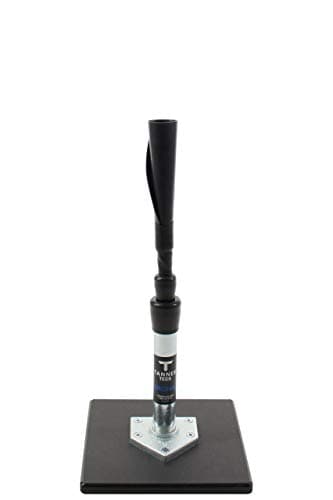
Tanner Tee The Original, Youth 20–32 in
Ages 5–12 (20–32 in)9.0/10Youth range 20 to 32 in, which brackets belt height from about five to twelve. The hand-rolled Flextop on a dense composite base.
$129.46Amazon#ad · Price as of November 3, 2026 · Disclosure for the link to Tanner Tee The Original, Youth 20–32 in
Best won't-tip batting tee
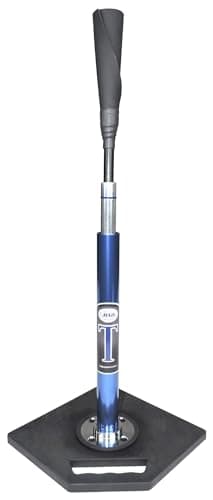
JUGS T Batting Tee
Ages 7 and up (24–45 in)9.2/1024 to 45 in on an 8 lb rubber-sealed steel base. The widest useful range here and the one that still works for a 13-year-old.
$104.99Amazon#ad · Price as of November 3, 2026 · Disclosure for the link to JUGS T Batting Tee
Best tee ball tee for 3–6
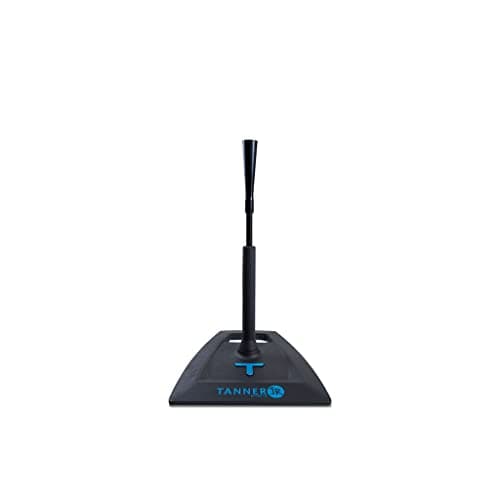
Tanner Tee Junior, 18–25 in
Ages 3–6 (18–25 in; maker: '3 - Tee Ball Years')8.5/1018 to 25 in, which is the only range on this page that goes low enough for a three- to six-year-old in tee ball.
$59.99Amazon#ad · Price as of November 3, 2026 · Disclosure for the link to Tanner Tee Junior, 18–25 in
Best portable tee
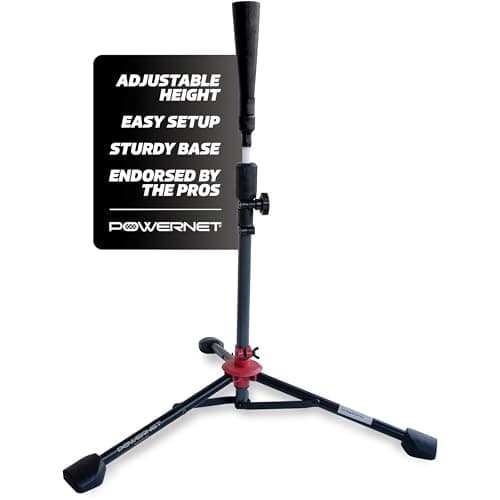
PowerNet Tripod Batting Tee (27.5–44 in)
Ages 9 and up (27.5–44 in)8.4/1027.5 to 44 in on a 2.5 lb pop-up tripod. Travel tee: it will not go low enough for a small kid, but it lives in the bat bag.
$49.99Amazon#ad · Price as of November 3, 2026 · Disclosure for the link to PowerNet Tripod Batting Tee (27.5–44 in)
Four tee-work mistakes
Setting it too high so the ball goes further. A high tee produces uppercut swings and satisfying fly balls, which is why kids and parents both drift up. It teaches a swing that pops up in games.
Hitting the stem, repeatedly, and ignoring it. Hitting the tee is information: he is contacting too deep or too low. Fix the swing rather than moving the tee back to protect it. It is also the reason weighted and flexible-top tees exist.
Fifty swings at the same height. Volume without variation grooves one swing. Three rounds of ten at three heights, with the tee moved front to back, is a better session and a shorter one.
No net, so the session becomes ball-chasing. Twenty minutes of tee work needs a net and a bucket or it becomes five minutes of hitting and fifteen of walking. Those are on best baseball hitting nets and best bucket of baseballs, and the whole setup is on backyard baseball practice setup.
How we picked these
Researched, certification-checked and sized for the age
Every pick on this page earns its place the same way: the certification is checked against the governing bodies' rules and the maker's stated stamp, so the gear is legal for the division it is bought for; sizing comes from the makers' own age, height and hand charts; the published specs (drop, barrel, construction, closure, cleat type) are read from the maker's page; and the patterns in verified buyer reviews sharpen the “best for” line on each card. Every figure links to where it came from, with the date.
Scores are editorial judgments built from that documented research, applied with the same weights to every product in a category, so the ranking is comparable top to bottom. Commissions never set a score or decide a pick. The rubric and its weights are published.
Questions parents ask
Frequently asked
How high should a batting tee be set?
How high should a tee be for a 6-year-old?
How high should a tee be for a 10-year-old?
Where should the tee be placed relative to home plate?
Why does my kid keep hitting the tee?
Should tee work be at one height or several?
Keep reading
Related on Bat & Bucket
Receipts
Sources
- Tanner Tees: The Original batting tee, Youth 20-32 in
- Tanner Tees: Junior batting tee, 18-25 in
- JUGS: JUGS T batting tee
- PowerNet: Tripod batting tee (27.5-44 in)
- Tanner Tees: Pro batting tee, Youth 20-32 in
Certification rules come from the governing bodies' own pages (Little League, USA Baseball, USSSA, NOCSAE), sizes from the makers' published sizing charts, and specs from the maker's product page or the retailer listing named on each product. Every figure above links to the page it was read from, with the date. Amazon prices move often, so each buy button takes you to the current price. Read the full method.