Bats · Guide
How to break in a composite bat, stage by stage
A composite barrel is a weave of microfibers in resin, and it does not reach its designed performance until those fibers have been compressed by a few hundred controlled swings. Rush it and you get a bat that underperforms for a month. Do it in a cage full of dimpled balls and you can void the warranty. Here is the process, quoted from the maker.
By Mike M.Updated Researched · every figure sourced
#adReader-supported: we may earn a commission if you buy through our links, at no extra cost to you. It never decides a pick. How we pick · Disclosure
Why a composite bat needs this at all
A composite barrel is carbon or glass fiber laid up in resin. Out of the wrapper that structure is stiffer than it will ever be again, and it is the gradual, controlled flexing of the fibers that brings the barrel to the performance its certification allows. The maker's own framing is that the microfibers in a composite bat need to be compressed for optimal production, and that doing the break-in correctly also helps the bat's durability.
So two things are true at once. A brand new composite bat is legal and safe but not yet at its best, and the break-in is not only about performance: a bat compressed evenly lasts longer than one that was hammered on one side at full effort from the first swing.
The process, in four stages
| Stage | Swings | Effort | Source of the ball |
|---|---|---|---|
| 1 | About 50 | 50 percent | Batting tee, real baseball |
| 2 | About 50 | 75 percent | Batting tee, real baseball |
| 3 | About 50 | 75 percent | Soft toss or light front toss |
| 4 | About 50, then more at full speed | Full effort | Live or machine pitching, building up to game speed |
Four sets of fifty gets you to roughly 200 swings, inside the 150 to 400 range. For a kid taking a tee round and a soft-toss round a few times a week, that is two to three weeks of ordinary practice rather than a special project, which is the right way to think about it: break-in is just the first fortnight of normal work with the barrel turned between swings.
You need a tee and a bucket of balls to do this properly, and those are the two cheapest things in youth baseball. The lists are on best batting tees for kids and best bucket of baseballs.
Why you rotate the barrel
A bat contacts the ball on whichever face is forward, and a kid swinging with the same grip hits the same strip of barrel every time. If you only ever compress one side, you get a barrel that is broken in along one line and stiff everywhere else, which is both a performance problem and a durability problem.
A quarter of an inch per swing is small enough to be a single nudge of the hands and adds up to full coverage of the barrel over a couple of hundred swings. It is the one instruction in the whole process that people skip and the one that matters most, because the other instructions only affect how long break-in takes.
The cage mistake that voids a warranty
This is worth repeating to a 13-year-old who has just been given a flagship bat and a book of cage tokens, because the most natural way to put 200 swings on a new bat is also the way that can destroy it. If the cage uses dimpled balls, use the house bat there and break the new one in off a tee at home.
The cold-weather rule
Rawlings also warns that composite bats can be negatively affected by colder temperatures and that you should not leave the bat in a car or the garage. Bring it inside, particularly in a cool climate.
That rule applies long after break-in is finished, and it is the main practical argument for buying alloy instead if your season starts in March somewhere cold. A one-piece alloy bat has no break-in requirement and no temperature rule; the trade is more sting on mishits. Both sides of that are on alloy vs composite and one-piece vs two-piece bats.
Why not to shortcut it with rolling
Bat rolling presses a composite barrel through rollers to compress the fibers in minutes instead of weeks, and it is sold online as a service. It is also illegal in every organisation that sanctions youth baseball, because it takes the bat past the performance limit its certification mark attests to. A rolled bat is removed from play and in most leagues carries a suspension on top.
It matters for second-hand buying too: a used composite bat advertised as “broken in for you”, “rolled” or “hot” is a bat you cannot use. The checks are on should you buy a used youth bat.
Three bats this applies to
Every composite bat on this site needs the process above. These three are the ones most likely to arrive in a youth player's hands, with their construction quoted from the page it was read on.
Our picks for this
Three composite bats, and what each one is
All three are composite and all three need the 150-to-400-swing process. Check the stamp against your kid's league before you start: break-in does not help a bat the umpire refuses.
Best premium USA bat, runner-up
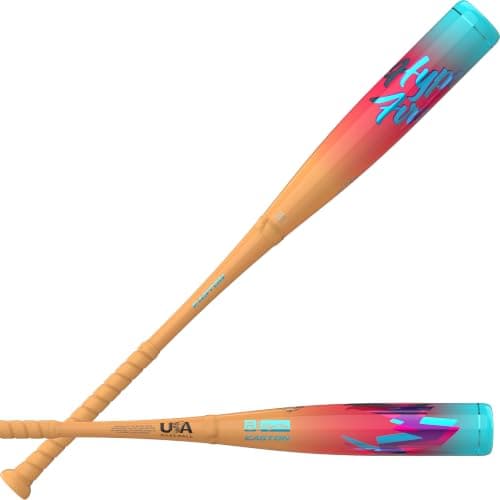
Easton Hype Fire USA (2027)
Two-piece composite USA bat in -11, -10, -8 and -5, with a 3D Ropecoil barrel. Legal in Little League Majors and below.
$349.99Amazon#ad · Price as of November 3, 2026 · Disclosure for the link to Easton Hype Fire USA (2027)
Best USA bat overall
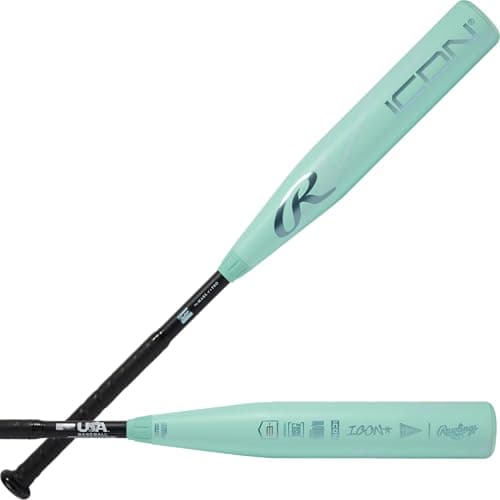
Rawlings Icon USA (2026)
Two-piece composite USA bat in -12 through -5. Rawlings' own pages carry both the break-in guidance quoted above and the bat it applies to.
$299.99Amazon#ad · Price as of November 3, 2026 · Disclosure for the link to Rawlings Icon USA (2026)
Best DeMarini USSSA bat
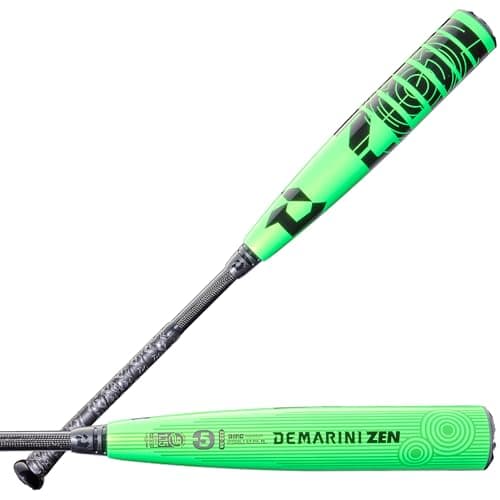
DeMarini Zen USSSA (2026)
Two-piece composite with a Dark Matter barrel, USSSA 1.15 BPF, in -10, -8 and -5. Travel ball only; not legal in Little League.
$159.95Amazon#ad · Price as of November 3, 2026 · Disclosure for the link to DeMarini Zen USSSA (2026)
Alloy bats need none of this
An alloy bat is a single piece of metal and it performs the same on swing one as on swing one thousand. No break-in, no rotation, no temperature rule, no dimpled-ball warning. If the process above sounds like more management than you want for a 9-year-old's rec season, that is a legitimate reason to buy alloy and it is not a compromise on legality: the stamp is the same.
Where it does become a compromise is sting on mishits, which is the whole argument for a two-piece composite in the first place. Pick the problem you would rather have.
How we picked these
Researched, certification-checked and sized for the age
Every pick on this page earns its place the same way: the certification is checked against the governing bodies' rules and the maker's stated stamp, so the gear is legal for the division it is bought for; sizing comes from the makers' own age, height and hand charts; the published specs (drop, barrel, construction, closure, cleat type) are read from the maker's page; and the patterns in verified buyer reviews sharpen the “best for” line on each card. Every figure links to where it came from, with the date.
Scores are editorial judgments built from that documented research, applied with the same weights to every product in a category, so the ranking is comparable top to bottom. Commissions never set a score or decide a pick. The rubric and its weights are published.
Questions parents ask
Frequently asked
How many swings does it take to break in a composite bat?
Do you have to rotate a bat when breaking it in?
Can you break in a composite bat in a batting cage?
What temperature is too cold for a composite bat?
Do alloy bats need to be broken in?
Is bat rolling a legal way to break in a composite bat?
Keep reading
Related on Bat & Bucket
Receipts
Sources
- Rawlings/Easton: How to break in your composite bat (150-400 swings, rotate 1/4 in, no dimpled balls)
- Easton: 2027 Hype Fire USA bat (-11, -10, -8, -5)
- Rawlings: 2026 Icon USA bat (specs, bat length by age/height table)
- Headbanger Sports: 2027 DeMarini Zen USSSA bat listing
- BaseballMonkey: How to tell if a baseball bat is legal in 2026 (league-by-league summary)
Certification rules come from the governing bodies' own pages (Little League, USA Baseball, USSSA, NOCSAE), sizes from the makers' published sizing charts, and specs from the maker's product page or the retailer listing named on each product. Every figure above links to the page it was read from, with the date. Amazon prices move often, so each buy button takes you to the current price. Read the full method.