Bats · Guide
Should you buy a used youth baseball bat?
Used youth bats are everywhere, because every family in the league has one their kid outgrew in July. Most of them are fine. A few are illegal, a few are damaged in ways you cannot see, and one category is worthless no matter how good it looks. Here is how to tell which is which before you hand over the cash.
By Mike M.Updated Researched · every figure sourced
#adReader-supported: we may earn a commission if you buy through our links, at no extra cost to you. It never decides a pick. How we pick · Disclosure
League rules as of Oct 10, 2026. Every rule on this page was read from the governing body's own page on that date, and each is linked. Leagues and tournaments change bat and gear rules between seasons (USSSA's 14U bat rule changed on January 1, 2026): confirm on the linked page and with your league before you buy, and tell us if a rule has changed.
The short version
A youth bat almost never wears out. It gets outgrown, or a division change makes it illegal, and then it sits in a garage. That is why the second-hand market is so good and why the seller is usually honest: they are a parent on the next field over, not a dealer.
The risk is not that someone lies to you. It is that neither of you knows the bat is no longer legal, or that the barrel has a crack you cannot see under the paint. Both of those cost you the whole purchase, because an illegal or damaged bat is removed from play at the plate.
The five checks
Run these in order, in daylight, before you pay. Compiled from the league rules on damage, alteration and legibility summarised by BaseballMonkey, plus the approved lists USA Baseball publishes.
- Is the certification mark there, legible and correct? An illegible stamp is treated as no stamp. Find it on the taper, confirm it is the right mark for your kid's league, and photograph it. The three marks are explained on how to read a bat stamp.
- Does the barrel have dents, cracks or a misshapen area? Run a flat palm along the whole barrel, rotating as you go. Alloy dents; composite cracks, often as a hairline you can only see at an angle in bright light.
- Does it rattle? Shake it. A rattle means a loose end cap or something broken inside, and that bat is out of play regardless of its stamp.
- Has it been altered? Rolled, shaved or repainted bats are illegal and in most leagues carry a suspension on top. See the section below for what to look for.
- Is the model still certified? USA Baseball and USSSA occasionally decertify a model. Check the published approved lists before buying anything more than a couple of years old.
The composite problem
An alloy bat tells you how hard its life has been: you can see the dents. A composite bat does not. Composite barrels gradually lose stiffness as the resin matrix breaks down with use, which is why composite bats need a break-in period at all, and that process does not stop at the end of break-in. A heavily used composite barrel can look immaculate and be past its best.
Composite is also the material that cracks in cold weather, and you have no way of knowing whether the previous owner swung it through a freezing March practice. So the rule of thumb: buy used alloy with confidence, buy used composite only from someone you know, cheaply, and with the barrel inspected in bright light. The material differences are set out on alloy vs composite, and the break-in process on how to break in a composite bat.
Rolled and shaved bats
These are the two alterations sold as upgrades. Rolling runs a composite barrel through a press to accelerate the break-in and soften the walls. Shaving removes material from inside the barrel to thin the walls. Both make the barrel more elastic, both push the bat past the performance limit its stamp certifies, and both are illegal in every organisation that sanctions youth baseball.
What to look for: a composite bat that feels unusually “loose” or dull when you flick the barrel; paint or decals disturbed around the end cap, which has to come off for shaving and is then glued back; a seller describing the bat as “juiced”, “hot”, “broken in for you” or “rolled”. Walk away from all of it. Beyond the legality, a shaved barrel is structurally weaker and fails suddenly.
Where to buy used, and where not to
| Source | Risk | Verdict |
|---|---|---|
| A family in your own league | Low. They know the rules you play under and you will see them again. | The best source there is |
| League or club swap event | Low to medium. Inspect on the spot. | Good, with the five checks |
| Local marketplace, in person | Medium. You can inspect, but there is no comeback. | Fine for alloy, cautious for composite |
| Online auction, shipped | High. No inspection, photographs hide hairline cracks, and “rolled” listings are common. | Only with returns, and never for composite |
| Anyone advertising rolled or shaved bats | Certain. The bat is illegal. | No |
When new alloy is the better deal
Here is the comparison that people skip: at the budget end of the new market you are buying a one-piece alloy bat with a current stamp, a manufacturer's warranty and no history. Against a used flagship composite of unknown mileage, that is often the better purchase even though it costs more today.
Our picks for this
Three new alloy bats that beat a risky used one
All three carry a current USA Baseball mark, need no break-in, tolerate a cold spring and come with the maker's warranty. Certification on each card is quoted from the maker's spec page.
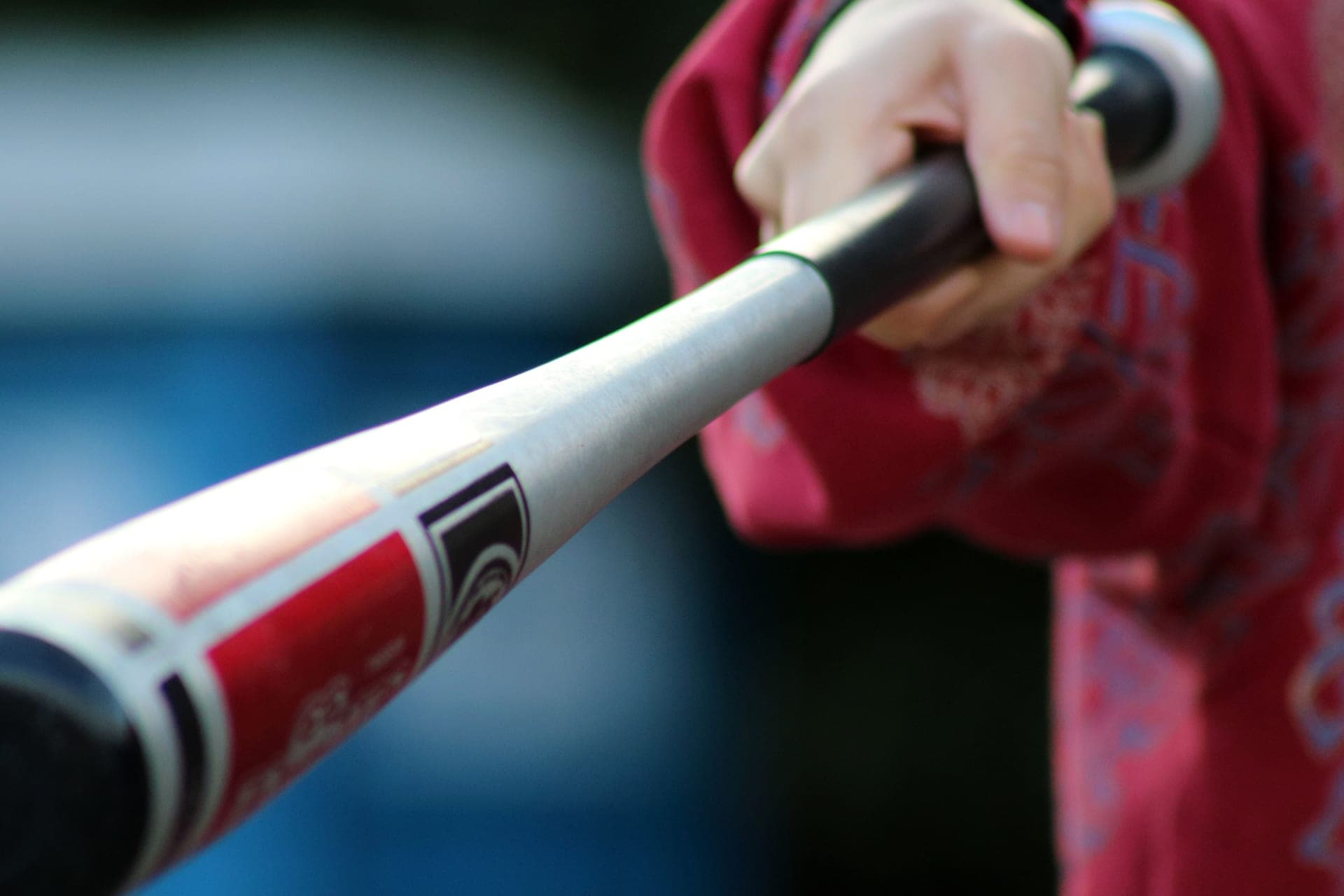 Stock photo
Best starter USA bat for 6–8
Easton Typhoon USA (-12)
-12 with a 2 1/4 in barrel: the cheapest USA-stamped bat that is not a tee ball bat, for a 6- to 8-year-old.
Check price · Amazon#ad · Price as of November 3, 2026 · Disclosure for the link to Easton Typhoon USA (-12)
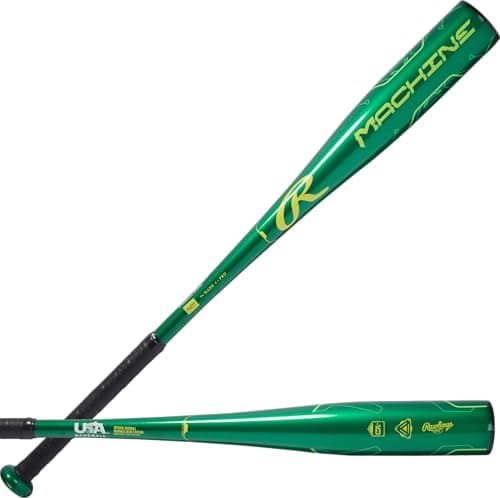
Best budget USA bat
Rawlings Machine USA (-10, 2026)
-10 with a full 2 5/8 in barrel and a lightweight swing-weight label. The budget bat for a first kid-pitch season.
$79.99Amazon#ad · Price as of November 3, 2026 · Disclosure for the link to Rawlings Machine USA (-10, 2026)
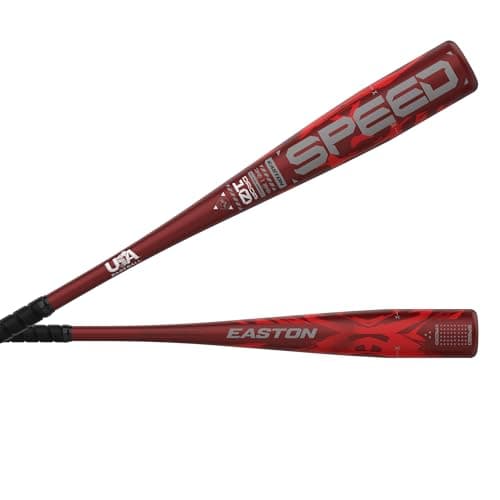
Best 2 5/8 in alloy USA bat under the flagships
Easton Speed USA (-10, 2025)
-10, one-piece ALX50 alloy, full 2 5/8 in barrel. A step up in build with the same no-break-in, cold-tolerant alloy advantage.
$99.99Amazon#ad · Price as of November 3, 2026 · Disclosure for the link to Easton Speed USA (-10, 2025)
What a used bat should save you
No prices are printed on this page, and that is deliberate: a used bat has no list price and a new bat's price moves weekly. What you can hold onto is the ratio. A used bat should cost materially less than the cheapest current new bat that would do the same job, because you are accepting unknown mileage and no warranty in exchange.
If a used flagship costs about what a new entry-level alloy costs, buy the new alloy. If a used alloy costs a fraction of a new one and passes the five checks, buy the used one and spend the difference on a tee and a bucket of balls. The wider budget argument is on how much should you spend on a youth bat.
How we picked these
Researched, certification-checked and sized for the age
Every pick on this page earns its place the same way: the certification is checked against the governing bodies' rules and the maker's stated stamp, so the gear is legal for the division it is bought for; sizing comes from the makers' own age, height and hand charts; the published specs (drop, barrel, construction, closure, cleat type) are read from the maker's page; and the patterns in verified buyer reviews sharpen the “best for” line on each card. Every figure links to where it came from, with the date.
Scores are editorial judgments built from that documented research, applied with the same weights to every product in a category, so the ranking is comparable top to bottom. Commissions never set a score or decide a pick. The rubric and its weights are published.
Questions parents ask
Frequently asked
Is it safe to buy a used youth baseball bat?
How can you tell if a used bat is still legal?
What is a rolled bat?
How long does a composite bat last?
Can you use a 2017 bat in Little League?
Where is the best place to buy a used youth bat?
Keep reading
Related on Bat & Bucket
Receipts
Sources
- BaseballMonkey: How to tell if a baseball bat is legal in 2026 (league-by-league summary)
- Little League: Bat Information (rules by division)
- USA Baseball: USABat approved bat lists
- USA Baseball: USABat FAQ (wood-like standard, no drop limit, tee ball marking)
- Easton: Typhoon -12 USA bat
- Rawlings: 2026 Machine -10 USA bat
- Easton: 2025 Speed -10 USA bat
Certification rules come from the governing bodies' own pages (Little League, USA Baseball, USSSA, NOCSAE), sizes from the makers' published sizing charts, and specs from the maker's product page or the retailer listing named on each product. Every figure above links to the page it was read from, with the date. Amazon prices move often, so each buy button takes you to the current price. Read the full method.