Practice & Gear Bag · The picks
Best pitching machines for kids (2026): safe-ball machines, the speed to set by age, and when a kid is ready for one
A pitching machine is the purchase most families make two years too early. The three machines here throw lightweight or foam balls that do not bruise, with the maker's speed range and guarantee quoted, plus the speed-by-age table and the honest answer to 'is my 7-year-old ready'.
By Mike M.Updated Sourced · gear tested by us: 0
#adReader-supported: we may earn a commission if you buy through our links, at no extra cost to you. It never decides a pick. How we pick · Disclosure
Quick picks
The rankings at a glance
| # | Product | Best for | Score | Price |
|---|---|---|---|---|
| 1 |  JUGS Lite-Flite Machine Throws fastballs, curves and sliders from both sides for baseball and softball using JUGS' lightweight Lite-Flite balls, simulates up to 85 mph at 25 feet, and carries a 2-year guarantee. The kids' machine that teaches breaking balls without bruises. | Best overall (8+)Ages 8 and up (Lite-Flite balls) | 8.1 /10 | Check price · Amazon |
| 2 | PowerNet Launch F-Lite Pitching Machine A two-sport machine with interchangeable tripod legs, four speed settings simulating 40 to 90 mph at 25 feet, a breaking-ball bracket and 12 F-Lite balls in the box. The value machine for a family that plays both sports. | Best value / best for baseball and softball (7+)Ages 7 and up (40 mph setting) | 8.2 /10 | Check price · Amazon |
| 3 | JUGS Small-Ball Pitching Machine Throws 5-inch foam Small-Balls at 55 to 75 mph from 25 feet, fastballs and overhand curves, weighs about 23 lb. Safe in a garage, and the small ball sharpens a kid's eye. | Best for a garage (8+)Ages 8 and up | 8.0 /10 | Check price · Amazon |
| 4 |  PowerNet 7×7 PRO Training Net Forty-nine square feet of net on a one-piece frame with a weighted steel base, sets up in under two minutes with no tools, and comes with a carry bag and ground stakes. The backyard hitting net. | The backstop you need with itAny age; 7 × 7 ft | 9.0 /10 | Check price · Amazon |
| 5 |  Rawlings Incredi-Ball SofTouch Training Baseballs (dozen) A dozen 9 in reduced-weight, soft-center training balls: real-size, safe for a 5-year-old, and fine for the living room off a Hit-A-Way Jr. | The soft balls for a 5-year-old (no machine)Ages 4–8 | 8.7 /10 | Check price · Amazon |
#ad · Prices are set by Amazon and change often, so we don't print them. Scores are ours, built from the governing bodies' certification rules, the makers' sizing charts and published specs, not our own testing. Photos are illustrative stock. Tap a row for the full write-up.
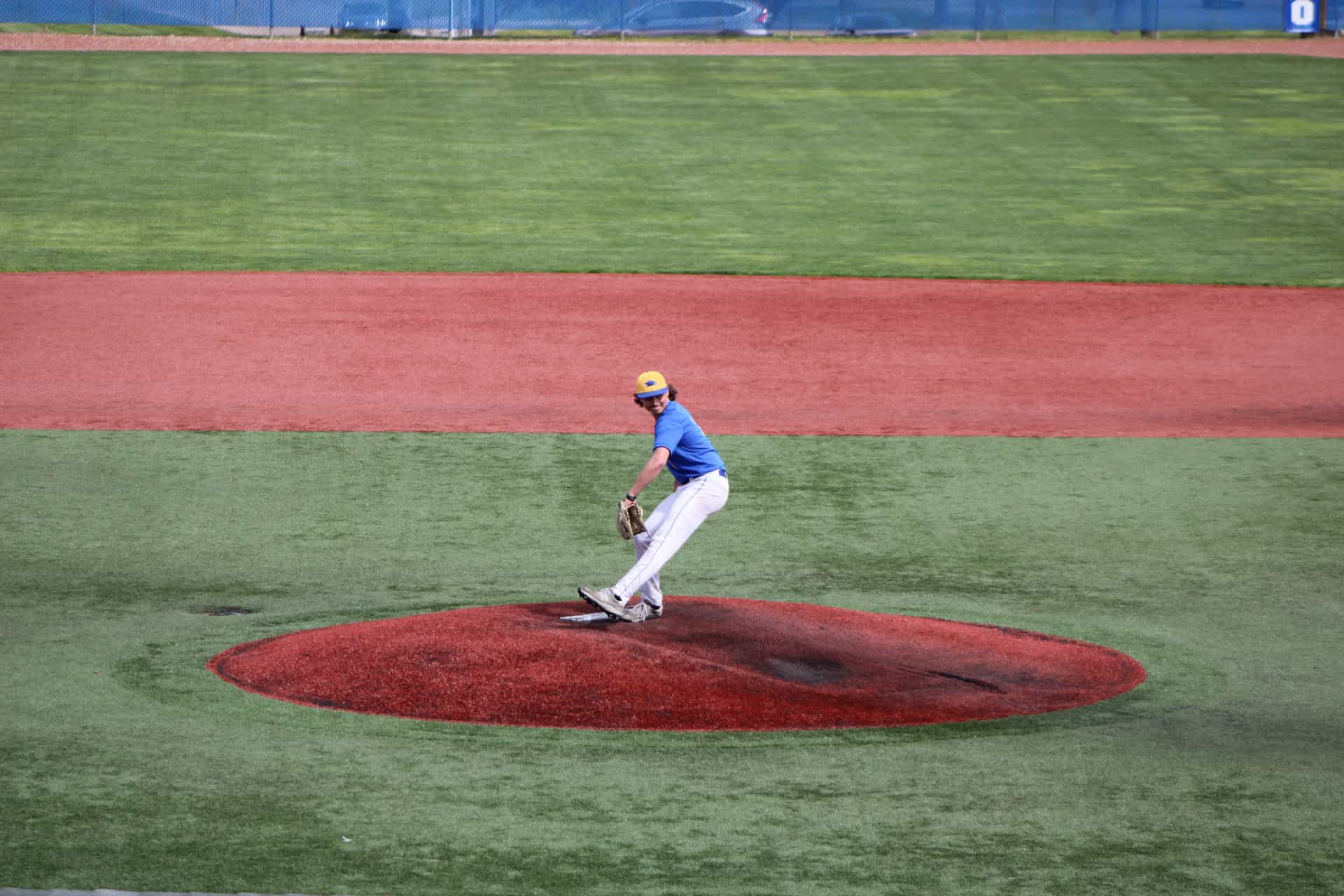
Is my kid ready for a machine?
Ready means: hits consistently off a tee, tracks soft toss, and is not afraid of the ball. That is usually 8 or 9, not 6. A machine before that teaches a kid to flinch, because a machine does not read fear the way a parent tossing underhand does. The one exception is machine-pitch leagues (often 7–8), where the league's machine throws real baseballs and a home machine with lightweight balls builds the timing without the bruises. For a 5- to 7-year-old, spend the money on the tee-and-net setup and a dozen soft training balls.
What speed to set, by age
| Age / level | Machine setting (simulated at 25 ft, per the makers' scales) | Why |
|---|---|---|
| 7–8, machine pitch or coach pitch | 40 mph (the Launch F-Lite's lowest setting) | Matches a coach's toss and the slow league machines |
| 9–10, kid pitch | 45–55 mph | Simulate what the league's pitchers actually throw (ask the coach), not more |
| 11–12 | 55–65 mph (the Small-Ball's range starts at 55) | The step up for Majors; add the breaking ball setting sparingly |
| 13–14 | 65–75 mph | The top of youth; the Lite-Flite and Launch go higher than a 13-year-old needs |
The machines' own ranges: JUGS Lite-Flite “simulates speeds up to 85 mph at 25 feet”; PowerNet Launch F-Lite “simulates speeds from 40 to 90 MPH at 25 feet”; JUGS Small-Ball “55 mph up to 75 mph from 25 feet.” The age pairings are ours; start low and move up when the kid is early on the ball, not late.
Lightweight balls, foam balls, real balls
- Lightweight (Lite-Flite, F-Lite): real-size, a fraction of the weight. Sting-free, safe in a yard, and what all three machines here throw. The right choice for kids.
- Foam 5-inch (Small-Ball): smaller than a baseball, half an ounce. Indoor-safe and it trains the eye; a little harder for a 7-year-old to track.
- Real baseballs: a different, heavier, more expensive class of machine, and the one that puts a 60 mph baseball into a 9-year-old's ribs. Not on this page.
How these were ranked
The practice rubric: setup time (20%), stability (25%), portability (15%), durability (20%), value (20%). Durability weights the JUGS guarantees (2 years on the Lite-Flite, per the maker) and the two makers' track records; value weights what is in the box (PowerNet ships 12 balls and the breaking-ball bracket). We have not run any of these; every figure links to the maker.
In detail
The picks, in full
Rank 1
Stock photoBest overall (8+)
JUGS Lite-Flite Machine
Throws fastballs, curves and sliders from both sides for baseball and softball using JUGS' lightweight Lite-Flite balls, simulates up to 85 mph at 25 feet, and carries a 2-year guarantee. The kids' machine that teaches breaking balls without bruises.
Spec sheetSourced · not tested by us
| Category | Pitching machine |
|---|---|
| Fits | Ages 8 and up (Lite-Flite balls) |
| Construction | Throws left- and right-handed curves, sliders and fastballs for baseball and softball; switch-and-play knobs (maker) |
| Speed | Simulates speeds up to 85 mph at 25 feet (maker) |
| Included | Optional 18-ball baseball and 14-ball softball feeders (maker) |
| Warranty | 2-year guarantee (maker) |
How the 8.1 score breaks down
- Setup time (20%)
- 8
- Stability (25%)
- 9
- Portability (15%)
- 7
- Durability (20%)
- 9
- Value (20%)
- 7
What the spec sheet supports
- Lightweight balls mean a kid can stand in without fear
- Breaking balls, both hands, both sports
- Two-year guarantee
Where it falls short
- Lite-Flite balls only; it does not throw real baseballs
- Needs power
Skip this if…
…you want the kid hitting regulation baseballs; that is a different, heavier class of machine.
#ad · Price set by Amazon · Disclosure for the link to JUGS Lite-Flite Machine
Rank 2
Stock photoBest value / best for baseball and softball (7+)
PowerNet Launch F-Lite Pitching Machine
A two-sport machine with interchangeable tripod legs, four speed settings simulating 40 to 90 mph at 25 feet, a breaking-ball bracket and 12 F-Lite balls in the box. The value machine for a family that plays both sports.
Spec sheetSourced · not tested by us
| Category | Pitching machine |
|---|---|
| Fits | Ages 7 and up (40 mph setting) |
| Construction | Breaking ball bracket adjusts for left- or right-handed sweepers; can launch pop flies and line drives for fielding (maker) |
| Speed | Four settings simulating 40 to 90 mph at 25 feet (maker) |
| Included | 6 Launch F-Lite baseballs and 6 F-Lite 12 in softballs; breaking ball bracket; two sets of tripod legs (maker) |
How the 8.2 score breaks down
- Setup time (20%)
- 9
- Stability (25%)
- 8
- Portability (15%)
- 8
- Durability (20%)
- 7
- Value (20%)
- 9
What the spec sheet supports
- 40 mph low setting suits a 7- or 8-year-old
- Baseball and softball in one box with balls included
- Fielding drills too
Where it falls short
- Lightweight balls only
- Newer brand than JUGS; less track record
Skip this if…
…you want the JUGS two-year guarantee and dealer network.
#ad · Price set by Amazon · Disclosure for the link to PowerNet Launch F-Lite Pitching Machine
Rank 3
Stock photoBest for a garage (8+)
JUGS Small-Ball Pitching Machine
Throws 5-inch foam Small-Balls at 55 to 75 mph from 25 feet, fastballs and overhand curves, weighs about 23 lb. Safe in a garage, and the small ball sharpens a kid's eye.
Spec sheetSourced · not tested by us
| Category | Pitching machine |
|---|---|
| Fits | Ages 8 and up |
| Construction | Throws fastballs and overhand curveballs; uses 5 in, 0.5 oz polyurethane-foam JUGS Small-Balls (maker) |
| Speed | 55 up to 75 mph from 25 feet (maker) |
| Weight | 23 lb (maker) |
How the 8.0 score breaks down
- Setup time (20%)
- 8
- Stability (25%)
- 8
- Portability (15%)
- 8
- Durability (20%)
- 9
- Value (20%)
- 7
What the spec sheet supports
- Foam balls: indoor-safe, no bruises, no broken windows
- 23 lb is carryable
Where it falls short
- Small foam balls only
- Tracking a 5 in ball is harder for a 7-year-old
Skip this if…
…you want breaking balls from both sides; the Lite-Flite does that.
#ad · Price set by Amazon · Disclosure for the link to JUGS Small-Ball Pitching Machine
Rank 4
Stock photoThe backstop you need with it
PowerNet 7×7 PRO Training Net
Forty-nine square feet of net on a one-piece frame with a weighted steel base, sets up in under two minutes with no tools, and comes with a carry bag and ground stakes. The backyard hitting net.
Spec sheetSourced · not tested by us
| Category | Hitting net |
|---|---|
| Fits | Any age; 7 × 7 ft |
| Sizes | 7 × 7 ft (49 sq ft) net (maker) |
| Base | Weighted steel base with square legs; one-piece PRO frame (maker) |
| Included | Net, carry bag with shoulder strap, ground stakes (maker) |
| Setup | Under 2 minutes, no tools; frame folds and legs swing in (maker) |
How the 9.0 score breaks down
- Setup time (20%)
- 10
- Stability (25%)
- 9
- Portability (15%)
- 9
- Durability (20%)
- 8
- Value (20%)
- 9
What the spec sheet supports
- Two-minute setup with no tools is what makes a net get used
- Weighted base plus stakes for windy days
- Doubles as a backstop for pitching and a target for fielding throws
Where it falls short
- 7 ft is tight for a 12-year-old's line drives off a tee; the 8×8 is safer for older kids
- Bow-frame nets wear at the pole sleeves over years
Skip this if…
…your hitter is 12 or older and strong; buy the 8×8 XLP.
#ad · Price set by Amazon · Disclosure for the link to PowerNet 7×7 PRO Training Net
Rank 5
Stock photoThe soft balls for a 5-year-old (no machine)
Rawlings Incredi-Ball SofTouch Training Baseballs (dozen)
A dozen 9 in reduced-weight, soft-center training balls: real-size, safe for a 5-year-old, and fine for the living room off a Hit-A-Way Jr.
Spec sheetSourced · not tested by us
| Category | Practice balls |
|---|---|
| Fits | Ages 4–8 |
| Sizes | 9 in; reduced weight; soft center (maker) |
| Included | One dozen (maker) |
How the 8.7 score breaks down
- Setup time (20%)
- 10
- Stability (25%)
- 8
- Portability (15%)
- 10
- Durability (20%)
- 7
- Value (20%)
- 9
What the spec sheet supports
- Regulation size so the eye learns the right ball
- Soft enough for catch in the house
Where it falls short
- Do not fly like a real ball off a bat
- A dozen goes fast
Skip this if…
…the kid is 9 and hitting real baseballs already.
#ad · Price set by Amazon · Disclosure for the link to Rawlings Incredi-Ball SofTouch Training Baseballs (dozen)
Before you buy
- Balls are the running cost. Each machine wants its own lightweight ball; a dozen goes missing a season. Budget for two dozen.
- Power. Check the power requirement on the maker's page before you pick a spot in the yard; an extension cord or a battery pack is part of the purchase.
- Feeder. A parent feeding one ball at a time is the default. JUGS sells an 18-ball feeder for the Lite-Flite for solo work.
- Two sports. The Launch F-Lite ships baseball and softball legs and balls; the Lite-Flite switches with knobs. If your daughter plays softball, that decides it.
- Where it lives. The Small-Ball weighs 23 lb per JUGS and its foam balls are indoor-safe; the others are yard machines.
How we picked these
Gear we claim to have tested: 0
Plenty of sites say they swung every bat on the list in a lab. We don't say that, and we say so on every page. What we do instead: check each bat against the governing bodies' certification rules and the maker's stated stamp; compile sizing from the makers' own age, height and hand charts; read the published specs (drop, barrel, construction, closure, cleat type); and read the complaint patterns in retailer reviews for the “skip it if” line. Every figure links to where it came from.
Scores are editorial judgments from that documented research, not test results. Commissions never set a score or decide a pick. The rubric and its weights are published.
Questions parents ask
Frequently asked
What is the best pitching machine for a 7-year-old?
What speed pitching machine for a 10-year-old?
Are pitching machines safe for kids?
JUGS Lite-Flite vs PowerNet Launch F-Lite?
How many balls come with a pitching machine?
Keep reading
Related on Bat & Bucket
Receipts
Sources
- JUGS: Lite-Flite pitching machine
- PowerNet: Launch F-Lite pitching machine with breaking ball bracket
- JUGS: Small-Ball pitching machine
- PowerNet: 7x7 FT PRO training net (one-piece frame)
- Rawlings: Incredi-Ball SofTouch training baseballs
We don't claim to have swung, worn or tested this gear, and we don't pretend to. Gear we claim to have tested: 0. Certification rules come from the governing bodies' own pages (Little League, USA Baseball, USSSA, NOCSAE), sizes from the makers' sizing charts, and specs from the maker's product page or the retailer listing named on each product. Amazon prices change often, so we don't print them. Where a figure isn't published, we say so. Read the full method.