Bats · Guide
What size bat for a 10-year-old
Ten is the age the bat stops being a toy and starts being equipment, and it is also the age most parents buy one size too big. The answer is a 28 or 29 inch bat at drop 10, which is 18 or 19 ounces. Here is how to confirm that in your kitchen, which stamp his league wants, and why buying ahead backfires.
By Mike M.Updated Researched · every figure sourced
#adReader-supported: we may earn a commission if you buy through our links, at no extra cost to you. It never decides a pick. How we pick · Disclosure
The short version
Ten-year-olds sit on a 28 or 29 inch bat. At drop 10 — the standard drop at this age — that is 18 or 19 ounces. A small 10-year-old in his first kid-pitch season can be on a 27; a big one who already hits for power can be on a 30. The band is narrow and the kid in front of you decides where inside it he sits.
What makes this age worth its own page is that it is the last year before the decisions multiply. At eleven and twelve a parent has to think about drops, travel-ball stamps and which league the bat is for. At ten, for most families, the answer is still one bat, one stamp, one drop — and getting the length right is nearly the whole job.
Length: 28 or 29?
| The 10-year-old in front of you | Length | Weight at -10 |
|---|---|---|
| Small for his age, or first kid-pitch season | 27 in | 17 oz |
| Average height and strength | 28 in | 18 oz |
| Tall, or in his second or third kid-pitch season | 29 in | 19 oz |
| Big, strong, already driving the ball | 30 in | 20 oz |
When a kid is genuinely between two lengths, take the shorter one. The whole value of a correctly sized bat at ten is that he can get the barrel to the ball on time, and an extra inch is an extra inch of barrel to accelerate. A short bat he can control beats a long bat he cannot, and plate coverage is a problem you can solve by standing closer.
The full table by age, height and weight is on the youth bat size chart. The age above is on what size bat for a 12-year-old.
Drop: why -10 is the answer at ten
Drop is length minus weight, in ounces. A 29 inch bat at -10 weighs 19 oz, at -8 it weighs 21 oz and at -12 it weighs 17. Almost every 10-year-old should be on the -10, and the reasons are worth knowing because the shelf will offer you all three.
A -12 is a bat for a 7- to 9-year-old. By ten, most kids are strong enough that the extra two ounces of a -10 costs them nothing in bat speed and gives them a bit more mass behind the ball, which matters now that pitchers are throwing hard enough for the ball to come off the bat rather than being pushed. A -12 at ten is usually a bat he has outgrown.
A -8 is a bat for 12U and 13U. At ten it is a timing problem for all but the biggest kids, and a 10-year-old who is late on fastballs does not get better by swinging more weight. The exception is the physically mature 10-year-old playing up a division who passes the arm test comfortably with a -10 — in which case the drop-8 field is on best drop 8 USSSA bats. What the number means mechanically is on bat drop weight explained.
The two tests that settle it
Those two tests between them resolve almost every bat-sizing question, and they resolve it better than any chart because they measure the kid rather than his birthday. If length passes and weight fails, stay at the same length and go lighter on the drop. If weight passes easily and length fails, go up an inch at the same drop.
One more check that is worth doing at this age: watch him finish a swing. A kid swinging too much bat drops his back shoulder, pulls his head off the ball and finishes with the barrel low. A kid swinging the right bat finishes high and balanced. That is visible from the fence and it is the test coaches actually use.
Which stamp his league wants
At ten, the bat has to carry the right mark or the umpire will not let him use it, and the two marks are not interchangeable. Little League and most rec leagues require the USA Baseball stamp on a 2 5/8 inch barrel. USSSA travel ball requires the 1.15 BPF thumbprint and allows a bigger 2 3/4 inch barrel.
If your 10-year-old plays rec in the spring and travel in the summer, that is genuinely two bats in most cases, and the honest advice is to buy the one for the league he plays more games in and borrow for the other. If he plays only rec, buy USA and ignore the travel-ball shelf entirely — the big-barrel bats are heavier, more expensive and illegal where he plays.
The marks themselves and where to find them on the barrel are on how to read a bat stamp, and the three standards side by side are on USA vs USSSA vs BBCOR.
Four bats across the range
Our picks for this
Bats sold in the 10-year-old's sizes
Three USA-stamped bats for rec and Little League, one USSSA bat for travel. Lengths, drops and stamps are quoted from the maker or the retailer listing the buy link points at — check the stamp before the price.
Best USA bat overall
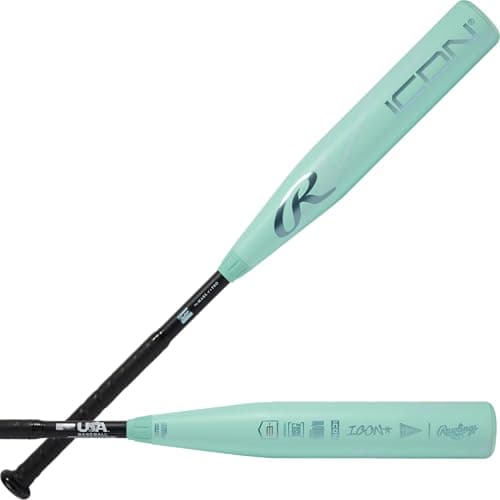
Rawlings Icon USA (2026)
USA stamp, two-piece composite, sold in -12, -10, -8 and -5. The premium pick, and a line he can stay inside through thirteen.
$299.99Amazon#ad · Price as of November 3, 2026 · Disclosure for the link to Rawlings Icon USA (2026)
Best value USA bat for 8–11
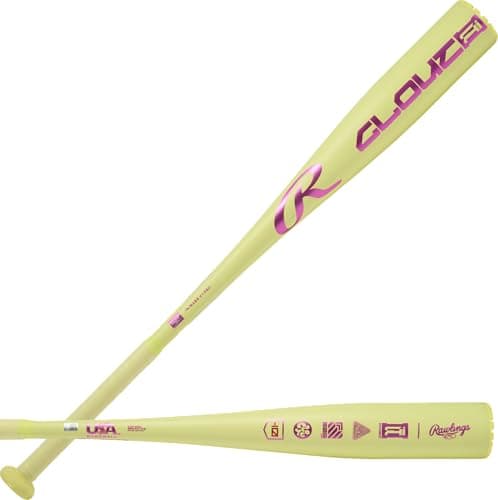
Rawlings Clout Ai USA (-10, 2026)
USA stamp, one-piece alloy in -10. The sensible middle of the range for an 8- to 11-year-old, with no break-in and no cold-weather rule.
$149.96Amazon#ad · Price as of November 3, 2026 · Disclosure for the link to Rawlings Clout Ai USA (-10, 2026)
Best 2 5/8 in alloy USA bat under the flagships
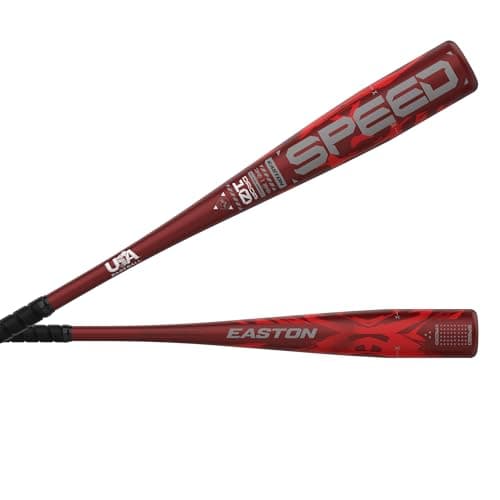
Easton Speed USA (-10, 2025)
USA stamp, one-piece ALX50 alloy -10 with a full 2 5/8 in barrel at a budget price. The bat to buy for a second rec season.
$99.99Amazon#ad · Price as of November 3, 2026 · Disclosure for the link to Easton Speed USA (-10, 2025)
Best USSSA bat overall
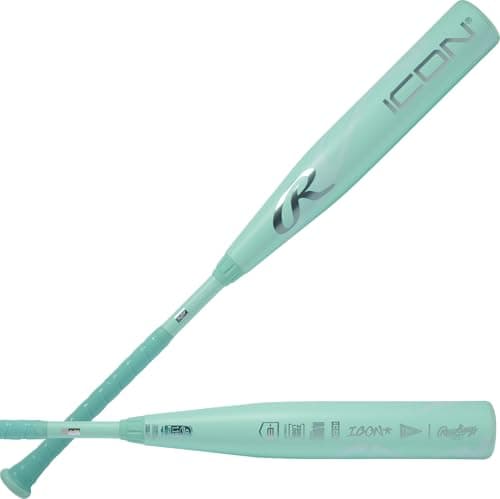
Rawlings Icon USSSA (2026)
USSSA 1.15 BPF stamp and the full 2 3/4 in barrel, in -10, -8 and -5. The travel-ball version of the same bat; illegal in Little League Majors.
$299.99Amazon#ad · Price as of November 3, 2026 · Disclosure for the link to Rawlings Icon USSSA (2026)
Why buying ahead backfires
The instinct is understandable: he grew four inches last year, bats are expensive, buy the 30 and he will grow into it. What actually happens is that he spends this season with a bat he cannot control, hits worse, gets moved down the order, and stops enjoying it — and by the time he grows into the bat, a season and a half of bad swing habits have been grooved on top of it.
A 10-year-old with a bat two inches too long will be late on pitches he should hit, will drop his back shoulder to get the barrel around, and will start cheating with his front foot. Those are mechanical faults that outlive the bat. The money you saved on one bat gets spent on lessons to undo them.
The better way to manage the cost is the second-hand market, which at this age is unusually good: every family in your league has a 28 inch bat their kid finished with in August. The checks that make that safe — the stamp, the barrel, the dents and the rolling question — are on should you buy a used youth bat, and the honest spending ladder is on how much should you spend on a youth bat.
If you would rather buy new and cheap than used, the under-$100 shelf at this age is genuinely good, because the USA standard caps what any bat can do to a ball: best youth baseball bats under $100.
How we picked these
Researched, certification-checked and sized for the age
Every pick on this page earns its place the same way: the certification is checked against the governing bodies' rules and the maker's stated stamp, so the gear is legal for the division it is bought for; sizing comes from the makers' own age, height and hand charts; the published specs (drop, barrel, construction, closure, cleat type) are read from the maker's page; and the patterns in verified buyer reviews sharpen the “best for” line on each card. Every figure links to where it came from, with the date.
Scores are editorial judgments built from that documented research, applied with the same weights to every product in a category, so the ranking is comparable top to bottom. Commissions never set a score or decide a pick. The rubric and its weights are published.
Questions parents ask
Frequently asked
What size bat should a 10-year-old use?
What drop bat should a 10-year-old use?
Is a 30 inch bat too big for a 10-year-old?
How heavy is a 29 inch drop 10 bat?
Does a 10-year-old need a USA or USSSA bat?
Should I buy a bigger bat so my 10-year-old can grow into it?
Keep reading
Related on Bat & Bucket
Receipts
Sources
- Rawlings: 2026 Icon USA bat (specs, bat length by age/height table)
- Rawlings: 2026 Clout Ai -10 USA bat
- Easton: 2025 Speed -10 USA bat
- Rawlings: 2026 Icon USSSA bat
- Little League: Bat Information (rules by division)
- BaseballMonkey: How to tell if a baseball bat is legal in 2026 (league-by-league summary)
Certification rules come from the governing bodies' own pages (Little League, USA Baseball, USSSA, NOCSAE), sizes from the makers' published sizing charts, and specs from the maker's product page or the retailer listing named on each product. Every figure above links to the page it was read from, with the date. Amazon prices move often, so each buy button takes you to the current price. Read the full method.