Bats · Guide
Composite bats in cold weather: what the makers actually warn, and what to swing instead
Every March a parent posts a photo of a cracked barrel and asks what happened. Composite bats and cold are a real problem, but the internet version of it is half folklore. Here is what the makers put in writing, why the failure mode is a crack and not a dent, and the simple rule that keeps a three-hundred-dollar bat alive through an early season.
By Mike M.Updated Researched · every figure sourced
#adReader-supported: we may earn a commission if you buy through our links, at no extra cost to you. It never decides a pick. How we pick · Disclosure
What the makers actually put in writing
That matters because of what is written everywhere else. Search this question and you will find confident numbers: 50 degrees, 60 degrees, 40 degrees, fifteen minutes in a car. Some of those come from retailers, some from coaches, and some from nowhere at all. The makers themselves are deliberately vague, and the honest version of this page says so rather than inventing a figure to look authoritative.
What is consistent across the industry is the direction of the advice. Nobody tells you a composite bat is better in the cold. Nobody publishes a cold-weather composite. Every maker that mentions temperature at all mentions it as a risk, and the alloy bats carry no such warning. You can make a decision from that without a thermometer.
Why cold hurts a composite barrel
A composite barrel is carbon or glass fibre laid up in a resin matrix. The fibres carry the load and the resin holds them in position and transfers force between them. Resin is a polymer, and polymers get stiffer and more brittle as they get colder — the same reason a cold plastic sled cracks on an impact it would shrug off in July.
So the barrel that is designed to flex and spring back has less give in it than its designer assumed. A ball arriving at game speed puts the same energy into a structure with less capacity to absorb it, and the energy goes somewhere. In a warm barrel it goes into flex and comes back out as exit velocity. In a cold one a share of it goes into the resin, which is where micro-cracking starts.
This is also why the failure mode is different from an alloy bat's. An over-stressed alloy barrel dents: the metal deforms and you can see it. An over-stressed composite barrel delaminates and cracks, often along the seam of the barrel, and it frequently does it without warning on a swing that felt ordinary. A hairline crack that appears in April was usually created in March.
There is a performance cost before there is a damage cost, too. A stiffer barrel in cold air with a cold, hard ball means less trampoline and more sting straight into the hands. A kid swinging a flagship composite on a 45-degree Saturday is getting worse results and more pain than he would from a $90 alloy, which is an argument that lands with most parents faster than the physics does.
The temperature number, and why nobody publishes one
The figure you will see most often is 50 F, and as a field rule it is reasonable: below that, put the composite away. But treat it as a convention rather than a specification, because no maker we could find publishes it, and the real variables are not only air temperature.
| Variable | Why it matters | Practical rule |
|---|---|---|
| Air temperature | Governs how brittle the resin is | Below roughly 50 F, swing alloy |
| Bat temperature | A bat from a cold car is colder than the air | Store the bat indoors, never in the car |
| Ball temperature | A cold ball is harder and transfers more shock | Keep game balls inside until first pitch |
| Ball type | Dimpled cage balls are harder than baseballs | Never hit dimpled balls with composite |
The last row is the one that costs families bats, and it is a published instruction rather than folklore: Rawlings says not to hit dimpled balls while breaking in a bat because they can damage composite bats and can void your warranty. A March indoor cage session with a cold composite and a bucket of yellow dimpled balls manages to combine two risks at once. Both are covered on how to break in a composite bat.
The storage rule that matters more than the game-day rule
Most cold-weather damage does not happen because someone played in the cold. It happens because the bat lived in the trunk. A bat bag left in a car overnight in February is at outside temperature by morning, and a kid who pulls it out at a 9 a.m. game is swinging a barrel that is far colder than the air around it.
The fix is free. The bat comes inside with the kid, every time. If that is unrealistic in your house, at least bring it in the night before a game and let it reach room temperature. Twenty minutes in a dugout does not undo twelve hours in a trunk.
The same logic applies to the garage, which is where most bat bags end up and which in a cold climate is barely warmer than outside. Rawlings names the garage specifically. If the gear lives in the garage, the bat is the one item that should not.
Does cold weather void the warranty?
Makers do not generally publish “cold use” as a named exclusion the way they publish dimpled balls, bat rolling and shaving. What they do publish is care guidance, and a warranty claim on a barrel that cracked in a 40-degree tournament is a claim assessed against that guidance.
In practice most youth bat warranties run twelve months and most makers are reasonable about genuine barrel failures. But the claim is simpler if the bat was used the way the maker described, and the one thing that definitively voids coverage on composite — hitting dimpled balls — is the thing most likely to be happening in a cold month, because that is when everyone moves indoors to a commercial cage.
Four bats that do not care how cold it is
The practical answer for a cold-state family is not to baby a composite through March. It is to own a one-piece alloy for the early season. Alloy barrels have no resin matrix, no break-in requirement and no published temperature guidance. They sting more on a mis-hit, which is the trade, and in March they sting less than a brittle composite does.
Our picks for this
Alloy bats for an early season
Four one-piece alloy bats, with their stamp and drops quoted from the maker or the retailer listing. Check the certification against the league your kid actually plays in: a USA bat and a USSSA bat are not interchangeable.
Best value USA bat for 8–11
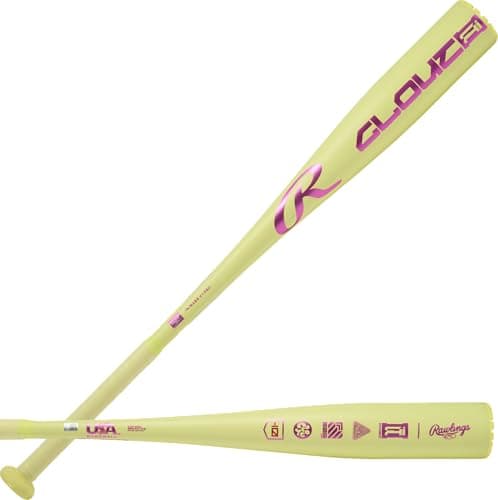
Rawlings Clout Ai USA (-10, 2026)
One-piece RED Alloy+ with the USA stamp, in -10. The sensible middle of the Little League range and the easiest swap for a kid who normally swings a composite Icon.
$149.96Amazon#ad · Price as of November 3, 2026 · Disclosure for the link to Rawlings Clout Ai USA (-10, 2026)
Best 2 5/8 in alloy USA bat under the flagships
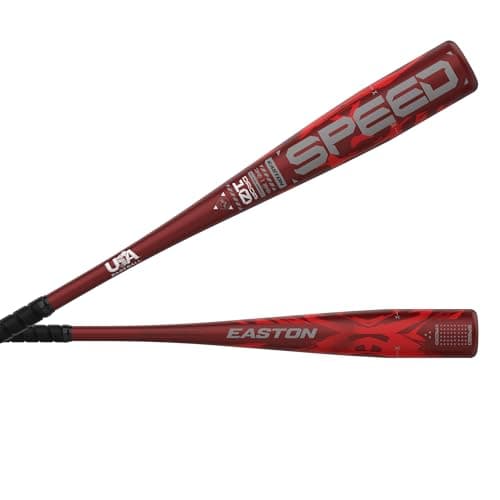
Easton Speed USA (-10, 2025)
One-piece ALX50 alloy with a full 2 5/8 in barrel and the USA stamp, at a budget price. The cheapest way to keep a composite out of the cold.
$99.99Amazon#ad · Price as of November 3, 2026 · Disclosure for the link to Easton Speed USA (-10, 2025)
Best alloy USA bat in -11 or -8
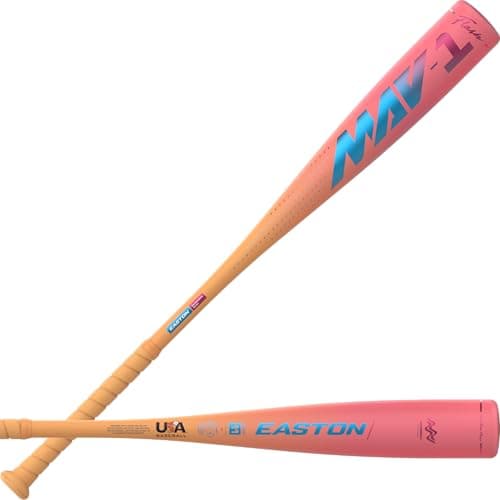
Easton MAV1 Flash USA (-11 / -8, 2026)
One-piece MAV HP alloy with the USA stamp, sold in -11 and -8 — the two drops the -10 bats skip, which covers both ends of the age range.
$149.99Amazon#ad · Price as of November 3, 2026 · Disclosure for the link to Easton MAV1 Flash USA (-11 / -8, 2026)
Best alloy USSSA bat with damping
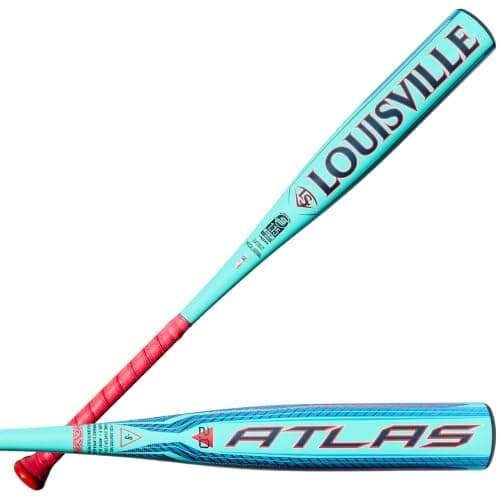
Louisville Slugger Atlas 2.0 USSSA (2027)
One-piece SL Hyper alloy with a tuned mass damper in the handle and the USSSA 1.15 BPF stamp, for travel ball. The damper is there for exactly the mis-hit sting a cold morning produces.
$249.95Amazon#ad · Price as of November 3, 2026 · Disclosure for the link to Louisville Slugger Atlas 2.0 USSSA (2027)
If the composite is the only bat you own
Most families are not buying a second bat in February, so here is the version that costs nothing. Bring the bat indoors and keep it there. Take warm-up swings without hitting a ball. Use real baseballs, never dimpled ones, and keep the game balls inside until first pitch where you can. Put batting gloves on the kid, because a cold-hand sting is most of what he is actually complaining about. And accept a quieter early season: the barrel will come back in May.
If the bat is already cracked, look at the date of purchase before you look at the forecast. Twelve-month warranties cover more barrels than people think, and a composite that failed inside a year is usually worth a claim.
Whether you want a composite at all is a bigger question than the weather, and the honest answer for a lot of rec families in cold states is no. Both sides of that are on alloy vs composite and one-piece vs two-piece bats.
How we picked these
Researched, certification-checked and sized for the age
Every pick on this page earns its place the same way: the certification is checked against the governing bodies' rules and the maker's stated stamp, so the gear is legal for the division it is bought for; sizing comes from the makers' own age, height and hand charts; the published specs (drop, barrel, construction, closure, cleat type) are read from the maker's page; and the patterns in verified buyer reviews sharpen the “best for” line on each card. Every figure links to where it came from, with the date.
Scores are editorial judgments built from that documented research, applied with the same weights to every product in a category, so the ranking is comparable top to bottom. Commissions never set a score or decide a pick. The rubric and its weights are published.
Questions parents ask
Frequently asked
How cold is too cold for a composite bat?
Can you leave a composite bat in a cold car?
What happens to a composite bat in cold weather?
Are alloy bats better in cold weather?
Does cold weather void a bat warranty?
Can you use a composite bat in an indoor batting cage in winter?
Keep reading
Related on Bat & Bucket
Receipts
Sources
- Rawlings/Easton: How to break in your composite bat (150-400 swings, rotate 1/4 in, no dimpled balls)
- Rawlings: 2026 Clout Ai -10 USA bat
- Easton: 2025 Speed -10 USA bat
- Easton: 2026 MAV1 Flash USA bat (-11, -8)
- Headbanger Sports: 2027 Louisville Slugger Atlas 2.0 USSSA bat listing
- BaseballMonkey: How to tell if a baseball bat is legal in 2026 (league-by-league summary)
Certification rules come from the governing bodies' own pages (Little League, USA Baseball, USSSA, NOCSAE), sizes from the makers' published sizing charts, and specs from the maker's product page or the retailer listing named on each product. Every figure above links to the page it was read from, with the date. Amazon prices move often, so each buy button takes you to the current price. Read the full method.