Cleats · Guide
Baseball cleats buying guide: the six decisions, in order
Buying a kid's first pair of baseball cleats involves six decisions and only one of them is the brand. This guide runs them in the order that actually matters, starting with the one the league decides for you and ending with the one everybody starts with. Three picks at the end, all molded, all legal in every youth division.
By Mike M.Updated Researched · every figure sourced
#adReader-supported: we may earn a commission if you buy through our links, at no extra cost to you. It never decides a pick. How we pick · Disclosure
League rules as of Oct 10, 2026. Every rule on this page was read from the governing body's own page on that date, and each is linked. Leagues and tournaments change bat and gear rules between seasons (USSSA's 14U bat rule changed on January 1, 2026): confirm on the linked page and with your league before you buy, and tell us if a rule has changed.
The six decisions, in order
Parents usually start at decision six and work backwards, which is how a 9-year-old ends up in a narrow pro-model cleat that hurts. Run them in this order instead: stud type, cut, fit, width, surface, brand. The first four are the ones that decide whether he plays comfortably; the last two are preferences.
1. Stud type: molded, almost always
There are four kinds of sole and only two of them belong on a youth player.
| Type | What it is | Legal in youth ball |
|---|---|---|
| Rubber molded (RM) | Soft rubber studs molded into the outsole | Every division |
| TPU molded | Harder plastic studs, better bite on packed dirt | Every division |
| Metal | Steel spikes on a rigid plate | Not in Little League Majors and below; usually from about 13; often banned on turf |
| Turf shoe | Dozens of short rubber nubs | Everywhere, but it is a practice shoe, not a game cleat for dirt |
Even where metal becomes legal, molded is usually still the right answer for a 13-year-old: it is legal on every field, safer on a slide and gentler on a growing heel. The full argument is on molded vs metal cleats.
2. Low, mid or high cut
- Low cut for almost every youth player. Lighter, cooler, and the ankle support argument for a mid cut is weaker than it sounds for a kid whose weight is low anyway.
- Mid cut for a kid who has rolled an ankle, or one who specifically asks for it. The New Balance 3000v6 Mid is the one we rank.
- High cut is essentially a football shape and rarely sold in youth baseball sizes. Skip it.
3. Fit on a foot that is still growing
A cleat is not a trainer. It is stiffer, it has no give sideways, and a bad fit shows up as blisters in week one and heel pain in month two. Three tests, done with the socks he will actually wear.
- A thumb's width at the toe. Press down in front of the big toe with him standing. About a thumb's width of space is right. Less and he is already too big for them; much more and his foot slides forward on a stop.
- No heel slip. Have him walk, then jog a few steps. If the heel lifts out, the cleat is too long or too wide, and that heel movement is the main cause of blisters.
- No pressure across the widest part. Run a thumb across the ball of the foot. If the upper is already stretched over it in the shop, it will not break in; cleat uppers are synthetic and barely stretch.
The size charts, including the Little Kids and Big Kids numbering most brands use, are on the youth cleat sizing guide.
4. Width, the one nobody checks
This is where a lot of unhappy kids come from, and the listings themselves tell you. The retailer spec for the New Balance 4040v8 carries an explicit note that New Balance cleats “can be a little smaller and narrower than your standard athletic shoe” and suggests considering a half size up. Nike youth lasts also run narrow for many kids.
So if your kid has a wide foot, do not order a pro-model cleat unseen because a team-mate has it. Buy from a brand that publishes wide sizes, or try them on. The wide-foot list is on best youth cleats for wide feet, and if he is complaining of heel pain rather than width, read cleats for heel pain and Sever's disease before you buy anything.
5. Surface: do you need turf shoes too?
One pair of molded cleats covers dirt and grass and is accepted on most turf fields that allow cleats at all. A second pair of turf shoes becomes worth it when practice is on artificial turf or indoors, where many facilities prohibit cleats entirely, or when he is doing enough volume that you would rather not wear the game cleats out in the cage.
For a first season, buy one pair of molded cleats and nothing else. The turf list is there when you need it: best youth turf shoes.
6. Brand, last
Having got the first five right, the brand decides two things that genuinely matter and one that does not. It matters for the last shape, because New Balance, Nike and Under Armour fit differently, and for availability, because a cleat you can replace mid-season from a local shelf is worth more than one you cannot. It does not matter for performance at a youth level, whatever the kid believes about the name on the heel.
Three molded cleats that fit the brief
All three are molded, legal in every youth division, and sold in youth size runs. Specs on each card are quoted from the retailer listing they were read from, because New Balance and Nike both block automated reading of their own pages.
Our picks for this
One cushioned, one widely stocked, one budget
Molded studs on all three. Pick on fit and on whether you can replace them locally in July, not on the logo.
Best youth baseball cleat overall
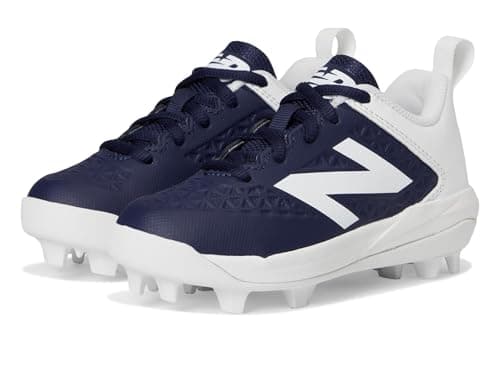
New Balance 4040v8 Youth (rubber molded)
Youth sizes (Little Kid through Big Kid)8.8/10Best cushioned: a full-length FuelCell midsole, which matters for a kid on his feet all Saturday. The listing warns the fit runs narrow, so size up or try them on.
$49.95Amazon#ad · Price as of November 3, 2026 · Disclosure for the link to New Balance 4040v8 Youth (rubber molded)
 Stock photo
Best Nike youth cleat
Nike Force Trout 9 Keystone (rubber molded)
Little Kids and Big Kids sizes8.4/10Best stocked: the rubber molded Trout, carried in Little Kids and Big Kids sizes at most big-box stores, which makes a mid-season replacement easy.
Check price · Amazon#ad · Price as of November 3, 2026 · Disclosure for the link to Nike Force Trout 9 Keystone (rubber molded)
Best budget youth cleat overall
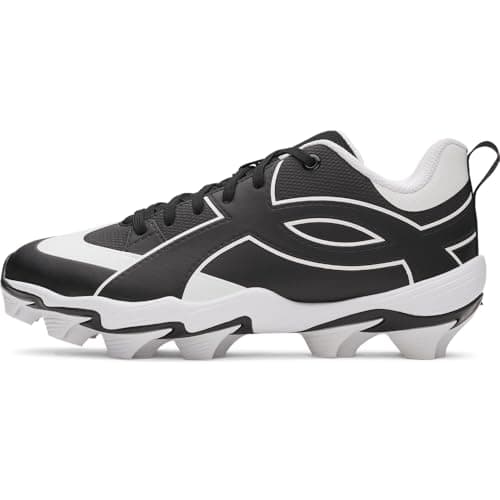
Under Armour Leadoff Low RM Jr.
Kids' sizes (retailer: Baseball, T-Ball)8.8/10Best budget: EVA midsole, padded collar and a toe-cap overlay, which is exactly where kids' cleats fail first. The retailer lists T-ball as an activity, so it comes small.
$31.99Amazon#ad · Price as of November 3, 2026 · Disclosure for the link to Under Armour Leadoff Low RM Jr.
When to buy, and when to replace
- Buy as late as you can before the season. A foot measured in January is a different foot in April.
- Replace when the studs round off, not when the shoe looks old. Rounded studs slide, and sliding on a stop is how ankles turn.
- Replace immediately if the toe is splitting. The toe-cap area is where kids' cleats fail, and a split upper does not get better.
- Check the fit mid-season. Do the thumb test again in June. Plenty of kids outgrow cleats inside one season.
- Clean them after a muddy game. Caked dirt in the studs is both a traction problem and how cleats start to smell. The method is on how to clean baseball cleats.
How we picked these
Researched, certification-checked and sized for the age
Every pick on this page earns its place the same way: the certification is checked against the governing bodies' rules and the maker's stated stamp, so the gear is legal for the division it is bought for; sizing comes from the makers' own age, height and hand charts; the published specs (drop, barrel, construction, closure, cleat type) are read from the maker's page; and the patterns in verified buyer reviews sharpen the “best for” line on each card. Every figure links to where it came from, with the date.
Scores are editorial judgments built from that documented research, applied with the same weights to every product in a category, so the ranking is comparable top to bottom. Commissions never set a score or decide a pick. The rubric and its weights are published.
Questions parents ask
Frequently asked
What kind of baseball cleats should I buy for my kid?
How should baseball cleats fit a child?
Should I buy baseball cleats a size up?
Can kids wear metal cleats in baseball?
Do you need turf shoes as well as cleats?
How often should youth baseball cleats be replaced?
Keep reading
Related on Bat & Bucket
Receipts
Sources
- Little League Help Center: Are cleats with metal spikes permitted?
- BaseballMonkey: Best baseball cleats for 2026
- BaseballMonkey: New Balance 4040v8 boys' low molded cleats (specs, size chart)
- Academy: New Balance 4040 v8 RM kids' cleats listing
- Academy: Nike Force Trout 9 Keystone kids' cleats listing
- Academy: Under Armour Leadoff Low RM Jr. kids' cleats listing
- Zappos: kids wide baseball cleats search (width filter)
- KidsHealth (Nemours): Sever disease, what it is, ages, treatment (medically reviewed January 2019)
Certification rules come from the governing bodies' own pages (Little League, USA Baseball, USSSA, NOCSAE), sizes from the makers' published sizing charts, and specs from the maker's product page or the retailer listing named on each product. Every figure above links to the page it was read from, with the date. Amazon prices move often, so each buy button takes you to the current price. Read the full method.